First, choose a stylus whose exact version works with your tablet. For lettering strokes that vary with pressure, your tablet and app must also support pressure sensitivity. Apple Support Germany and Samsung Germany list compatibility by model. If your screen reflects light by the window, adjusting its position and brightness is more likely to help than switching styluses. Any anti-reflective solution must be specifically designed for your tablet.
Which option is right for you?
Lettering with varied line widths
If you want to create fine upstrokes and heavier downstrokes, distinguish pressure sensitivity from tilt recognition. Apple describes the Apple Pencil Pro’s tool features, while Samsung lists pressure and tilt recognition for the S Pen EJ-PX710BBEGEU.
A stylus for a tablet you already own
If you already own an iPad, Galaxy Tab or stylus-compatible Windows tablet, first check your device’s full model name and the stylus version listed as compatible with it. Apple Support Germany, Samsung Germany and Wacom Germany provide the relevant compatibility details.
Creating by a bright window
If you work in daylight, how easy the specific display is to read matters just as much as the stylus. Apple explains how to adjust screen brightness, while Samsung lists an anti-reflective film for certain Galaxy Tab models.
What should you look for when buying?
First check compatibility with your tablet, then the line control you want, followed by the display, charging method and replacement tips.
| What matters |
What to check before buying |
Who will find this important? |
| Compatibility |
Exact tablet and stylus version; for Windows devices, check the input protocol where applicable. |
If I already own a tablet, I want to be sure that this exact stylus version will work with it. Around 31% of consumers put compatibility first. |
| Line control |
Pressure sensitivity for the exact stylus and tablet combination; app support for the brush. |
If I want to change line width by pressing harder, I need pressure sensitivity rather than tilt recognition alone. Around 31% of consumers prioritise this kind of control. |
| Readability by a window |
Screen position and brightness; if using a film, check it’s compatible with your specific tablet. |
If I want to judge fine lines in bright daylight, I pay particular attention to how easy the display is to read. Around 25% of consumers prioritise display readability. |
| Ready to use and accessories |
Charging and pairing methods, what’s included and whether compatible replacement tips are available. |
If I want to have my stylus ready and use it without unnecessary interruptions, I check the charging method and tips in advance. Around 13% of consumers prioritise this practical convenience. |
Common misconceptions
-
Assuming compatibility based on the brand alone
Apple lists Pencil versions by iPad model. For Bamboo Ink Plus, the supported device and input protocol are what matter.
Before ordering, compare the full model names and, where relevant, the protocol with the manufacturer’s information.
-
Confusing tilt recognition with pressure sensitivity
Tilt and pressure are different types of input. An independent comparison by COMPUTER BILD describes the Apple Pencil (USB-C) as not pressure-sensitive, although Apple lists tilt recognition.
If you want downstrokes that respond to pressure, check that both the stylus and tablet support pressure sensitivity, and that your app’s brush responds to it.
-
Buying a new stylus to fix screen reflections
You adjust brightness on the tablet. An anti-reflective film is designed for specific displays and won’t change the stylus’s features.
First check the screen angle and brightness. Only choose a film if it’s specifically listed as compatible with your tablet.
-
Assuming magnetic storage means magnetic charging
Apple describes the Apple Pencil (USB-C) as attaching magnetically for storage, but pairing and charging are done using a USB-C cable.
Check the charging method and what’s included for the exact stylus version. A model that charges via USB-C may need a compatible cable.
Key brands to consider
Apple
The Apple Pencil Pro and Apple Pencil (USB-C) are different options for specifically supported iPads.
- Apple lists features such as rotation and magnetic charging for the Pencil Pro. For the Pencil (USB-C), Apple lists tilt recognition and cable charging.
- The features and compatibility of one version don’t automatically apply to the other. An independent comparison by COMPUTER BILD describes the Pencil (USB-C) as not pressure-sensitive.
Samsung
The S Pen EJ-PX710BBEGEU is listed as compatible with certain Galaxy Tab series.
- For this model, Samsung lists pressure and tilt recognition, as well as magnetic storage.
- Additional BLE features require a charged stylus and may depend on the app. These details don’t apply to all S Pens.
LAMY
The AL-star EMR may suit devices that specifically support Wacom EMR input.
- LAMY lists battery-free operation and replaceable tips for the AL-star EMR.
- EMR alone doesn’t confirm compatibility with any Android, iPad or Windows tablet. Check your specific device.
Wacom
The Bamboo Ink Plus is designed for compatible stylus-enabled Windows devices using Active ES or Microsoft Pen Protocol (MPP).
- Wacom lists up to 4,096 pressure levels, USB-C charging and a choice of tips.
- Tilt support and whether individual tips can be used may depend on the third-party device. Check the protocol against your specific device.
Logitech
The Crayon (USB-C) is an iPad-focused option for labelling tasks.
- An independent comparison by COMPUTER BILD describes it as broadly compatible with iPads and notes that it has a battery indicator.
- The comparison points out its unusual shape and lack of pressure sensitivity. Check that it’s approved for your specific iPad.
Joybuy products for tablet lettering
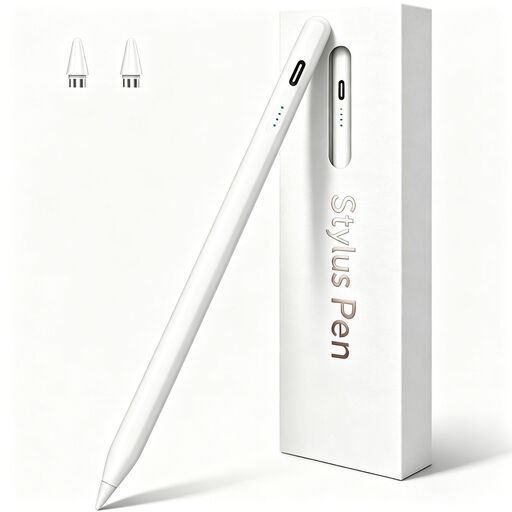
This selection includes styluses for selected Android, HarmonyOS and iPad devices, as well as an active tablet stylus that pairs with an app. Check compatibility with your specific device before buying.
 No image available
Input Pen Stylus for Android and HarmonyOS touchscreens
For lettering on an Android or HarmonyOS tablet; according to the product information, it isn’t suitable for iPad, Microsoft or some Lenovo tablets.
View at Joybuy
 No image available
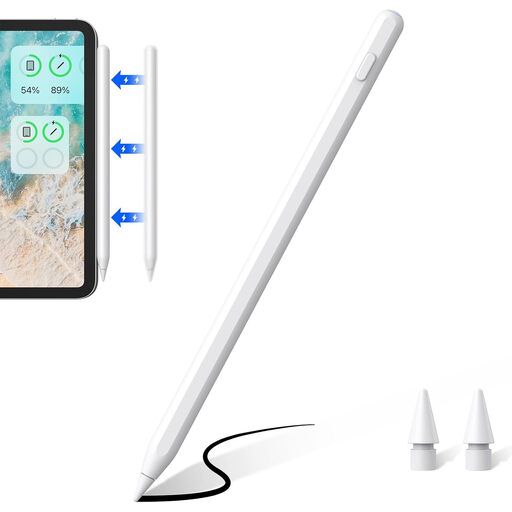
ZSPEED Wireless Charging Stylus Pen for iPad, White
For lettering on one of the specifically supported iPad models. Check the model list for your device before relying on the stated tilt recognition.
View at Joybuy
 No image available
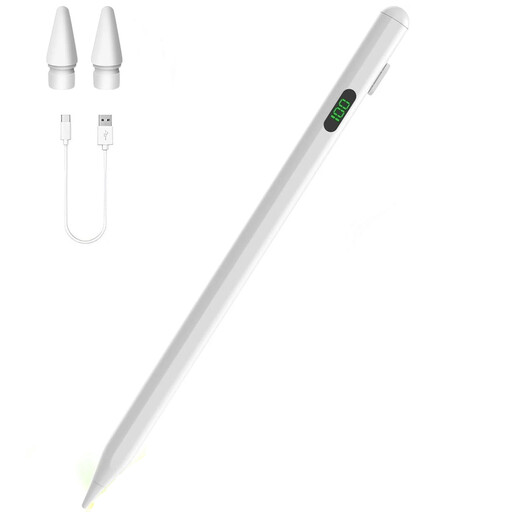
Input Stylus Pen for iPad (2018–2025)
For an iPad model listed in the product description. Check the model list against your tablet before buying.
USB-C fast charging is stated in the product name.
View at Joybuy
 No image available
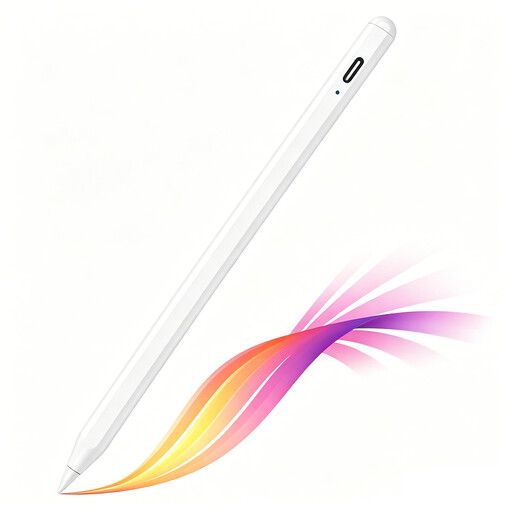
iPad Stylus with USB-C charging port
For a specifically supported iPad model. Check the exact device generation; according to the product information, magnetic attachment is for storage, not wireless charging.
USB-C charging port and tilt recognition are stated in the product name.
View at Joybuy
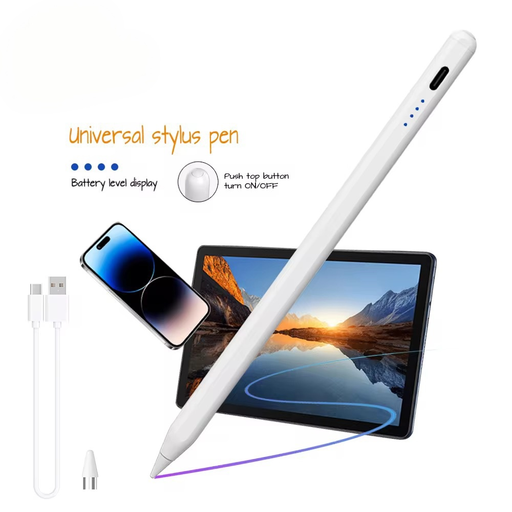 No image available
VoxorAI HL-U05 White Pen
An active tablet stylus for the device families named in the product title. According to the product information, a companion app is required to set it up.
View at Joybuy
Frequently asked questions
Is tilt recognition enough for lettering with varied line widths?
Not if you want to change the width by pressing harder. Check pressure sensitivity on both the stylus and tablet, as well as your app’s brush settings. An independent comparison by COMPUTER BILD describes the Apple Pencil (USB-C) as not pressure-sensitive.
How can I make the screen easier to read by a window?
First, adjust the screen’s angle in relation to the light source and check the brightness setting. Samsung says an anti-reflective film is designed to reduce reflections, but lists it only for certain Galaxy Tab models. This doesn’t tell you how it will work with other devices or in your particular lighting conditions.
Can I put a used stylus battery in household rubbish?
No. The German Environment Agency recommends collecting used batteries separately and taking them to in-store collection bins or local authority collection points. Only remove a built-in battery before handing in an old device if it can be done easily, without specialist tools.


