First, choose a stylus that’s compatible with your exact tablet model. Then decide whether you want to control line thickness with pressure or tilt, and check how it charges and stores away at your small workspace. If you’re printing your greeting card, you’ll also need to consider how your app exports the design.
Who creates greeting cards with a tablet stylus?
Lettering with varied line thickness
If you draw the letters yourself, pressure or tilt can help you create different strokes. The inputs available depend on the specific stylus and device. Apple and Samsung, for example, list different compatible models and features.
Creating at a small workspace
If you use your stylus for short creative sessions, you may want to consider how it charges, where you can store it and whether it works without pairing. STAEDTLER, Logitech and Microsoft specify different charging and storage requirements for their various models.
Greeting cards to print
If you plan to print your design later, think about how to get it from your design app into an output file. Adobe Express offers downloads of its card designs as PDF, JPG or PNG files.
What should you look for when buying?
First, check that the stylus is compatible with your tablet. Then consider how you want to control your strokes, how easy it is to use at your workspace and how you plan to print your card.
| What matters |
What to check before buying |
Who is this especially important for? |
| Compatibility |
Check the exact tablet model and stylus version. For the Noris digital, also make sure the display supports EMR. |
If the stylus needs to work with a tablet you already own, checking the model match is essential. Around 36% of consumers are likely to make compatibility their main concern. |
| Control over lettering strokes |
Check pressure and tilt recognition separately, and make sure they work with your chosen brush in the app you use. |
If you want precise control over thick and thin lettering as you draw, you should also consider the app. Around 29% of consumers are likely to prioritise how they can shape their strokes. |
| Ease of use at a small workspace |
Check how the specific device charges or pairs, and where the stylus can be stored. If needed, check which replacement tips are available. |
If desk space is limited, an easy-to-use stylus that stores away neatly could make all the difference. Around 21% of consumers are likely to make ease of use their top priority. |
| Getting your greeting card ready |
Check how you can save your design and which file format your chosen printing method requires. |
If you want to print your card rather than just view it on screen, plan how to export it early on. Around 14% of consumers are likely to make preparing their card for output their main concern. |
Which buying mistakes should you avoid?
-
Choosing based only on the brand or the term ‘tablet stylus’
Compatibility can depend on the specific tablet generation and stylus version. STAEDTLER explicitly states that the Noris digital requires an EMR-compatible display.
Check the exact model and version of your tablet against the information provided by the stylus manufacturer.
An incompatible stylus won’t work as intended with your device, so you may need to buy another one.
-
Confusing tilt recognition with pressure sensitivity
Tilt can affect your strokes, but it isn’t the same as pressure-sensitive brush control. In its comparison, for example, Apple distinguishes between the Pencil Pro, which supports pressure sensitivity, and the Apple Pencil (USB-C), which doesn’t.
Decide how you want your lines to change, then check that the stylus feature works with your chosen brush in the app.
-
Overlooking charging, storage and replacement parts
Styluses vary in whether they need charging or pairing, and in how they can be stored with your device. Microsoft notes that charging options for the Surface Slim Pen vary by model; STAEDTLER says the Noris digital classic works without charging or pairing.
Check how your chosen stylus version charges and stores away, and which replacement tips are compatible.
Depending on the model, you may need additional charging accessories. Apple offers replacement tips for compatible Pencil models.
-
Assuming your digital design is already print-ready
An app may export files in certain formats without confirming that they meet the requirements of your particular printing method.
Before you finalise your design, check which file format you need and how to export it in that format.
If the format or print specifications aren’t right, you may need to make further changes and export the design again.
Which brands are worth considering?
Apple
Apple Pencil models are an option if you already own an iPad. The right version depends on your specific device.
- According to Apple’s comparison, the Pencil Pro supports pressure and tilt input. The Apple Pencil (USB-C) supports tilt, but not pressure sensitivity.
- Apple lists compatibility by Pencil and iPad model. Check the details for your exact generation.
Samsung
The S Pen EJ-PX510 is a clearly specified option for the Galaxy Tab S9 FE and S10 FE.
- Samsung specifies pressure and tilt recognition, as well as magnetic storage, for this stylus.
- These details apply to the tablet ranges and stylus listed; they can’t be assumed to apply to other Galaxy Tabs.
STAEDTLER
The Noris digital is worth considering if your tablet has a compatible EMR display and you’d prefer a stylus that doesn’t need charging.
- STAEDTLER describes the Noris digital classic as having a replaceable tip and working without charging or pairing.
- According to STAEDTLER, the Noris digital models listed only work with EMR displays, so the device version is crucial.
Logitech
The Crayon (USB-C) is an option for supported iPads if you mainly sketch or want to vary your strokes by tilting the stylus.
- Logitech specifies USB-C charging and tilt-responsive stroke variation.
- Check the exact Crayon and iPad versions, and make sure your chosen brush works as intended in your app.
Microsoft
The Surface Slim Pen is worth considering if you’re creating your design on a supported Surface device.
- Microsoft documents pressure input for the listed Surface models.
- Features and charging slots vary by Surface model. A separate charger is available if needed.
Joybuy products for different tablets
The following styluses are designed for iPad, Android and Surface devices. For each model, check its compatibility with your exact device and whether tilt or pressure control suits your lettering style.
 No image available
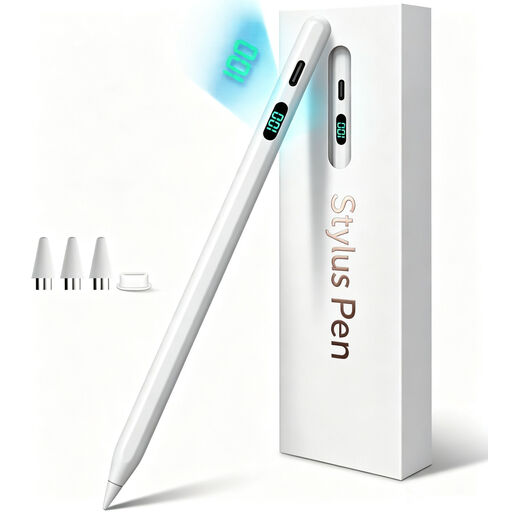
Input Pen Stylus for iPad 2018–2026, USB-C
For a compatible iPad, if tilt-responsive lines are all you need. According to the product description, the stylus isn’t pressure-sensitive. The product name specifies USB-C charging.
View at Joybuy
 No image available
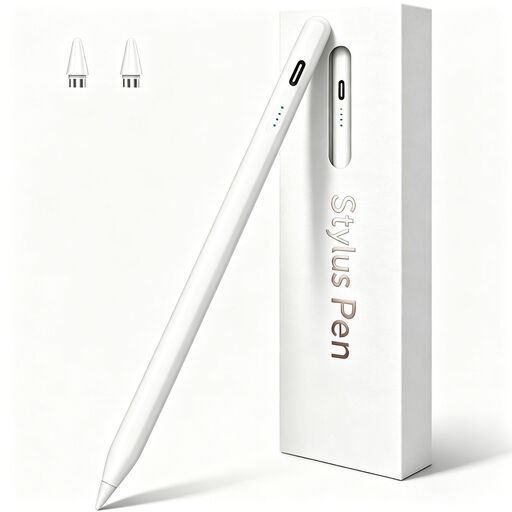
Stylus for Samsung, Huawei and XiaoMi touchscreens
For drawing on compatible Android or HarmonyOS touchscreens. According to the product description, it isn’t designed for iPad, Microsoft devices or some Lenovo tablets. Check compatibility with your exact device.
View at Joybuy
 No image available
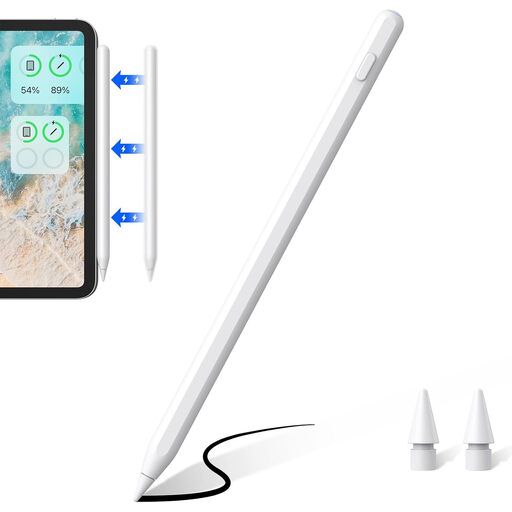
ZSPEED Stylus Pen for iPad, White
For compatible iPads. The product name specifies tilt recognition and magnetic charging. Supported models listed include iPad Pro 11" (4th/3rd/2nd/1st generation), iPad Pro 12.9" (6th/5th/4th/3rd generation), iPad Air 4/5 and iPad mini. Magnetic charging is limited to compatible iPads.
View at Joybuy
 No image available
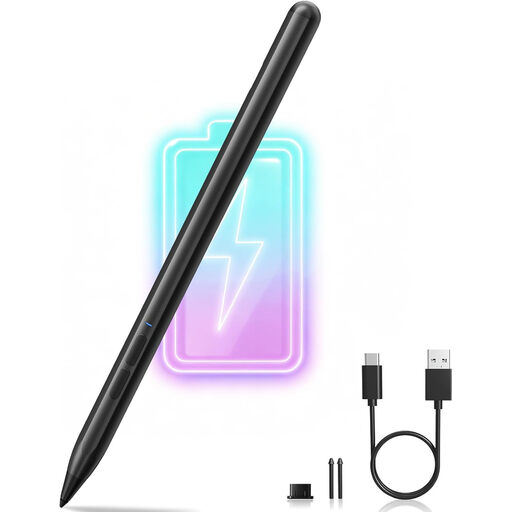
Stylus Pen for Microsoft Surface, 4096 pressure levels
For the Surface devices listed in the product name. The title specifies pressure sensitivity with 4096 levels and tilt support. Listed models include Surface Pro 3–11, Surface Go 1–4, Surface Laptop 1–6, Surface Studio and Surface Book 1–3. Check your exact model.
View at Joybuy
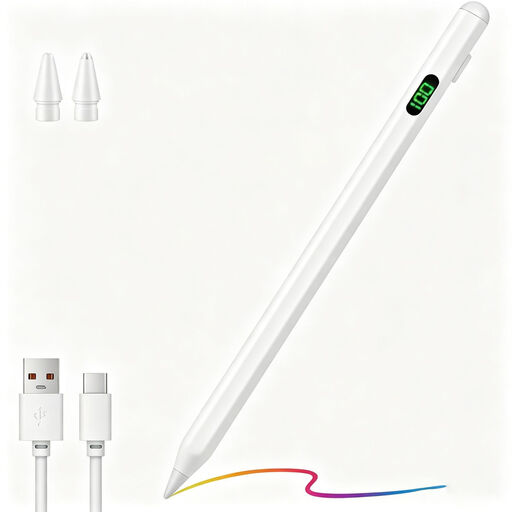 No image available
Universal touchscreen stylus for Android and iOS
For drawing, sketching and writing on compatible capacitive touchscreens. The product name specifies a POM tip. According to the product description, magnetic attachment is designed for compatible iPads and isn’t for charging.
View at Joybuy
Frequently asked questions about tablet styluses for greeting cards
Is ‘suitable for tablets’ enough information to buy?
No. Check the exact tablet model against the stylus version. The Noris digital also requires an EMR-compatible display.
How do tilt and pressure recognition differ for lettering?
Tilt and pressure are different inputs, so check them separately. Apple’s comparison lists pressure and tilt input for the Pencil Pro, but tilt without pressure sensitivity for the Apple Pencil (USB-C). Your device and app must also support the feature you want.
What should I know about charging and replacement tips?
It depends on the model. Microsoft says a separate charger is available for the Surface Slim Pen if needed, while STAEDTLER describes the Noris digital classic as working without charging. Apple offers compatible replacement tips for the Pencil models it lists; check accessory compatibility in each case.
Can I export my card design for printing?
Check the app you’re using and make sure the file format suits your planned printing method. Adobe Express offers downloads of its card designs as PDF, JPG or PNG files.


