Tracing with a tablet you already own
If you want to add a stylus to your tablet, the exact model name and supported input technology matter. Similar-sounding stylus names alone don’t guarantee compatibility.


First, choose a stylus to match your exact tablet model. Then check whether your drawing app can import scanned files and lets you edit separate layers. For consistent outlines, a precise, compatible stylus may be all you need. Brush strokes that respond to pressure require the right combination of stylus, device and app. Apple and Samsung provide device-specific compatibility information, while Procreate explains how to import a supported image file and work with layers.
If you want to add a stylus to your tablet, the exact model name and supported input technology matter. Similar-sounding stylus names alone don’t guarantee compatibility.
If you want your brushes to respond to pressure or tilt when tracing, the feature you need and the drawing app you use must work with the specific stylus and tablet.
When importing a template and drawing on separate layers, the app’s features matter as much as the stylus. A handy place to keep your stylus and a practical way to charge it can make your workflow easier.
First check that your tablet and stylus are compatible. Then consider what your brushes need, followed by file imports, layers and charging options for your workspace.
| What matters | What to check before buying | Who is this especially important for? |
|---|---|---|
| Compatibility | Check the full tablet and stylus names against the relevant manufacturer’s compatibility list. For Noris digital, also check that the display has an EMR digitiser. | If I want to trace on a tablet I already own, the stylus must work with that exact model. Around 36% of consumers are likely to put compatibility first. |
| Line control | Check the pressure and tilt features of the specific version, and make sure they’re supported by your tablet and drawing app. | If I want my brush strokes to respond to pressure or tilt, the relevant input must work in my app. Around 29% of consumers are likely to prioritise line control. |
| Scans and layers | Check the supported file format and import method. Find out whether you can edit the template and traced lines on separate layers. | If I want to import a scanned template and edit my lines separately, I’ll need the right app features. Around 21% of consumers are likely to focus on their scanned-image workflow. |
| Storage and charging | Check how the exact stylus version charges and stores, and plan for an easy-to-reach place to keep it at your workspace. | If I want to keep my stylus handy at a standing desk and put it away between drawing sessions, charging and storage matter. Around 14% of consumers are likely to prioritise having their stylus ready to use at their workspace. |
Stylus versions and tablet generations vary. Despite a similar product name, a stylus may not work with your device or support the input you need.
Before buying, compare the full model names with the relevant manufacturer’s compatibility list. For Noris digital, the display must also have an EMR digitiser.
Tilt and pressure are different inputs. A stylus version with tilt detection doesn’t necessarily mean that a brush will respond to different levels of pressure.
Check which input your brushes need, then compare it with the details for the exact stylus version and app.
The Apple Pencil (USB-C) attaches magnetically for storage, but charges using a USB-C cable. The Apple Pencil Pro charges magnetically on a compatible iPad.
Check how the exact version charges and make sure you have an easy-to-reach place to keep it at your standing desk.
The Apple Pencil (USB-C) and Pencil Pro are designed for specific listed iPad models. Check the compatibility list for your iPad.
S Pen versions are designed for specific Galaxy Tab models. The EJ-PT730 is listed as a replacement for the stylus supplied with the Galaxy Tab S7 FE.
The documented Logitech Crayon product page describes a Lightning version for iPad.
The Surface Pen is designed for compatible Surface devices and supported Windows drawing apps.
Noris digital is a pencil-shaped stylus for displays with an EMR digitiser.
Metapen describes the Air 8 as an iPad stylus for note-taking and simple sketches.
The following Joybuy products are described as styluses for tracing and drawing on iPads. Before buying, check compatibility with your specific model. Bear in mind that tilt features don’t confirm pressure sensitivity.
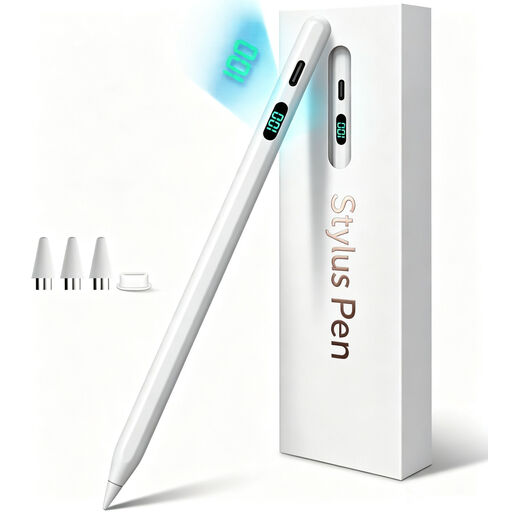 No image available
For tracing on a supported iPad. The product description lists palm rejection.
Listed as compatible with iPads from 2018–2026. Tilt detection varies line width; according to the product details, it isn’t pressure-sensitive. USB-C charging and magnetic attachment are also listed.
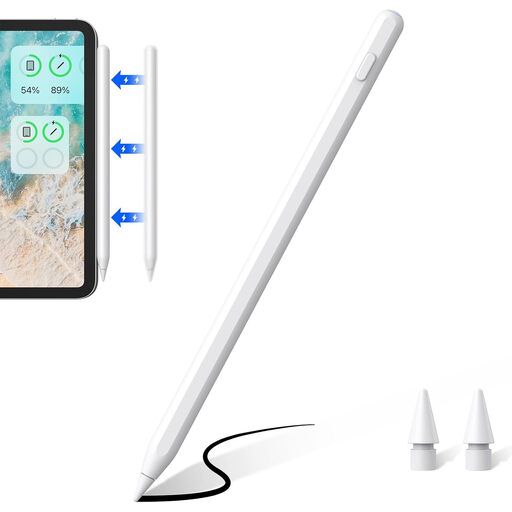 No image available
For drawing on one of the iPad models listed in the product title. The description lists palm rejection.
The product details list a 1.0-mm tip, tilt sensitivity and magnetic charging.
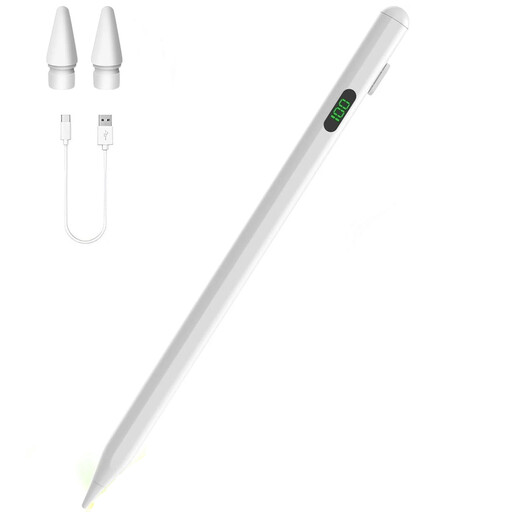 No image available
For drawing on a supported iPad. The description lists palm rejection.
Listed as compatible with iPads from 2018–2025. Tilt detection for line variation, USB-C charging and magnetic attachment are also listed.
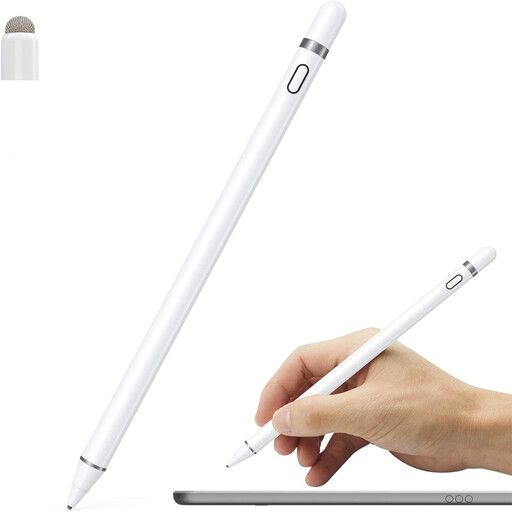 No image available
For drawing or writing on the iOS and Android touchscreens listed in the product description.
The title lists a dual-touch feature and a rechargeable design.
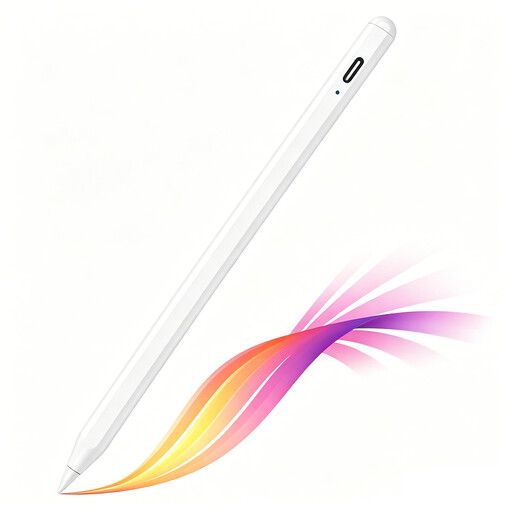 No image available
For tracing on one of the supported iPad models. The description lists palm rejection.
Tilt detection and USB-C charging are listed. According to the product description, magnetic attachment is for storage; wireless charging isn’t supported.
In Procreate on iPad, you can import a supported image file via “Actions → Add → Insert a file” and draw the lines on another layer. You can adjust the opacity of the template layer. Check the scan format; this workflow won’t necessarily work in other apps.
It depends on the model: the Apple Pencil (USB-C) charges by cable, while the Pencil Pro charges magnetically on a compatible iPad. According to STAEDTLER, Noris digital doesn’t need a stylus battery when used with a suitable EMR display. Make sure you have an easy-to-reach place to keep your stylus, and change your working position when it suits your routine. The Federal Institute for Occupational Safety and Health describes dynamically alternating between sitting and standing as sit-stand dynamics.
If a product is faulty, your statutory rights are against the seller and are separate from any voluntary guarantee. For an online purchase made as a consumer, European Union consumer information says you generally have 14 days from delivery to withdraw from the contract. Exceptions may apply, and the terms of the contract should be checked.