
Lieferung heute & morgen

Qualitätsgarantie

Willkommens-Angebote freischalten: KOSTENLOSE Lieferung | Bis zu 80 % RABATT | Kostenlose 30-Tage-JoyPlus-Testphase
App herunterladen
By Joybuy Product Recommendation Officer, August 28, 2026
A tabletop Christmas tree is a practical and festive solution for anyone looking to create a holiday atmosphere in smaller apartments, offices, or dorm rooms without sacrificing much space. However, the market is flooded with models of widely varying quality. Before you make a decision, it's crucial to understand the common pitfalls that often only become apparent after your purchase.
This guide will help you identify the key features to make an informed choice and find a durable tabletop Christmas decoration.
Many buyers focus on the appearance in product photos, overlooking functional flaws that can quickly spoil the enjoyment of their tree. Pay close attention to these three points:
To avoid these issues, you should focus on objective quality features. These three parameters are crucial for the durability and appearance of your tree.
The needle material is the most important factor for a realistic look.
Some models combine both materials, using PE for the visible outer branches and PVC for the inner filler branches.
A solid base is essential. Pay attention to the stand's material and construction. For a mini Christmas tree, the following options are recommended:
Avoid simple, lightweight plastic stands that are merely snapped together.
A tree's density is objectively measured by its number of branch tips ("tip count"). A higher number generally means a fuller, bushier tree without unsightly gaps. For a decorative Christmas tree around 90 cm tall, a tip count of 120 to 200 is a good benchmark for an appealing density.
Here are some options tailored to different needs and decorating styles that meet the quality criteria mentioned above.

Why it's a good fit: Ideal for users seeking a classic, reusable, and above all, stable tabletop Christmas tree without compromising on a realistic appearance.
The heavy cement base ensures a secure stand and prevents tipping. The branches, made of 100% PE material, offer a true-to-life appearance and minimise needle shedding.
Sturdy construction combined with a dense, realistic branch structure (143 tips). According to the manufacturer, the material is flame-retardant.

Why it's a good fit: For those seeking an elegant alternative to a classic tree. A wintry floral arrangement can serve as a stylish and low-maintenance tabletop Christmas decoration.
As a floral arrangement, this product bypasses the typical problems of Christmas trees, such as instability or needle shedding. The high-quality silk and plastic materials ensure a durable and realistic look.
Versatile and suitable for year-round use. It requires no maintenance and offers a clean, elegant decorating solution for tables, sideboards, or windowsills.
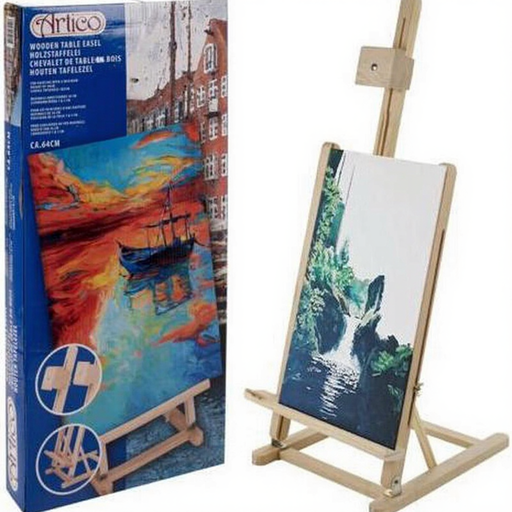
Why it's a good fit: For those who prefer a custom and artistic decoration. Instead of a tree, a painted canvas, a decorated wreath, or a framed picture can be festively displayed.
The sturdy wooden construction provides an adjustable and stable platform. This solves the instability problem common with low-quality display stands and allows for a secure presentation.
Maximum flexibility for creative and personal decorating ideas. The height and angle are adjustable, suitable for canvases up to 56 cm high.
We have compiled a comprehensive, up-to-date list of products that meet these strict selection criteria and applicable safety standards.
There's no fixed rule, as density also depends on the material and arrangement of the branches. As a guideline: for a 90 cm artificial Christmas tree, a tip count between 120 and 200 indicates good fullness. However, more important than the number alone is the combination of an adequate tip count and high-quality material like PE injection moulding.
This depends entirely on the product. Check the manufacturer's specifications for terms like "weather-resistant" or "suitable for outdoor use." Critical factors include the stability of the stand in wind and the protection of any electrical components (like string lights) from moisture. Some models, such as the aforementioned Yaheetech tree, are described as suitable for both indoor and outdoor use.
To preserve the tree's shape and quality, it's best to store it in its original box or a dedicated storage bag. A cool, dry place like a closet or basement is better than an attic with extreme temperature fluctuations. When packing, gently compress the branches, but avoid sharp bends to prevent damaging the structure.