Who are the different models suited to?

If you prepare lots of bowls

After preparing a large batch, what matters is how many bowls will actually fit in the rack. The rack layout and the shape of your bowls are more useful guides than the place-setting capacity alone. Bomann and Midea list the stated capacities of their respective models.

Households without a fixed water supply

A model with a tank may be suitable if there’s no suitable fixed water supply where you plan to put it. You’ll still need a practical way to drain the water; Midea and Medion describe tank options for their tabletop models.

Small kitchens with limited worktop space

You’ll need to consider the overall dimensions, the open door, hose routing and usable interior space together. A smaller casing doesn’t automatically mean deep or wide bowls will fit.

What should you look for when buying?

Larger model with a fixed water supply

Suitable if: You can wash a full load at once and have access to water supply and drainage where you plan to put it.

Things to consider: A higher stated capacity takes up more space; according to the manufacturer, the Bomann TSG 7405 is 55.0 cm wide.

Small model with a water tank

Suitable if: There’s no fixed water supply where you plan to put it, and you’re happy with smaller loads or running several cycles.

Things to consider: You’ll still need to plan for drainage, and a capacity of three place settings doesn’t guarantee that three deep bowls will fit at once.

Compact model connected to a tap

Suitable if: You can connect it to a suitable tap but don’t want a permanently installed machine.

Things to consider: ‘No permanent installation’ doesn’t mean ‘no water connection’: the tap, hose routing and drainage all need to work.

Buying priority What to look for Who it matters to
Lots of bowls in each cycle Compare your bowls, including their height and diameter, with the rack layout, cutlery space and stated capacity. Bomann lists six place settings and Midea three; this isn’t a count of bowls. If you want to wash as much tableware as possible together after a large preparation session, the usable rack space is what counts. This is a priority for around 29% of consumers.
Water supply and drainage Check whether the specific model uses a fixed water supply, a tank or a tap connection, and plan how the water will drain. Midea and Medion list tank options for their models. If you don’t have a suitable fixed water supply, you’ll need a practical alternative and a safe way to drain the wastewater. This is a priority for around 23% of consumers.
Space and bowl shape Compare the external dimensions, clearance for the open door and interior rack with your bowls. Bomann lists 43.8 × 55.0 × 50.0 cm and Midea 43.5 × 42.0 × 46.5 cm, in each case height × width × depth. If worktop space is limited, make sure the model, door and hoses will all fit in the intended spot. Around 18% of consumers say the available space is a deciding factor.
Wash programmes and kitchen hygiene Check the programmes and permitted load in the manual for the specific model. Don’t assume a programme name or a UV-light claim means the entire load is sterilised. If you’re washing tableware used to prepare food, you’ll need both a suitable programme and hygienic separation of kitchen utensils. Cleaning is the main priority for around 18% of consumers.
Running costs For the exact model, compare electricity use per 100 Eco cycles, water use per Eco cycle and programme duration with how often you use it. Don’t assume Eco figures apply to other programmes. The Verbraucherzentrale explains how consumption figures relate to the Eco programme. If you expect to run several cycles regularly, consider the consumption and running time of the programmes you’ll actually use. Around 12% of consumers put running costs first.

Common buying misconceptions

  • Assuming place settings equal the number of breakfast bowls that will fit

    Place settings indicate a stated capacity. Deep or wide bowls may take up space in the rack differently from the tableware used as the basis for that figure.

    Before comparing capacities, check your bowls’ dimensions against the rack layout and cutlery space of the specific model.

  • Confusing ‘no permanent installation’ with ‘no need to plan the water supply’

    A tank can replace a fixed water supply, but you’ll still need to plan for drainage. A model connected to a tap still needs a suitable water supply.

    Before buying, check the operating method in the manual, as well as the power supply, hose routing, drainage and available space.

  • Assuming Eco consumption figures apply to every programme

    Consumption figures for the Eco programme don’t automatically show how much electricity and water other programmes use.

    Compare the figures for the exact model with the programmes you actually plan to use. The Verbraucherzentrale notes that the relevant label values relate to the Eco programme.

Brands to consider

Bomann

The TSG 7405 is a tabletop model for larger, full loads of tableware, with a fixed water supply.

  • Bomann lists six place settings, a cutlery basket, and inlet and drain hoses.
  • The stated width of 55.0 cm and the need for a water supply must suit your available space. Claims about cleaning performance come from the manufacturer and aren’t based on an independent test.

Midea

According to the manufacturer, the MDWMT0305EW-WE is a smaller tabletop model that can be used with or without a fixed water supply.

  • Midea lists three place settings, a width of 42.0 cm and a foldable cutlery tray.
  • With lots of bowls, the lower stated capacity may mean you need to run extra cycles; whether your bowls fit depends on their shape and size.

Medion

According to Medion, the DWT30 (MD370022) is designed for buyers who want to choose between a fixed water supply, tank or bucket operation.

  • Medion lists three place settings and six programmes.
  • Claims about drying plastic items and the hygienic effect of UV light come from the manufacturer and aren’t backed by independent evidence of effectiveness.

Klarstein

The Oceana is a compact model with three place settings that connects to a suitable tap.

  • Klarstein lists a width of 42 cm, a maximum plate diameter of 26 cm, and inlet and drain hoses.
  • The described operation without permanent installation doesn’t mean it uses a tank: a tap and drainage are still required. Claims about efficiency and performance come from the manufacturer.

Joybuy products

This selection includes dishwashers for breakfast tableware: tabletop models and one freestanding model that isn’t a tabletop option.
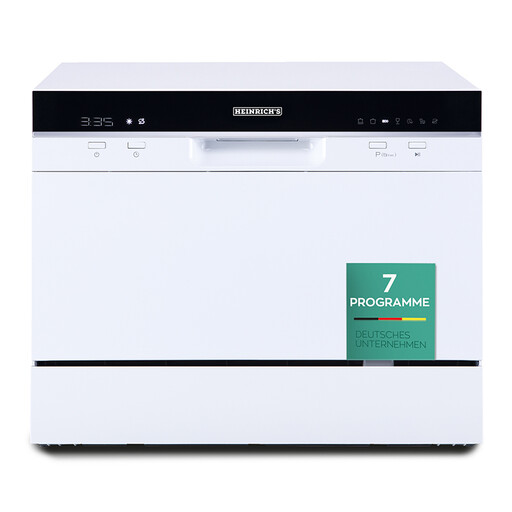
Heinrich's HTG 8840 tabletop dishwasher

Heinrich's HTG 8840 tabletop dishwasher, 6 place settings

For a larger full load, the stated capacity can be a useful point of comparison; how many of your bowls will fit depends on their shape and the racks.

The product title lists six place settings, seven programmes and a digital display.

View at Joybuy
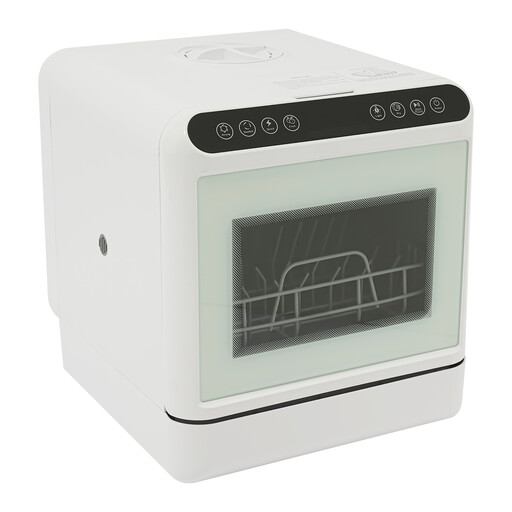
Compact tabletop dishwasher with 1.32Gal water tank

Compact tabletop dishwasher with 1.32Gal water tank

The tank mentioned in the product title is an option if you don’t want to use a fixed water supply; you’ll still need to plan for drainage.

The title also mentions hot-air drying, 72h storage and an EU plug.

View at Joybuy
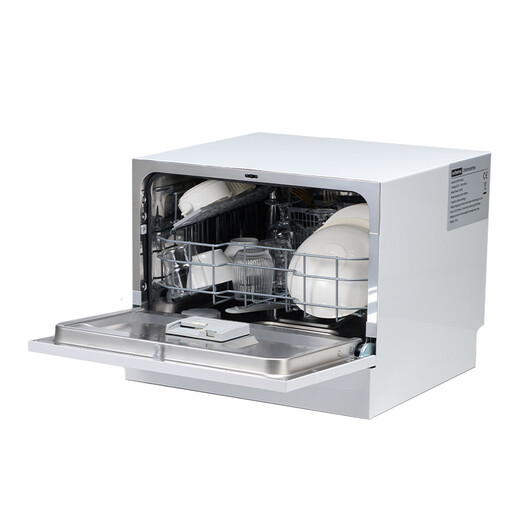
Ochama Counter-Top Dishwasher with 6 place settings

Ochama Counter-Top Dishwasher, 6 Standard Place Settings

The stated capacity may help when comparing models for a larger load of bowls, but it doesn’t tell you how many breakfast bowls will actually fit.

The product title lists six standard place settings, a 30-minute quick cycle and eight functions.

View at Joybuy

Comfee CDWMTO201D(W) dishwasher with 5-litre tank

Comfee' CDWMTO201D(W), tabletop dishwasher with 5-litre tank

The tank is an option if there’s no fixed water supply where you plan to put it; according to the product information, a tap connection is also possible.

The product title lists a built-in 5-litre tank and ‘6+3 programmes’. According to the product description, a separate adapter is required to connect it to a tap.

View at Joybuy
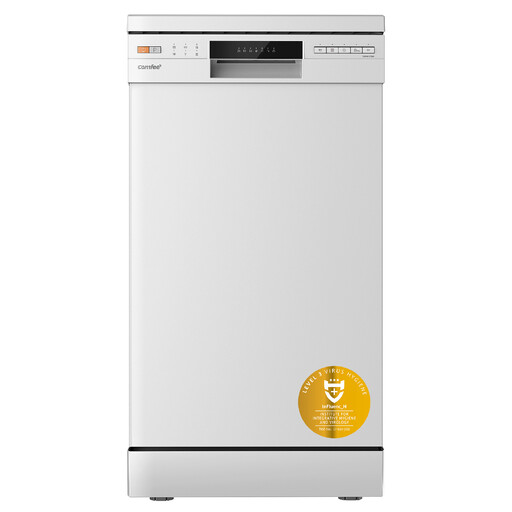
Comfee CDWEF1034BW freestanding dishwasher

Comfee' CDWEF1034BW, freestanding dishwasher with 10 place settings

This freestanding model isn’t a tabletop option. Check that you have enough space and the right connections for a freestanding appliance.

The product title lists ten place settings and energy class E.

View at Joybuy

Frequently asked questions

Are three place settings enough for three breakfast bowls?

No. The stated capacity doesn’t guarantee that three breakfast bowls will fit. Compare the height and diameter of your bowls with the rack and cutlery tray of the specific model.

Does a model with a water tank still need a connection?

With the tank models described, you may not need a fixed water supply, but you’ll still need suitable drainage and a power supply. Check the manual for the model you’ve chosen and make sure it will fit in the intended spot.

How do I compare electricity and water use if I run frequent cycles?

Compare the figures for the exact model, including electricity use per 100 Eco cycles, water use per Eco cycle and the Eco programme duration. These figures don’t automatically apply to other programmes; the Verbraucherzentrale notes that consumption figures relate to the Eco programme.

Does a hygiene programme mean I don’t need to take care when preparing frozen meals?

No. A programme name alone doesn’t prove that tableware is sterilised. The German Federal Institute for Risk Assessment recommends using separate utensils for raw and cooked foods to prevent cross-contamination.

Does the energy label also need to be visible in an online listing?

Yes. Under EU requirements, the energy label for dishwashers must also be visible in online listings. This doesn’t specify a particular efficiency class; the European Commission explains the labelling requirements.