What should you look for when buying?
First compare the load size that will actually suit your needs, then check the water supply and drainage, followed by the space available and the Eco programme’s consumption figures.
| Buying criterion |
What to check |
Who is this important for? |
| Amount of crockery and basket fit |
Compare the stated capacity and basket with the largest plates, bowls and cooking utensils you use regularly. |
If there’s a lot to wash after cooking, I want to need as few suitable loads as possible. Around 36% of consumers focus on the amount of crockery and basket fit. |
| Water supply and drainage |
Check in advance whether there’s a usable water supply and where the drain hose can go. If using a tank, follow the instructions for the model. |
If there’s no suitable fixed water supply where I plan to put the appliance, I need an alternative that works without overlooking wastewater drainage. Around 29% of consumers prioritise flexible connection options. |
| Available space and crockery dimensions |
Measure the available height, width and depth, including room for the door to open and the hose to be routed; check the basket dimensions for plates and bowls. |
With limited free worktop space, I want to be sure the appliance and the crockery I use most often will fit where I plan to put it. Around 21% of consumers prioritise available space and crockery dimensions. |
| Electricity, water and noise |
Check the specific model’s Eco consumption, Eco programme duration and noise level on a comparable basis, and consider how often you’ll use it. |
When weighing up running costs and noise, I need figures for the exact model rather than a general promise. Around 14% of consumers put these criteria first. |
Tabletop dishwashers at Joybuy
A selection of tabletop dishwashers for everyday use at Joybuy; capacity and water supply options vary by model.
 No image available
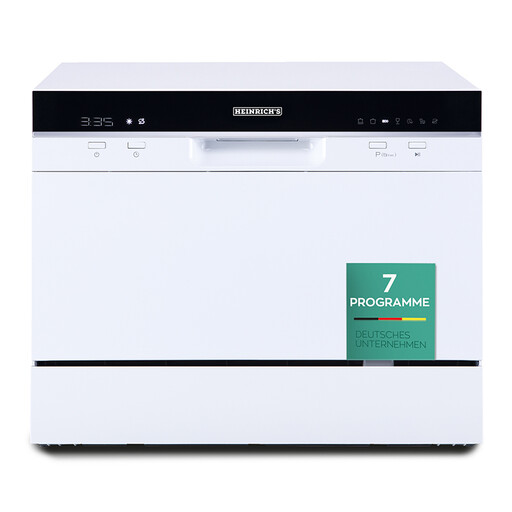
Heinrich's HTG 8840, white
An option if you regularly have larger loads to wash and there’s a water connection where you plan to put the appliance.
The product details list six place settings, seven programmes and 6,5 l of water per cycle.
View at Joybuy
 No image available
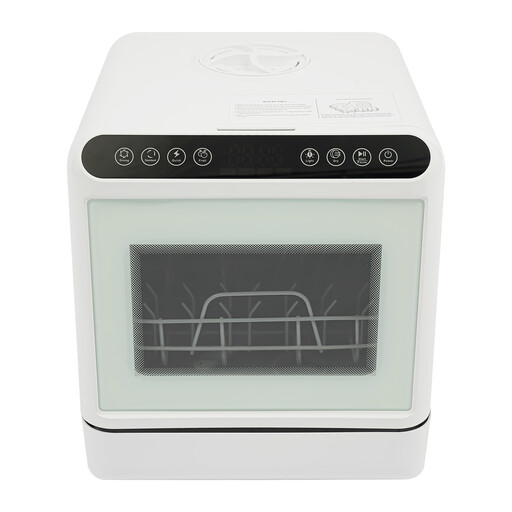
Tabletop dishwasher with a 6-l water tank
May suit you if you don’t want to use a fixed water supply where you plan to put the appliance and a tank model works for your day-to-day needs.
The product description lists a 6-l tank and says it is suitable for 4–6 people.
View at Joybuy
 No image available
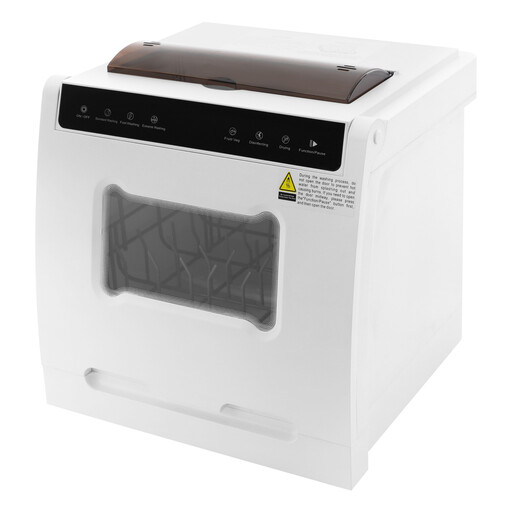
White tabletop dishwasher with 6 wash modes
An option if you’d like to compare a tabletop appliance with several wash modes.
The product description lists six wash modes, including standard and quick programmes.
View at Joybuy
 No image available
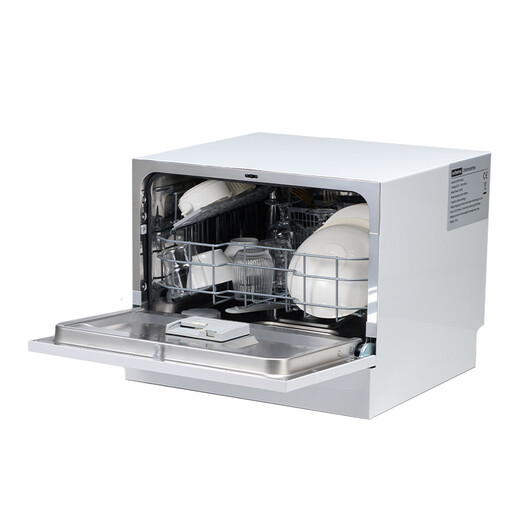
Ochama tabletop dishwasher, 6 standard place settings
Worth considering if you’re looking for a larger stated capacity to suit the space available.
The title lists six standard place settings; the product description lists a 30-minute quick programme.
View at Joybuy
 No image available
Comfee' CDWMTO201D(W), white
An option if you don’t want to use a fixed water supply or are considering a tap connection.
The product details list a manually filled 5-l tank, the option of a tap connection and a maximum plate diameter of 250 mm.
View at Joybuy
Frequently asked questions
How can I tell whether my everyday crockery will fit?
Measure your largest plates and bowls, then check the basket layout and the manufacturer’s details for the exact model. The number of place settings is useful for comparison, but doesn’t guarantee that bulky cooking equipment will fit.
Can I use a tank model without a fixed water connection?
A tank can replace a fixed water supply, but not wastewater drainage. Midea describes the MDWMT0305EW-WE as suitable for use with or without a water connection; check the instructions for drainage and setup at the specific location.
How can I use and care for my dishwasher as efficiently as possible?
The German Environment Agency recommends running the appliance with a full load and using the Eco programme; pre-rinsing with warm water should be avoided. If your appliance has water softening, you should also check the water hardness and the manufacturer’s advice on regeneration salt or suitable tablets.
What running costs and post-purchase rights should I consider?
To estimate your own costs, you’ll need the Eco consumption figures for the specific appliance, how many cycles you run, and your electricity and water prices. In Germany, statutory warranty rights against the seller are separate from a voluntary guarantee; the consumer advice centre explains that new goods are generally covered by a two-year statutory warranty period.
What does the energy label tell me, and where should I take an old appliance?
In the EU, household dishwashers have an energy label rating from A to G. The European Commission lists Eco consumption and noise among the information shown on the label. According to Germany’s Federal Environment Ministry, a discarded electrical appliance should go to an authorised collection point, such as a local authority recycling centre.


