If your temporary kitchen has no usable mains water connection, a tabletop dishwasher with a manually filled tank could be an option – provided you can drain the wastewater safely. If a suitable connection is available, focus on the cutlery basket or tray, the space it needs and comparable Eco consumption figures. The number of place settings does not guarantee space for a specific quantity of cutlery.
Who is a tabletop dishwasher suitable for?
Renovating without a fixed water supply
If there’s no mains water connection available while your kitchen is being renovated, a model specifically designed to use a tank could be an option. You’ll still need an accessible way to drain the wastewater. Bomann and MEDION list tank options for certain models.
Households with lots of everyday cutlery
If you want to wash cutlery alongside smaller dishes, compare your usual load with the space available in the specific model’s basket or on its cutlery tray. The manufacturer’s place-setting capacity doesn’t tell you how many individual pieces of cutlery will fit.
Households short on space
When worktop space is limited, you’ll need to allow for the appliance’s dimensions, the open door and the hose route. Bomann and Midea list the dimensions of their respective tabletop models; make sure there’s enough room to use the appliance as well.
What should you look for when buying?
Tabletop model with a manually filled tank
Suitable if: there’s no usable mains water connection during the renovation and you have a safe way to drain the wastewater.
Keep in mind: The tank doesn’t replace wastewater drainage. You’ll still need to fill it by hand, and the interior space will be limited.
Tabletop model with a water connection
Suitable if: a compatible tap or fixed connection, along with a drain, remains accessible during the renovation.
Keep in mind: Where you can position the appliance and route the hoses depends on the connections actually available.
Larger tabletop model with a connection
Suitable if: you regularly wash dishes as well as cutlery, have enough space and can still use the water connection.
Keep in mind: A higher place-setting capacity won’t solve a connection or space problem, and doesn’t tell you whether there’s room for your usual cutlery load.
During a kitchen renovation, the main things to consider are the water supply and drainage, space for cutlery, the room available and consumption when the dishwasher is sensibly loaded.
| Consideration |
What to check before buying |
Who is it important to? |
| Water supply and drainage |
Check whether the specific model can run from a tank, and make sure there’s an accessible drain and a suitable hose route. |
If I can’t use a fixed mains water connection during the renovation, I need a practical way to fill the dishwasher and drain the wastewater. Around 36% of consumers prioritise being able to use a dishwasher without a fixed water supply. |
| Space for cutlery |
Compare your usual cutlery load with the model’s basket or tray; only load cutlery labelled as dishwasher-safe. |
If I want to machine-wash knives, forks and spoons regularly, my usual load needs to fit in the space provided. Around 29% of consumers say space for cutlery is their main priority. |
| Space for the appliance |
Allow for the appliance’s dimensions, the door opening and the inlet and outlet hoses together. |
With limited worktop space during a renovation, I need enough room to position the appliance and open it. Around 21% of consumers say the space available is their main priority. |
| Consumption per cycle |
Compare Eco figures on a like-for-like basis and consider how many suitably full loads you’re likely to run. |
If I often wash only a small amount of cutlery, I want to know whether I can save up other suitable dishes to wash in the same cycle. Around 14% of consumers prioritise consumption and effort. |
The European Commission describes the Eco consumption figures on the EU energy label for the household dishwashers it covers. The Verbraucherzentrale NRW explains the electricity and water figures. The German Environment Agency recommends running dishwashers as full as possible on the Eco programme. So don’t compare figures from different programmes without checking the details.
Common buying misconceptions
-
‘No water connection’ doesn’t mean ‘no wastewater drainage’
A tank can replace a fixed mains water supply, but it can’t drain the wastewater. For the Bomann TSG 5702, the manufacturer lists a drain hose.
Before buying, decide where the water can be drained safely throughout the entire wash cycle, and check the hose route at your intended location.
Allow extra time or materials for a safe temporary drainage solution if needed.
-
Place settings don’t indicate a set number of cutlery items
The place-setting capacity doesn’t tell you whether your particular mix of knives, forks and spoons will fit in the basket or on the tray. Manufacturers offer different cutlery storage options.
Compare your usual cutlery load with the interior of the specific model, and follow the care instructions for your cutlery.
Smaller loads may mean you need to run extra cycles; how often depends on how you use the dishwasher.
-
Don’t compare Eco figures with those for other programmes
The EU energy label is based on defined Eco conditions. Figures for other programmes or lightly loaded cycles aren’t directly comparable.
The European Commission describes the A to G energy label scale, which has applied since 1 March 2021. Compare appliances using the same label figures, and consider how full you expect to load them.
Key brands at a glance
Bomann
The TSG 5702 is a tabletop model with a tank, a dedicated cutlery basket and trays.
- Bomann lists a 5-litre tank, plus inlet and drain hoses supplied with the appliance.
- A capacity of three place settings doesn’t guarantee space for a specific number of individual cutlery items. The manufacturer lists an operating noise level of 58 dB.
MEDION
Features vary by model: the LIFE DWT30 (MD370022) is described as offering tank, mains connection and bucket modes; the DWT60 (MD37496) is specified for six place settings and a water connection.
- MEDION lists three operating modes for the DWT30; the manufacturer lists six place settings for the DWT60.
- The DWT30’s three operating modes don’t apply to the DWT60. The DWT30’s cleaning and drying claims come from the manufacturer.
Midea
The MDWMT0305EW-WE is a tabletop model with three place settings and a folding cutlery tray.
- Midea lists dimensions of 435 × 420 × 465 mm in height × width × depth order, as well as six programmes and a self-cleaning function.
- Joybuy lists the model as MDWMT0305EW in the description, but MDWMT0305EW-WE in the specifications. Check the full model name before choosing.
HAVA
According to the manufacturer, the R09 is a tabletop model with a tank and three place settings.
- HAVA lists a 5-litre tank and dimensions of 43 × 43 × 46 cm.
- Wastewater still needs to be drained when using the tank. The manufacturer’s cleaning and drying claims aren’t independent test results.
Klarstein
The Oceana 10048548 is an alternative with a water connection if a suitable tap remains accessible during the renovation.
- Klarstein lists three place settings and inlet and drain hoses, each 150 cm long.
- The manufacturer specifies a connection to a tap, not a water tank. Comparisons with handwashing and claims about noise are made by the manufacturer.
Joybuy products for a temporary kitchen
These products offer different options for a temporary kitchen. Check the water supply, drainage and space for your cutlery load for each model.
 No image available
AIRMSEN tabletop dishwasher, 5+1 programmes, 5-litre tank
Could suit a temporary kitchen without a fixed mains water connection; the wastewater needs to be collected in a container.
The product name specifies a built-in 5-litre tank, 5+1 wash programmes and a double-tempered glass door.
View at Joybuy
 No image available
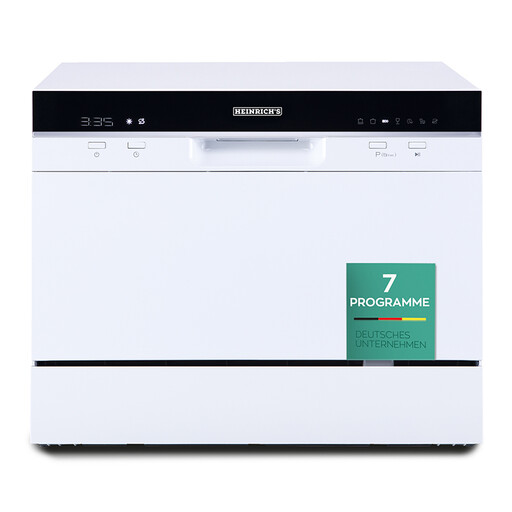
Heinrich's HTG 8855 tabletop dishwasher
Specified as a tabletop appliance for a temporary kitchen; check that its connection options suit the setup before buying.
The product name lists three place settings, seven programmes, 56,3 dB and energy class C. It describes operation with or without a water connection.
View at Joybuy
 No image available
Heinrich's HTG 8840 tabletop dishwasher
Could be a good fit if a suitable water connection and drain remain available during the renovation.
The product name lists six place settings, seven programmes, 47 dB and energy class D.
View at Joybuy
 No image available
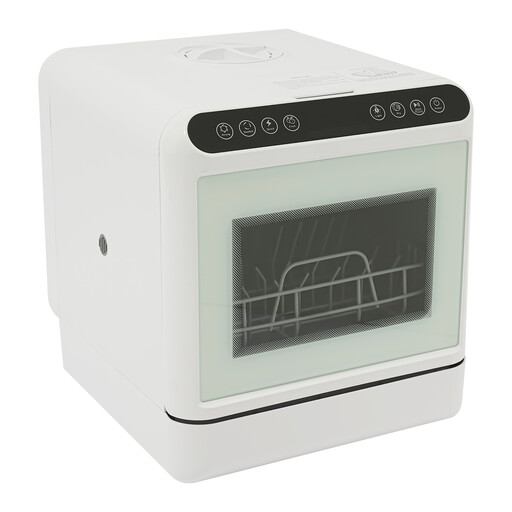
Compact tabletop dishwasher with 1.32Gal tank
The tank could be useful in a small kitchen without a fixed mains water connection; make sure you plan for drainage too.
The product name lists a built-in 1.32Gal water tank, hot-air drying and 72h storage.
View at Joybuy
 No image available
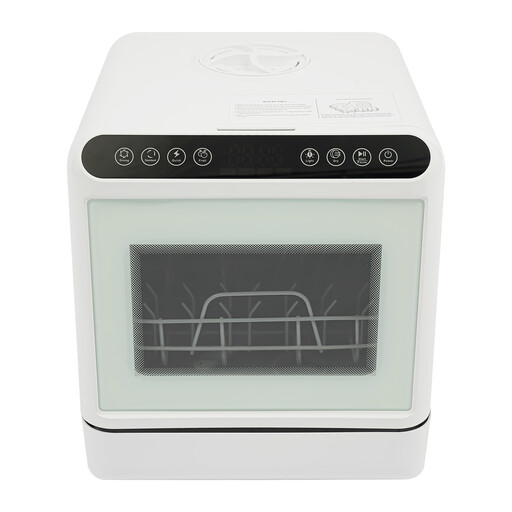
Tabletop dishwasher with 6-litre water tank
The tank is an important feature if you can’t use a fixed mains water connection during the renovation; also check where the wastewater will drain.
The product name lists a built-in 6-litre tank and touch controls.
View at Joybuy
Frequently asked questions
Can a tank-fed tabletop dishwasher work without any water connection?
A model specifically designed for tank operation can work without a fixed mains water supply. The wastewater still needs to drain safely, so check the hose and temporary location before buying.
Can I load any cutlery in with the dishes?
No. Follow the cutlery manufacturer’s care instructions and only use cutlery that’s dishwasher-safe. According to the Verbraucherzentrale, the glass-and-fork symbol indicates that an item is suitable for contact with food; it doesn’t automatically mean it’s dishwasher-safe. Arrange cutlery so the water jets can reach its surfaces. The Verbraucherzentrale advises against washing wooden utensils in the dishwasher.
How can I compare the consumption of different dishwashers?
For a like-for-like comparison, check the EU label figures for electricity use per 100 Eco cycles and water use per Eco cycle. The Verbraucherzentrale NRW points out that Eco figures don’t show the consumption of every other programme. For a more personal estimate, also consider how many cycles you’re likely to run and how full you’ll load them.
In Germany, what’s the difference between a statutory warranty and a guarantee if a product develops a fault?
The statutory warranty is a claim against the seller; a guarantee is an additional voluntary benefit subject to its own terms. If a product is faulty, you can initially request that the seller puts it right by repairing or replacing it. For purchases made from 31 July 2026, the Verbraucherzentrale describes an extension of the statutory warranty period from two to three years if the fault is remedied by repair within the initial two-year period. The conditions of each individual case apply.


