What should you look for when buying?
First, consider how much cutlery needs washing at once and what water connections are available where you plan to put the appliance. You can then assess the dimensions, energy and water use, and noise levels of the specific model.
| What matters when buying |
What to check |
Who is it most relevant to? |
| Cleaning and handling shared cutlery |
Check the cutlery basket or rack, suitable programmes and care instructions for the specific model. |
If I’m washing cutlery used by different people, I want to load it correctly and choose a programme to suit how dirty it is. Around 33% of shoppers put cleaning first. |
| Usable cutlery space and room for the appliance |
Check the interior layout and cutlery storage; measure the external dimensions and the space needed with the door open. |
If we have lots of cutlery to wash at once, it needs to fit in the storage area without taking up too much room. Shoppers mainly concerned with capacity and available space account for around 27%. |
| Water supply and drainage |
Check the type of water supply, the required drainage and whether the appliance can be installed in your chosen location, using the instructions. |
If there’s no permanent water supply, I need a suitable way to fill the appliance and still have to plan for drainage. Around 27% of shoppers are most concerned about this connection flexibility. |
| Energy and water use, and noise |
Compare kWh per 100 Eco cycles, litres per Eco cycle, Eco programme duration and dB(A) on the same basis. |
If the appliance is used in a shared space, I want to take comparable energy, water and noise figures into account. Around 13% of shoppers are mainly concerned with running costs and noise. |
EU energy label figures for household dishwashers are based on the Eco programme at rated capacity. The Verbraucherzentrale recommends comparing electricity use in kWh per 100 Eco cycles and water use in litres per Eco cycle; these figures can’t be used to determine consumption on other programmes.
Joybuy product selection
This selection includes tabletop dishwashers with six place settings, as well as models with tank operation for shared cutlery. Check the capacity, cutlery storage and water connections at your chosen installation location for each model.
 No image available
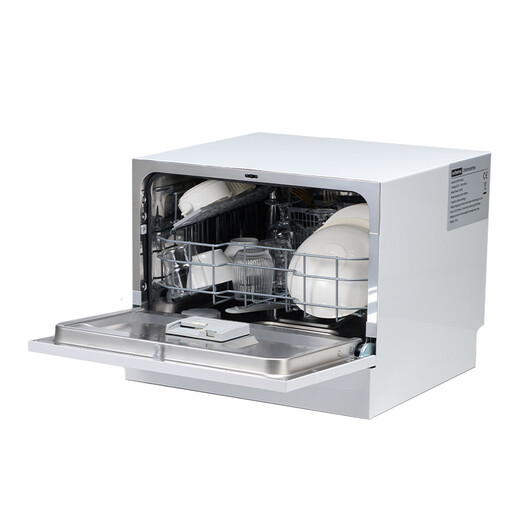
Ochama tabletop dishwasher, six place settings
Could suit shared cutlery if the stated capacity and interior layout meet your needs.
The product details list six standard place settings, eight programmes, a 30-minute quick wash and a 24-hour delay start.
Joybuy
 No image available
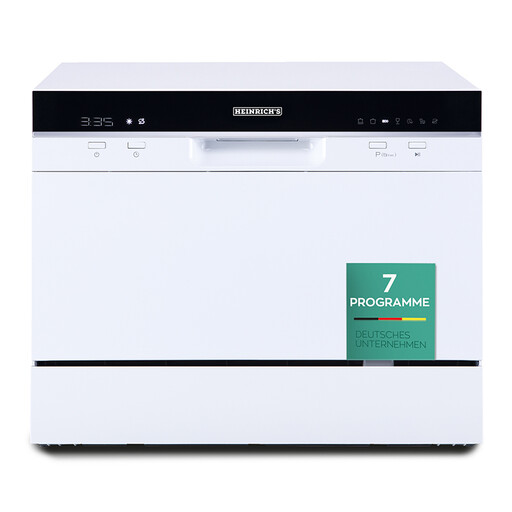
Heinrich's HTG 8840, six place settings
An option for shared cutlery if there’s a suitable water supply and drain, and six place settings are enough for your load.
The product details list a cutlery basket, water inlet hose and drain hose. The appliance is described as being for domestic use only; this doesn’t establish its suitability for use in a food business.
Joybuy
 No image available
AIRMSEN tabletop dishwasher with 5-litre tank
Could be a good fit if tank operation is useful at your chosen location and the smaller capacity is enough for your needs.
The product details list four place settings, an integrated 5-litre tank and the option to connect to a tap. Larger shared loads may need extra cycles.
Joybuy
 No image available
Heinrich's HTG 8855, three place settings
A smaller tank option if you have modest loads and no permanent water supply where you plan to put it.
The product details list a 5-litre tank, seven programmes and a cutlery basket. Larger shared loads may need extra cycles; the appliance is described as being for domestic use.
Joybuy
 No image available
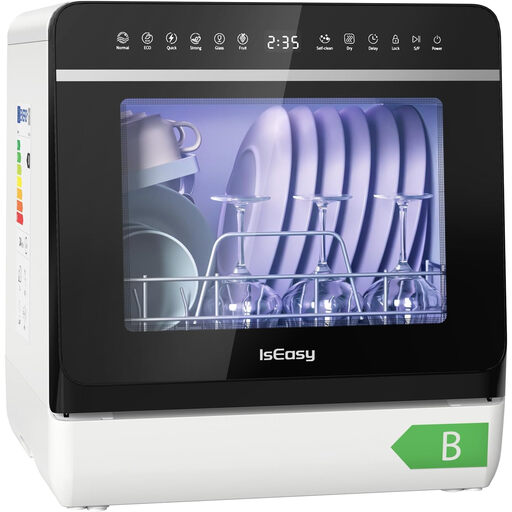
Tabletop dishwasher with 5-litre tank, three place settings
Could suit small loads without a permanent water supply, provided a suitable drain can be set up at your chosen location.
The product details list three place settings, a cutlery basket and seven programmes. Using the tank doesn’t remove the need to plan for drainage.
Joybuy
Frequently asked questions
Can you use a tank model without a water connection straight away?
Not just because it has a tank. According to the manufacturer, the Midea MDWMT0305EW-WE can be used with or without a water connection. You’ll also need to check the required drainage and make sure you have a suitable place for it.
How can we compare electricity and water use fairly?
Compare the figures on the specific EU energy label: electricity in kWh per 100 Eco cycles and water in litres per Eco cycle. The label test uses the Eco programme at rated capacity; figures for other programmes can’t be inferred from it.
What should users agree on when it comes to cleaning and care?
Only load cutlery that’s suitable for the appliance, following the instructions, and choose a programme to match how dirty it is. Use detergent and, where needed, salt and rinse aid according to the appliance instructions and water hardness. You should also agree who will take care of regular appliance maintenance.
What ongoing costs and service considerations should you include in your decision?
Factor in Eco consumption figures relevant to how you’ll actually use the appliance, as well as detergent and, where needed, salt, rinse aid and any connection parts required. EU ecodesign rules also cover the availability of spare parts and repair information; the specific model variant determines the service and accessories available.
Do the same food hygiene rules apply to a private house-share kitchen as to a catering business?
No. The fact that several people use the kitchen doesn’t change this: the EU Food Hygiene Regulation excludes the preparation, handling and storage of food for private domestic consumption in the home. If the kitchen is used by a food business, that use must be assessed separately; this doesn’t mean that a domestic tabletop dishwasher is automatically approved for commercial dishwashing.


