Holiday home without a suitable water inlet
You want to wash mugs in a machine, but there’s no usable water inlet where you plan to put it. A tank model could work if you also plan for filling it and draining the waste water.


If there’s no usable water inlet where you plan to put it, a manually filled tank model could be an option; you’ll still need electricity and a suitable way to drain the waste water. If you regularly have lots of mugs to wash and have the necessary connections and space, a larger plumbed-in model may be more practical. Before buying, check the size of your mugs, the basket layout, the space needed for the appliance and its door, and the consumption figures for the Eco programme.
You want to wash mugs in a machine, but there’s no usable water inlet where you plan to put it. A tank model could work if you also plan for filling it and draining the waste water.
You have a large number of mugs to wash after breakfast or a changeover. The key things are a suitable basket layout and enough space for the mugs you actually use.
You usually wash only a few mugs and need to check the appliance and door measurements against your small holiday-home kitchen. Remember to allow space for hoses and connections at the planned location, too.
Suitable if: there’s no suitable inlet where you’ll use it in the holiday home and you’ll generally be washing smaller loads.
Allow for: filling it by hand and safely draining the waste water; you’ll still need electricity.
Suitable if: you have a water inlet, a drain and enough space, and regularly have lots of mugs to wash.
Allow for: the manufacturer lists the Bomann TSG 7405 as 55,0 cm wide and 50,0 cm deep; you’ll also need space to route the hoses.
Suitable if: you have a water connection but only a few mugs to wash and limited space.
Allow for: the manufacturer says the Klarstein Aquatica 10047348 holds two place settings; washing larger numbers of mugs may mean running extra cycles.
| What you need | What to check before buying | Who is this important to? |
|---|---|---|
| Water inlet and drainage | Check for a suitable water inlet, power socket, hose routing and drainage point at the intended location. | If there’s no fixed water inlet where I’ll use it, I need a tank model and still have to drain the waste water safely. Around 36% of consumers put the lack of a water inlet at the top of their list. |
| Number of mugs per cycle | Work out how many mugs you typically have after breakfast or a changeover; don’t assume that place settings equal a guaranteed number of mugs. | After a changeover, I want to wash lots of mugs in as few cycles as possible. Around 29% of consumers prioritise finding the right capacity. |
| Space and mug fit | Measure your largest mugs, including their handles, and check the basket, cup rack, appliance and door measurements, and space for the hose in the model specifications. | In a small kitchen, the appliance and its open door need to fit; tall mugs must also sit securely in the basket with their handles. Around 21% of consumers prioritise available space and mug fit. |
| Consumption and care | Compare Eco programme figures on the same basis, and take account of detergent and, where necessary, salt, following the appliance instructions and considering your water hardness. | For occasional use, I want to understand consumption and care requirements rather than relying on general claims about saving money. Around 14% of consumers put running costs at the top of their list. |
A tank model still needs to drain the wash water once the programme has finished.
Plan how you’ll drain the water at the intended location before buying. A tank model also takes time to fill and requires you to deal with the waste water; a collection container may take up extra space.
The stated capacity doesn’t tell you whether tall or wide mugs will fit in the basket with their handles. If the fit isn’t right, you may need to run extra cycles.
Measure your largest mugs and check the basket layout and any cup rack for the exact model.
The standardised electricity and water figures on the energy label refer to the Eco programme, not to every other setting.
Compare label figures on the same basis and, if you use the dishwasher differently, check the programme instructions.
The HAVA R01 is a tank option for a holiday-home location without a fixed water inlet.
According to the manufacturer, the TSG 7405 is a plumbed-in model for larger amounts of washing up.
The Aquatica with product code 10047348 is a smaller plumbed-in option for lighter loads.
According to the manufacturer’s website, the MDWMT0305EW-WE holds three place settings.
The Bob complete package is another tank option if you don’t want a fixed water supply.
This selection features tabletop dishwashers with water tanks for machine-washing mugs in a holiday home. Even when using a tank, you’ll need to make sure there’s a power supply and a way to drain the waste water at the intended location.
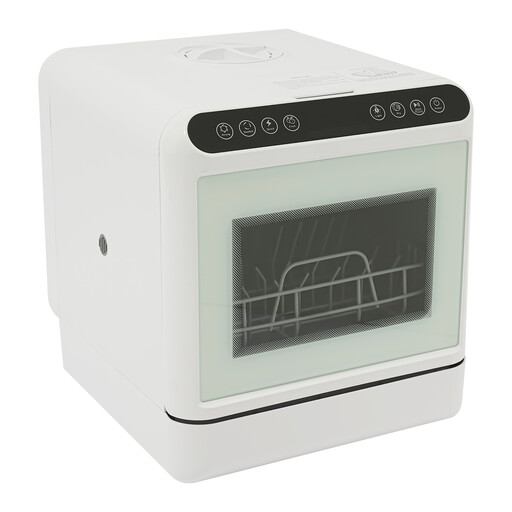 No image available
The integrated tank suits a location without a fixed water inlet; make sure you have a suitable way to drain the waste water.
The product title mentions hot-air drying, 72-hour storage, capacity for 4–6 people and an EU plug. Check that your mugs fit in the basket.
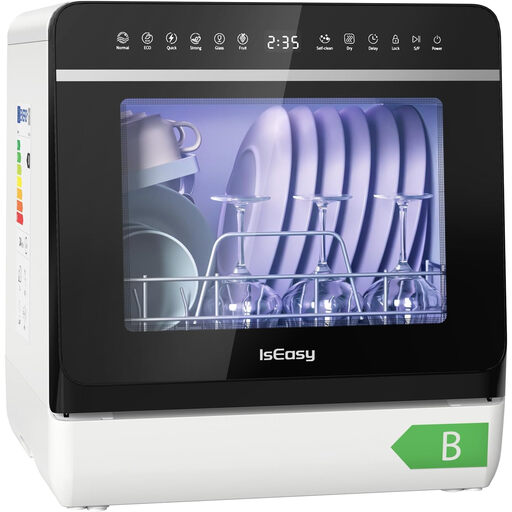 No image available
The tank mentioned in the product title is useful for a location without a fixed water inlet; the waste water still needs to be drained appropriately.
The product title describes a slim appliance with a 5-litre water tank. Before buying, compare the dimensions and basket layout with your largest mugs.
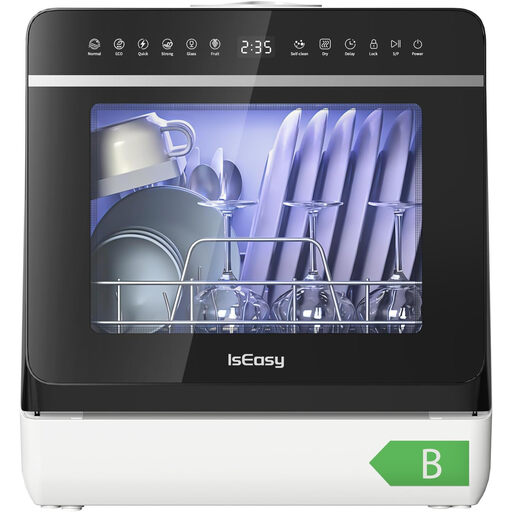 No image available
Tank operation is an option if there’s no fixed water inlet at the intended location; check the drainage route in advance.
The product title mentions a water tank and a flexible hose. Check the connection and basket details on the specific product page, as well as whether your mugs will fit.
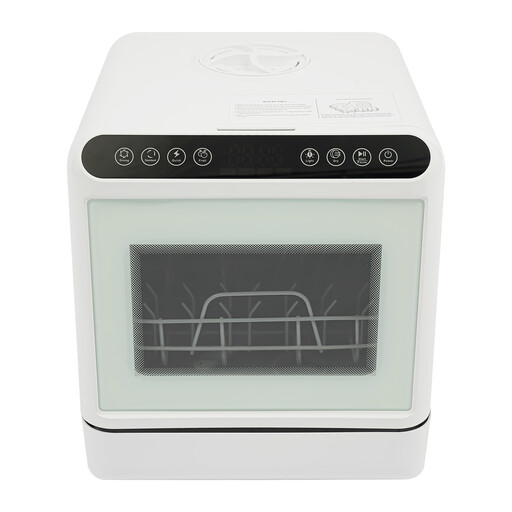 No image available
The tank mentioned in the product title could suit a location without a fixed water inlet; you’ll still need a way to drain the waste water.
The product details list a 6-litre tank and touch controls. The description says that an earthed 220–240-V socket is required.
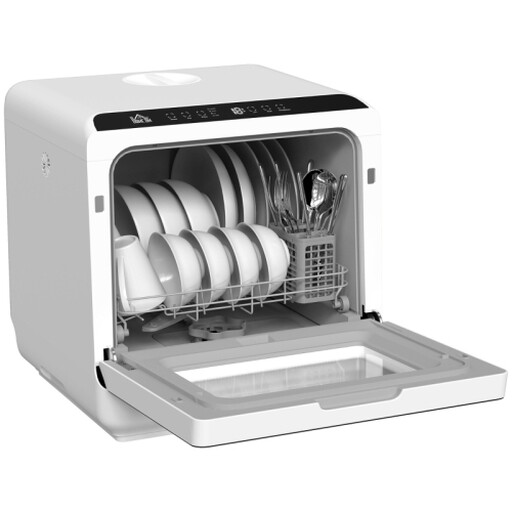 No image available
Tank operation could suit a holiday-home location without a fixed water inlet, provided you can drain the waste water safely.
The product title mentions five programmes, an LED display and a drying function. Check that your mugs fit and that the connections are suitable for how you plan to use it.
A tank model that you fill by hand doesn’t need a fixed water inlet, but it still needs electricity and a suitable drain. For the HAVA R01, the manufacturer specifies a drain hose that can be run to a sink or bucket.
The glass-and-fork symbol indicates that an item is suitable for contact with food; it doesn’t mean it’s dishwasher-safe. Check the separate cleaning instructions for each mug.
Compare EU energy label figures on the same basis. These include electricity per 100 Eco cycles, water per Eco cycle, programme duration, place settings and noise level. Eco programme figures aren’t measurements for every other programme setting.
Follow the care instructions for the specific appliance, and use detergent and, where necessary, dishwasher salt in line with the manufacturer’s guidance and your water hardness. The German Environment Agency recommends loading the machine as fully as possible for an efficient wash and not pre-rinsing dishes with warm water.
No. Your statutory rights cover claims against the seller if goods are faulty; a manufacturer’s guarantee is separate and subject to its own terms. When buying, check who the seller is and who to contact.