People living alone with very little worktop space
If you wash smaller loads, weigh up the appliance’s width and depth, and the space needed in front of the door, against the basket’s usable capacity.


First, measure the available width and depth, and allow for the door to open and the hoses to run. A tank-fed model may suit you if you have a small amount of washing up or no suitable water supply; if you regularly have more dishes to wash, a larger model that connects to the water supply may be worth considering, although it will take up more space. Also check that your crockery fits in the basket and compare the Eco figures on the European Commission’s EU energy label.
If you wash smaller loads, weigh up the appliance’s width and depth, and the space needed in front of the door, against the basket’s usable capacity.
If you’d rather collect plates, cups and cutlery than run the dishwasher frequently because it’s too small, look for models with a capacity of five or six place settings and measure the available space first.
A tank-fed model may be an option if there’s no suitable fixed water supply. You’ll still need to plan for filling the tank and safely draining the waste water.
First, check that the appliance and its connections will fit in the space you have in mind. Then consider which basket capacity, energy and water consumption, and noise levels suit your everyday needs.
| What matters | What to check before buying | Who it matters most to |
|---|---|---|
| Space and fit | Check the appliance’s height, width and depth, as well as the door opening and hose route where you plan to install it. | If there’s very little free worktop space, I want to fit the door opening and hoses in too, without unnecessarily restricting the area I have for food preparation. Around 36% of consumers say space is their main concern. |
| Capacity for everyday dishes | Check your plates, bowls and cutlery against the basket, clearance around the spray arm and the specifications for the exact model. | If I have several items to wash every day, I want to fit as many as possible into one cycle. Around 29% of consumers put capacity for their everyday dishes first. |
| Water supply and drainage | Check whether the model uses a tank or a water supply, whether there’s a suitable drain within reach, and the hose lengths specified in the installation instructions. | If there’s no suitable water supply where I plan to put the appliance, I want to know in advance whether filling it and draining the waste water will be practical. Around 21% of consumers prioritise the connections. |
| Energy, water and noise | For the same model, compare Eco energy consumption per 100 cycles, water consumption per cycle, programme duration, capacity and noise level. | If the appliance will be used frequently or placed near a living area, I want to take its energy and water consumption and noise level into account. Around 14% of consumers pay particular attention to running costs and noise. |
The stated appliance dimensions include its height, width and depth. You’ll also need to allow for the door to open and the connected hoses to fit in the space you’ve chosen.
Measure the entire space and check the installation instructions before buying, rather than relying on an advertised width alone.
An unsuitable location may mean extra work to route the hoses or find somewhere else to put the appliance.
A tank can replace a fixed water supply, but you’ll still need a suitable way to drain the waste water.
Plan where the drain hose will go and follow the installation instructions for the model you choose.
With a tank-fed model, filling the tank is part of the routine; you’ll also need to plan how to drain the water safely.
A place setting describes a standard set of dishes, but it doesn’t tell you on its own whether your pans, bowls or large plates will fit in the basket.
Check your largest frequently used items against the basket and the specifications for the exact model.
Items that don’t fit in the basket may need to be washed separately.
The EU energy label shows Eco consumption figures and capacity, among other details. The German Environment Agency recommends running dishwashers on the Eco programme with a full load.
Compare the model-specific energy and water figures, along with capacity and how full you usually load the machine.
The models listed offer options for different amounts of space and types of connection.
The MDWMT0305EW-WE is an example of a model that holds three place settings and can be used with or without a water supply connection.
According to the manufacturer, the DWT50 (MD 37775) is designed for five place settings and a water supply connection.
According to the manufacturer, the specific Oceana version described holds three place settings.
The SKS51E38EU is a freestanding compact dishwasher with a capacity of six place settings.
The tabletop dishwashers below include compact tank-fed options as well as models for different amounts of washing up.
 No image available
A compact option if you need space for three place settings and want to choose between a tank and a direct water connection.
The product name lists three place settings, seven programmes, 56.3 dB and energy efficiency class C.
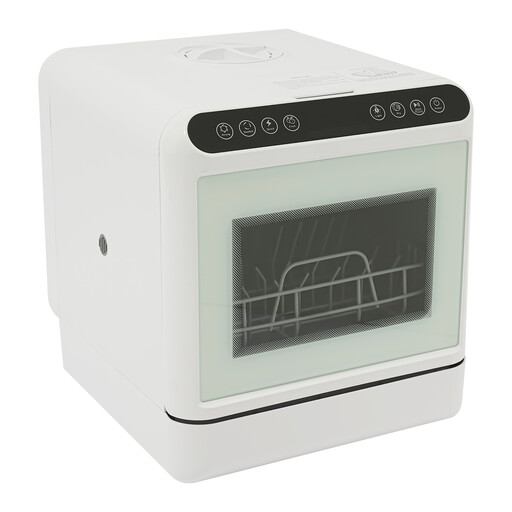 No image available
An option if you’re looking for a compact appliance with an integrated tank and its stated capacity for four to six people suits your needs.
The product name lists a 1.32Gal tank, hot-air drying and a 72-hour storage function.
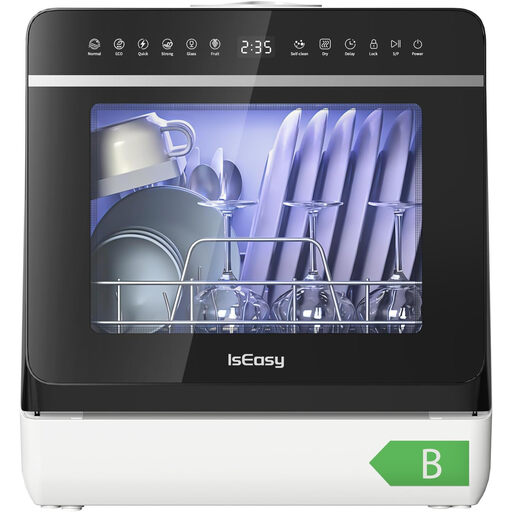 No image available
An option if you’re considering an appliance with a water tank rather than one that relies solely on a fixed water supply.
The product name lists a water tank and a flexible hose. Check the installation dimensions and drainage requirements before buying.
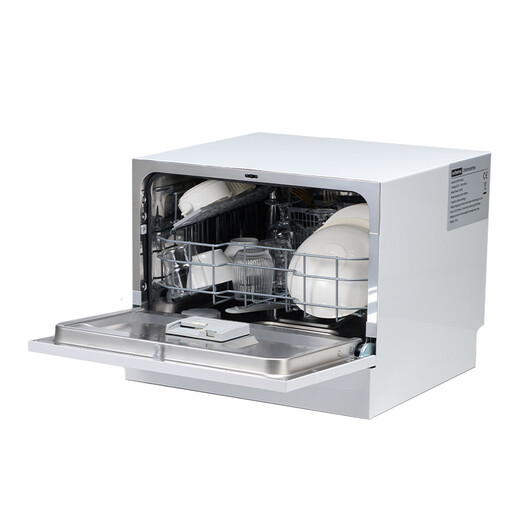 No image available
An option if you want to wash more dishes regularly and a capacity of six standard place settings suits your everyday needs.
The product name lists a 30-minute quick wash, a 24-hour delay start and eight functions.
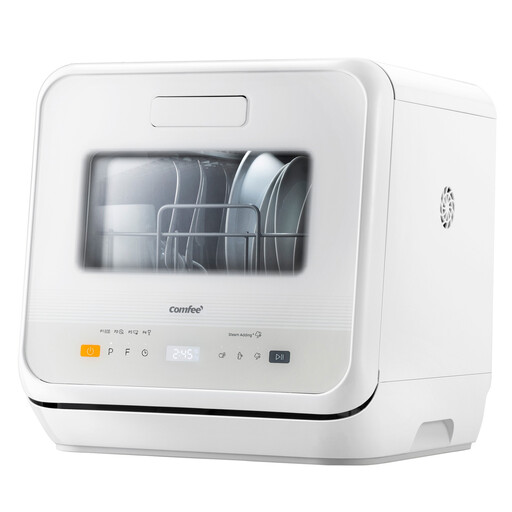 No image available
An option if you’re looking for a model with an integrated tank and the energy efficiency class stated in the product name: D.
The product name lists a 5-litre tank, 6+3 programmes and energy efficiency class D.
Not necessarily. Place settings describe standardised dishes, but don’t automatically indicate whether there’s room for pots. Check your largest items against the basket and the maximum plate diameter for the exact model.
A tank can replace a fixed water supply, but not the need for a waste-water drain. Make sure there’s a suitable drain and follow the installation instructions for the model you choose.
The German Environment Agency recommends running the machine on the Eco programme with a full load wherever possible. Follow the appliance instructions for detergent, rinse aid and dishwasher salt, and take your local water hardness into account.
The European Commission’s EU energy label includes the energy efficiency class, Eco energy consumption per 100 cycles, water consumption per cycle, programme duration, capacity and noise level, among other details. Compare the label for the exact model.