What should you look for when buying?
For breakfast bowls, the number of place settings isn’t the only thing that matters. The basket shape, water supply and usable space all need to suit life in a shared kitchen.
Tank model for smaller loads
A good fit if: there’s no suitable mains water supply and you’re likely to have smaller breakfast loads.
Consider: MEDION lists three place settings for the DWT30. The tank doesn’t replace the need for a drain or space to load the appliance.
Tabletop model with a mains connection
A good fit if: several people are collecting dishes to wash and you have a suitable connection and enough space.
Consider: Bomann and Midea list six place settings for specific models, but that doesn’t tell you how many deep bowls will fit at once.
Share an existing full-size dishwasher
A good fit if: there’s already a suitable machine available and you can collect the breakfast dishes until there’s a reasonably full load.
Consider: collected bowls may not be available again straight away. The German Environment Agency’s advice on efficiency compared with washing by hand applies to a fully loaded machine on the Eco programme.
The percentages below show the main concern that consumers prioritise in this buying situation.
| Buying criterion |
What to check |
Especially important if |
| Basket size for breakfast bowls |
Check that the basket shape works with the diameter and depth of your bowls, as well as your mugs and cutlery. |
When several people have breakfast, I want to fit bowls, mugs and cutlery in together if possible. Around 26% of consumers prioritise a basket size that suits a shared load. |
| Water supply and drainage |
Check whether the specific model uses a tank or mains connection, and that it can drain safely where you plan to put it. |
If there’s no suitable water supply, I need a practical way to fill the machine without overlooking drainage. Around 21% of consumers prioritise a suitable water supply. |
| Space and access |
Measure the height, width and depth, and allow room for the open door and hoses. |
If the worktop is shared, I want to fit the appliance and open basket without blocking the rest of the space. Around 21% of consumers prioritise the space available. |
| Noise and when you use it |
Compare the noise rating and programme duration for the programme you’ll use, and agree suitable times with others. |
In a shared kitchen, I want to plan washing times with others in mind, taking noise and waiting time into account. Around 16% of consumers prioritise quiet operation and coordinating when the machine is used. |
| Water and electricity consumption |
Compare kWh per 100 Eco cycles and litres per Eco cycle on a like-for-like basis. |
If the appliance will run regularly, I want to take its ongoing consumption into account when deciding what to buy. Around 16% of consumers prioritise running costs. |
Joybuy products
This selection includes compact tabletop models for shared breakfast loads, including models with tank operation and models with a water connection. Check the basket shape against your bowls and make sure you have a suitable drain where you plan to put the appliance.
 No image available
AIRMSEN tabletop dishwasher with 5-litre water tank, white
For shared loads, provided the bowls you use fit within the stated maximum dish size.
The description lists four place settings, a 5-litre tank and an alternative tap connection.
Maximum dish diameter according to the product details: 250 mm. Stated dimensions: 37 × 50 cm.
View at Joybuy
 No image available
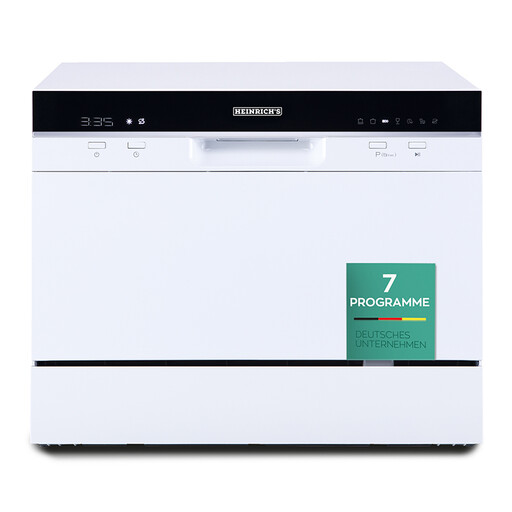
Heinrich's HTG 8840 tabletop dishwasher, white
For larger shared loads, if there’s a water connection where you plan to put the appliance.
The description lists six place settings, a water connection and a drain hose.
The product details list seven programmes and water consumption of 6.5 l per wash cycle.
View at Joybuy
 No image available
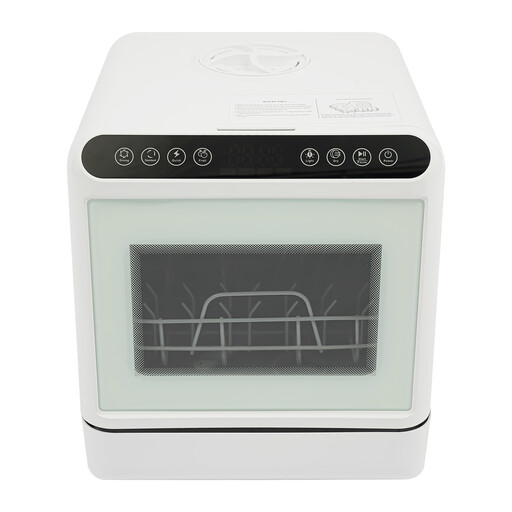
Tabletop dishwasher with integrated 6-litre water tank
For a location where an integrated tank could make it easier to supply water.
The description lists capacity for four to six people, four programmes and an integrated 6-litre tank.
The description states that a wash cycle reaches up to 72 °C.
View at Joybuy
 No image available
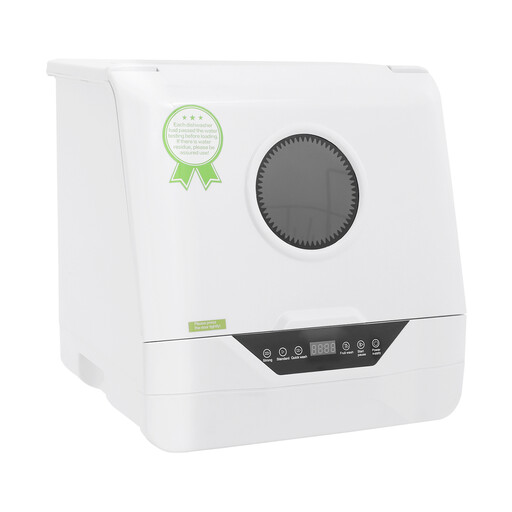
Compact tabletop dishwasher, 220 V, 800 W
For a shared kitchen, if the stated daily load suits the way you’ll use it.
The description lists four wash modes and a daily load for two to five people.
Stated dimensions: 15.24 × 14.69 × 15.43 Zoll. A noise rating of 55 dB and inlet and drain hoses are also listed.
View at Joybuy
 No image available
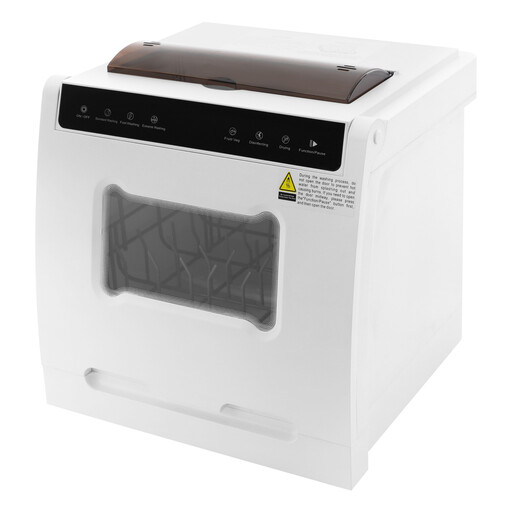
White tabletop dishwasher with 72 °C and six wash modes
For small kitchens, if the tabletop design and programmes listed suit your needs.
The product title lists six wash modes and hot-air drying; the description includes standard and quick programmes, among others.
72 °C is given as the temperature in the product title.
View at Joybuy
Frequently asked questions
Will every breakfast bowl fit in a model with three or six place settings?
No. The place-setting capacity alone doesn’t guarantee that deep bowls will fit. Check the diameter and height of your bowls against the basket of the specific model, and allow for other dishes in the same load.
Can you use a tank model without a tap?
Some models are designed to use a tank: MEDION lists this option for the DWT30, while Midea says the MDWMT0305EW-WE can be used with or without a water connection. Either way, check how the appliance can drain where you plan to put it.
How can you compare consumption for everyday use in a shared kitchen?
For similarly sized appliances, compare the label figures for kWh per 100 Eco cycles and litres per Eco cycle. The German Environment Agency’s advice that a machine can use less water and energy than washing by hand applies to a fully loaded machine on the Eco programme.
Who should you contact if there’s a fault?
If a product is faulty, your statutory rights are generally enforced against the seller; a manufacturer’s guarantee is separate. The German Consumer Advice Centre explains that guarantee terms should be checked separately.
Do old tabletop dishwashers need to be disposed of separately in Germany?
Yes. Waste electrical appliances are collected separately. Under the conditions set out in section 17 of the German Electrical and Electronic Equipment Act (ElektroG), a retailer must take back an old appliance of the same type free of charge when you buy a corresponding new one. The option to return appliances up to 25 cm without buying a new one does not automatically apply to tabletop dishwashers.


