Hosts serving drinks throughout the get-together
If you’re serving several rounds, the amount of ice made per cycle and the ability to keep producing ice while your guests are there matter more than a daily output figure on its own.


If you’re serving several rounds of drinks during a get-together, look at how much ice you can remove per cycle, how long each cycle takes and the capacity of the basket. Daily output alone doesn’t tell you how much ice will be ready at once. If you want several portions ready when your guests arrive, freezing ice in advance is a practical alternative, as long as you allow enough freezer space. The manufacturer’s production figures don’t replace checking how much ice you can actually take out when you need it.
If you’re serving several rounds, the amount of ice made per cycle and the ability to keep producing ice while your guests are there matter more than a daily output figure on its own.
If you want the first round ready without waiting, you can prepare ice in advance. You’ll need enough room in your freezer to store it.
The available worktop space and the type of ice you want can help you narrow down your choice of tabletop appliance.
A good fit if: You’re serving drinks over several rounds and can take out ice between cycles.
Keep in mind: You’ll need to allow for production cycles and basket capacity before serving the first round.
A good fit if: You want several portions ready at once or don’t want the appliance running while you serve drinks.
Keep in mind: Making ice in advance takes time and freezer space.
| Buying priority | What to look for | Who is it important to? |
|---|---|---|
| Keeping several rounds topped up | Compare the number of pieces per cycle, cycle time and basket capacity separately. | When I’m serving several rounds of drinks, I want to know how much ice I can take out per cycle and how long the next cycle takes. Around 31% of consumers prioritise an ongoing supply. |
| Ice for the first round | Work out how many glasses you plan to serve and when you’ll need the ice; check basket capacity and freezer space separately. | If I want to serve the first round without waiting, I’ll prepare ice in advance and check that I have enough freezer space. Around 25% of consumers prioritise having a stock ready. |
| Cleaning after your guests leave | Check the drain for leftover water, whether the basket can be removed and the cleaning instructions for the specific model. | If I use the appliance regularly, I want to know how to drain leftover water and maintain the water circuit. Around 19% of consumers say cleaning is their top priority. |
| The type of ice you want | Before comparing models, decide whether you want nugget ice or a choice of ice sizes. | If a particular type of ice works better with my drinks, I want to decide what I need before buying an appliance. Around 13% of consumers look first for their preferred type of ice. |
| Worktop space and ventilation | Consider the worktop area, room to operate the appliance and the model’s ventilation requirements; check any conflicting external measurements. | If my worktop space is limited, I’ll also check how much clearance the appliance needs around it. Around 12% of consumers say finding space for it is their top buying priority. |
A figure for 24 hours doesn’t tell you how much ice will be available at once for several glasses.
Plan the first round based on how much ice you can take out, then allow separately for further supplies from subsequent production cycles.
The stated basket capacity describes how much it is designed to hold, not a guarantee that the ice can be stored there long term.
If you want ice ready before your guests arrive, plan to store a suitable supply in the freezer.
You may need extra freezer space for this.
For its 120-watt model, KLAMER recommends 20 cm of clearance on all sides. CASO’s product page gives conflicting dimensions.
Check the ventilation requirements for the model you choose and confirm any conflicting external measurements before buying.
According to KLAMER, this 120-watt ice maker offers two ice sizes for an ongoing supply.
According to CASO, the IceChef Compact 3401 combines two selectable ice sizes with a 1-l water tank.
According to UNOLD, the Freeze 48935 comes with a stated-capacity ice basket and a drain for leftover water.
According to MEDION, the LIFE MD 11960 is designed for people who want nugget ice.
In its test, F.A.Z. Kaufkompass described the 2L ice maker as an appliance offering two ice sizes.
These tabletop appliances are designed to keep producing ice over several rounds of drinks. Compare the amount and time per cycle, basket capacity and the type of ice you want.
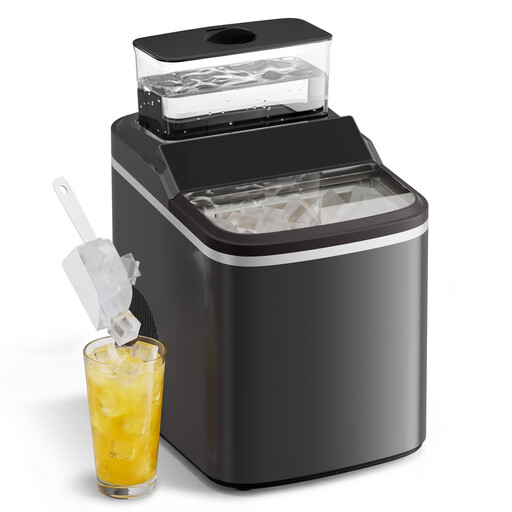 No image available
Details of the production cycles and basket capacity can help you plan to take out ice several times.
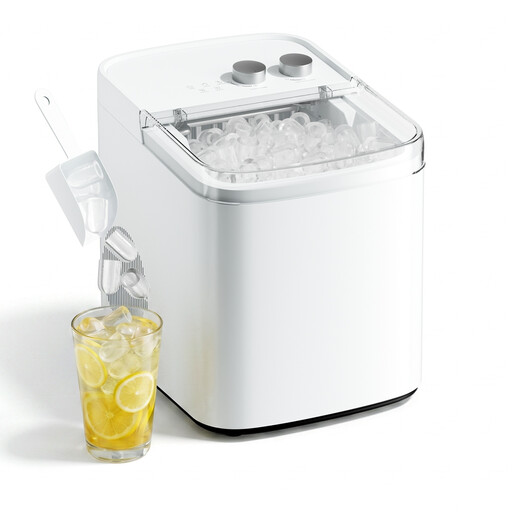 No image available
The stated amount per cycle and basket capacity give you an idea of how much ice you can make and take out each time.
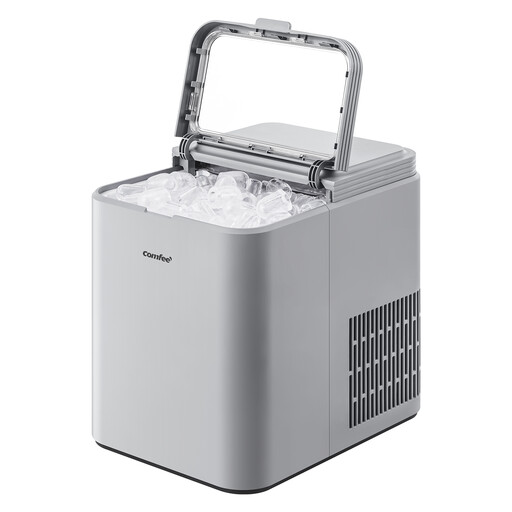 No image available
The cycle time can help you plan to take out ice repeatedly while your guests are there.
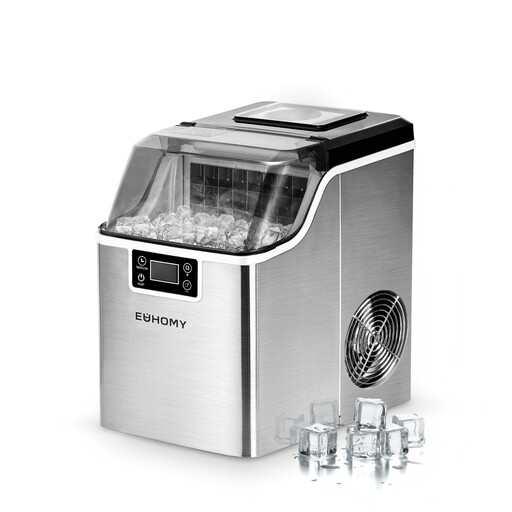 No image available
The larger stated batch could be useful for making several drinks; you’ll need to separate the cubes by hand before using them.
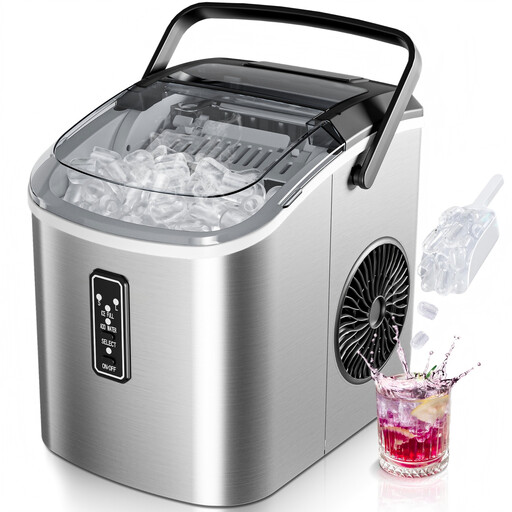 No image available
The cycle time and choice of ice sizes give you useful details for planning repeated batches and serving different drinks.
No. Also check the time and amount per production cycle, as well as how much ice you can take out of the basket. Manufacturers don’t give these figures in the same way for every model.
Follow the instructions for your particular model. For its 120-watt machine, KLAMER recommends cleaning it before first use and leaving it to stand for at least three hours. After a long period without use, the appliance should be completely emptied, cleaned and dried. These are the manufacturer’s instructions for this model, not a general three-hour rule.
For a typical distance purchase, Your Europe’s consumer information states that you generally have 14 days from delivery to withdraw from the purchase; exceptions and possible return costs should be taken into account. If goods are faulty, EU consumer information says you have a legal guarantee of at least two years from the seller. These rights are separate from any additional guarantee offered.
No. Germany’s Federal Environment Ministry explains that old electrical appliances must be collected separately and handed over to an authorised collection point or another authorised operator. Retailers’ take-back obligations are subject to certain conditions, depending on the size of the appliance and whether you’re buying a new one.