Batch cooks making several portions
If you’re planning several batches, the stated quantity per cycle can help you work out your ingredients and preparation. Check whether the capacity is given in flour or finished pasta.


If you’re making several batches and want to do as little of the dough preparation yourself as possible, consider an automatic pasta maker that specifically lists a tagliatelle attachment; if you’d rather prepare the dough yourself and control its thickness as you roll it, look for a motorised roller with a suitable cutter. Springlane lists a tagliatelle attachment and a flour capacity of 200–600 g for the Nina, while Imperia lists a tagliatelle cutter for the Electric iPasta Classic. Only compare capacity figures that use the same basis, and check what’s included, how the machine is cleaned and the compliance information for the specific offer before buying.
If you’re planning several batches, the stated quantity per cycle can help you work out your ingredients and preparation. Check whether the capacity is given in flour or finished pasta.
If you have a particular width in mind, check that the attachment is specifically designed for tagliatelle and is made for the model you’re considering.
If you’d rather do less of the dough preparation yourself, compare automatic pasta makers with motorised rollers. Also consider how easy it is to clean the individual parts after making several batches.
When making several batches, it’s important to know whether the machine also mixes and kneads the dough or simply rolls out dough you’ve prepared. The attachment must also produce the tagliatelle shape you want.
The proportions refer to consumers in Germany considering an electric pasta machine for making tagliatelle ahead of time, and should be treated as a rough guide.
| Priority | What to check before buying | Who it matters most to |
|---|---|---|
| Batch size | Consider flour weight and finished pasta weight separately, and note the basis used for the quantity per cycle. | If you want to estimate how many cycles you’ll need to make enough to store, the stated quantity is important. Consumers who prioritise batch size are estimated to make up around 36%. |
| Tagliatelle shape | Check the model number, the specifically named shaping attachment and the parts list for the same offer. | If you want a particular ribbon pasta shape, the suitable attachment should be specifically named. Consumers who prioritise the tagliatelle shape are estimated to make up around 29%. |
| Preparation and cleaning effort | Check whether the machine prepares the dough and which parts the manufacturer says should be cleaned by hand. | If you want to do as little kneading yourself as possible and tidy up quickly after several batches, consider automation and cleaning requirements together. Consumers who prioritise minimal effort are estimated to make up around 21%. |
| Attachments and ongoing costs | Check whether the attachment you need is included, and factor in the cost of the machine and accessories together if necessary. | If you’re planning an overall budget or need to buy an attachment separately, make sure you know what’s included before you buy. Consumers who prioritise total cost are estimated to make up around 14%. |
Capacity figures can refer to different quantities. Springlane lists 200–600 g of flour per batch for the Nina; Rommelsbacher states that the PM 220 makes up to 800 g of fresh pasta per cycle.
Plan your batches using the same recipe each time, and note whether each figure refers to flour or finished pasta.
Different ways of measuring capacity could mean you need to allow for more cycles and preparation time.
Philips confirms that the CP1442/01 tagliatelle attachment is compatible with the HR2665/93. This doesn’t mean it comes with every offer.
Check the parts list against the full model number and the specific offer.
If the attachment you need isn’t included, you may have to buy it separately.
Imperia describes the Electric iPasta Classic as a motorised roller with a cutter. Springlane and Rommelsbacher describe the automatic machines mentioned here as also preparing the dough.
Decide in advance whether you want to prepare and roll the dough yourself or put the ingredients into an automatic pasta maker.
With a motorised roller, preparing the dough is still an extra job you’ll need to do yourself.
Cleaning instructions vary by model and component. Rommelsbacher recommends hand-washing accessories for the PM 220, including the pressing screw and shaping attachments.
Check the instructions for each die, screw and cover before cleaning it.
Cleaning parts incorrectly could damage accessories and create extra work.
Springlane lists a dedicated tagliatelle attachment and a flour capacity of 200–600 g for its Nina automatic pasta maker.
The Pastarella PM 220 is an automatic pasta maker with integrated scales, controlled water supply and dies for narrow and wide ribbon pasta.
The HR2665/93 is an automatic pasta maker; Philips lists the CP1442/01 tagliatelle shaping attachment as compatible.
The Electric iPasta Classic is a motorised roller for dough you’ve prepared yourself. For this specific model, Imperia lists a Duplex cutter for tagliatelle and fettuccine.
Marcato describes the Atlasmotor+ as a motorised roller alternative for dough you’ve prepared yourself.
This selection includes electric pasta machines and rollers for different stages of pasta-making. For each offer, check whether the shaping attachments are suitable for the tagliatelle you want to make, which parts are included and what compliance information applies to the specific machine and its food-contact parts.
 No image available
For anyone who wants to adjust the dough thickness while rolling; check which cutter is included for the tagliatelle shape you want before buying.
The product description lists seven settings from 0.5 mm to 3 mm, two cutting widths of 1.5 mm and 6.6 mm, and a 60-W motor. Don’t immerse the machine in water; the description recommends cleaning it with a dry cloth and brush.
 No image available
For anyone who wants to prepare and extrude dough in the machine; check that the shaping attachments match the tagliatelle shape you want and the parts list.
The product description gives a 3-minute dough preparation step and 12–15 minutes to extrude the pasta.
 No image available
For anyone looking for dough preparation and shaping attachments in one machine; check which attachment makes the tagliatelle shape you want.
The product description lists 180 W, a 360° mixing system and nine interchangeable shaping attachments.
 No image available
For anyone planning smaller batches by dough weight; check whether one of the included shaping attachments is suitable for tagliatelle.
The product information states 200 g of dough per cycle and five shaping attachments. The description says to wipe the main unit with a soft cloth and not rinse it with water.
 No image available
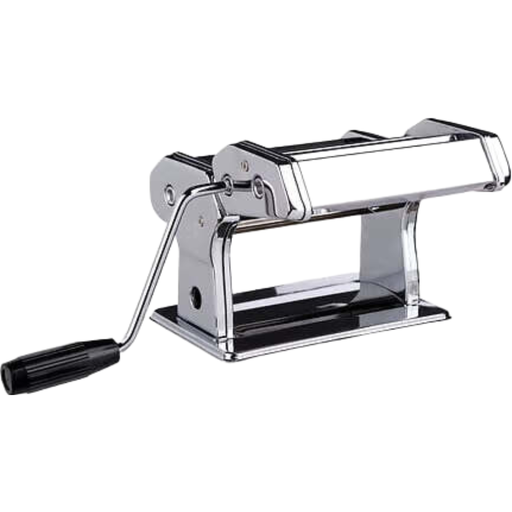
For anyone looking for an option specifically described as a tagliatelle and spaghetti roller; check the full parts list for the set.
The product description lists a tagliatelle/spaghetti roller and a ravioli roller. It also states that assembly is required.
No. Philips confirming that the CP1442/01 is compatible doesn’t prove that the attachment is included. Check the parts list for the specific offer.
Rommelsbacher recommends keeping fresh pasta chilled and says fresh egg pasta can be frozen. This is a manufacturer recommendation, not a general guarantee of shelf life. When handling raw eggs, follow good kitchen hygiene and keep perishable foods properly chilled, as recommended by the German Federal Institute for Risk Assessment.
No, it depends on the model and the part. Rommelsbacher recommends hand-washing many PM 220 accessories. Philips excludes the front cover and accessories from its statement about dishwasher-safe removable parts.
If goods are faulty, you have statutory rights against the seller; these are separate from any voluntary guarantee. According to the Verbraucherzentrale, online purchases generally come with a 14-day right to cancel, which you must exercise with the retailer.
No. For products covered by the relevant EU legislation, CE is a conformity marking applied by the manufacturer, not an independent assessment of quality. The relevant EU rules for food-contact materials also apply to parts intended to come into contact with food. Check the information for the specific machine and offer.