Who is this guide for?

Listeners carrying out critical restoration work

You compare the original with the processed recording, checking whether wanted parts of the signal have been removed along with the tape hiss. Audacity recommends listening to the removed audio when using noise reduction.

Editors in shared workspaces

You need to assess quiet passages despite background noise, while minimising sound leakage that could disturb others. Whether closed-back headphones are right for you also depends on how they fit.

Editors spending long sessions at their desk

You listen for extended periods and need a comfortable fit, as well as a practical cable route to your actual audio output. At a dual-monitor workstation, the connection and desk layout largely determine how you can route the cable.

What should you look for when buying?

Closed-back, wired headphones

A good fit if: Noise in your workspace could mask quiet traces of hiss, or you want to minimise sound leakage.

Bear in mind: How much noise they block depends on the fit; check for pressure and warmth during longer sessions.

Open-back studio headphones

A good fit if: Your room is quiet, sound leakage will not disturb anyone and you plan to make longer listening comparisons.

Bear in mind: Background noise can make quiet residual sounds harder to assess; a pronounced sound profile can also affect your comparisons.

Semi-open studio headphones

A good fit if: You are considering a semi-open design and do not expect either strong noise isolation or minimal sound leakage.

Bear in mind: The label does not specify a particular level of noise isolation; check the conditions in your workspace.

Buying consideration What to check before buying Who is this particularly important to?
Residual hiss and processing artefacts Compare familiar original and processed passages; if available, listen to the removed audio as well. If I want to check whether wanted audio is being lost along with the hiss, I compare passages I know well. Around 33% of consumers put critical noise monitoring first.
Noise isolation and sound leakage Check in your usual room conditions whether quiet traces remain audible and sound leakage is disruptive at your workstation. At a shared workstation, I want to assess quiet passages despite background noise while disturbing others as little as possible. Around 27% of consumers prioritise noise isolation and low sound leakage.
Fit during long sessions Try them on for a realistic working session and check that replacement earpads are available for the exact model version. If I plan to make longer listening comparisons, I check that the headphones are comfortable with my glasses on. Around 20% of consumers put long-wearing comfort and suitable earpads first.
Connection and cable routing Check the audio output, plug, supplied adapter and cable length against your intended listening position. At my dual-monitor desk, I want to route the cable so it reaches my audio output without getting in the way of my work. Around 20% of consumers prioritise connection and cable routing.

Avoiding buying mistakes

  • Assuming a wide frequency range proves artefacts are detectable

    A specification on a datasheet does not show how reliably you can detect removed parts of the signal or residual hiss in your recording.

    Assess the specific model using familiar original and processed passages. Also use the preview and, if available, the residual audio from your editing software.

  • Using open-back headphones in a noisy, shared workspace without trying them first

    Open-back headphones do not block background noise like a closed-back model, and sound can leak out.

    Choose based on the actual noise levels in your room. In a noisy workspace, consider closed-back models, but do not assume that every pair will fit you well.

  • Choosing an impedance version or cable based on the model name alone

    The beyerdynamic DT 770 PRO comes in 32, 80 and 250 Ohm versions. The plug and cable route need to suit your audio output and desk setup.

    Before buying, check the full model variant, audio output and what is included with the specific product listing.

Brands to consider

beyerdynamic

The DT 770 PRO is a closed-back model, while the DT 990 PRO is an open-back wired model. Their designs offer a starting point based on your room, not proven performance for tape restoration.

  • The manufacturer lists 32, 80 and 250 Ohm versions of the DT 770 PRO, as well as replaceable earpads.
  • beyerdynamic describes the DT 990 PRO as suitable for critical listening and notes in its own comparison that the treble can be relatively sharp. This is not independent evidence that it can detect tape hiss.

Audio-Technica

The ATH-M40x and ATH-M50x are closed-back, wired monitor headphones with detachable cables.

  • The European manufacturer specifications list two cables for the ATH-M40x and three for the ATH-M50x.
  • The manufacturer's claims of particularly accurate sound reproduction do not prove superior detection of restoration artefacts.

Sennheiser

The open-back HD 490 PRO is an option for critical listening in a quiet environment.

  • Sennheiser lists two types of earpad and a cable that can be connected on either the left or right side.
  • The advertised sound precision is a manufacturer claim. An open-back design does not provide noise isolation when there is distracting background noise.

AKG

The semi-open K240 MKII adds a design that sits between the open-back and closed-back categories covered here.

  • The manufacturer lists a detachable cable and replaceable earpads.
  • The term “semi-open” does not tell you how much noise the headphones will block at your own workstation.

Sony

The MDR-7506 is a wired model for studio and broadcast use.

  • Sony Germany lists a stereo mini-jack plug and a supplied adapter.
  • Check the connections and variant of the specific product on offer; the technical specifications are not a listening test for restoration work.

Joybuy products

The following Joybuy products are headphones for listening to audio at your workstation. Before buying, check that their connection and design suit your wired monitoring setup.
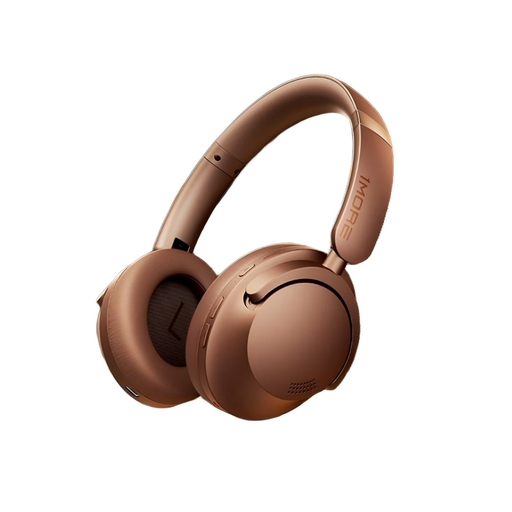
1MOREHQ51 SonoFlowPro Global Mocha Brown

1MOREHQ51 SonoFlowPro Global Mocha Brown

Designed for listening to audio at your workstation; the product description lists 40 mm drivers, Bluetooth 5.2 and memory foam earcups. Check that the connection suits your intended audio output; these specifications do not prove that the headphones can detect restoration artefacts.

View at Joybuy
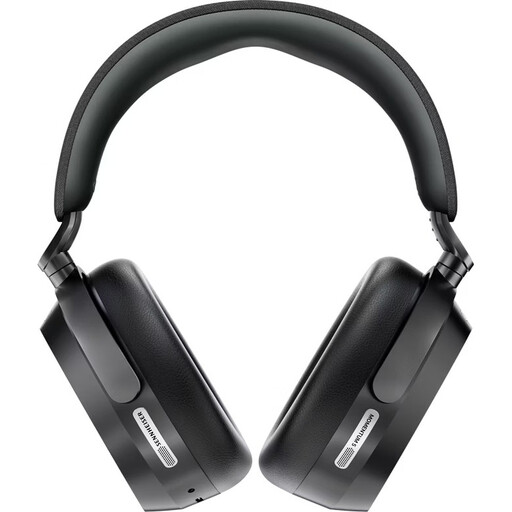
Sennheiser Momentum 5 Wireless, Black

Sennheiser Momentum 5 Wireless, Black

Features a closed-back over-ear design with wired audio playback; this model is also listed as offering ANC and comes with a 3.5 mm audio cable. Check the connection and fit at your workstation; these features do not prove suitability for detecting artefacts.

View at Joybuy

Frequently asked questions

How can I check whether removing tape hiss has also removed wanted audio?

Compare short sections of the original and processed recordings and, if your software offers the option, listen to the removed audio. Audacity recommends using the preview and listening to this audio to assess possible damage to the wanted sound. This checks the processing, not a guaranteed feature of the headphones.

Do I need a special headphone connection because I have two monitors?

No. What matters is the audio output on your computer or interface, and where it is on your desk. Check the plug, adapter and cable length for the specific model; the number of monitors alone does not determine the connection you need.

What can I do about worn earpads?

Check for replacement earpads for the exact model version. beyerdynamic lists replaceable earpads for the DT 770 PRO, and AKG does the same for the K240 MKII. This does not tell you the price of a replacement part or whether it will fit other generations of the model.

What are my rights when buying online in Germany?

Consumers generally have a right of withdrawal when entering into a distance contract; the statutory withdrawal period is generally 14 days. The Federal Ministry of Justice and the Federal Office of Justice also list statutory exceptions in “Laws on the Internet”, such as certain goods sealed for hygiene reasons, once the seal has been removed. This does not mean that all headphones are automatically excluded. For ordinary purchases of goods, claims for defects generally become time-barred two years after delivery. These statutory rules are separate from a voluntary manufacturer's guarantee.

Should I keep turning up the volume to find quiet traces of hiss?

No. The Federal Institute for Occupational Safety and Health warns that high headphone volume levels can damage your hearing. Listen carefully and avoid unnecessary jumps in volume; buying headphones is no substitute for safe listening habits.