Home cooks short on worktop space
You’d like to make a small batch of tapenade now and then, without giving up valuable worktop space. Small bowls and manual pull-cord mechanisms are options to consider when choosing a chopper.


For small batches of tapenade when there’s no socket nearby, a pull-cord chopper could be a good choice. If you make it more often and have a socket available, a compact electric chopper is worth considering. What matters is the usable capacity, how much control you have over the texture and how easy it is to clean. Capacity and wattage alone won’t tell you how well it will handle olives.
You’d like to make a small batch of tapenade now and then, without giving up valuable worktop space. Small bowls and manual pull-cord mechanisms are options to consider when choosing a chopper.
You’d rather chop olives and other ingredients than process them to a fine paste. So, check how easy the appliance is to operate and stop.
If you use your chopper regularly, removable parts and how much cleaning is needed after each use matter just as much as getting the right batch size.
A good fit if: you want to make small batches without a socket and control the action yourself.
Bear in mind: You operate it by hand and need room to pull the cord.
A good fit if: saving space and making small batches are priorities, and you have a socket nearby.
Bear in mind: A smaller stated capacity may mean processing larger recipes in several batches.
A good fit if: you prepare food often or make larger batches.
Bear in mind: Check the appliance dimensions and usable capacity. A larger bowl doesn’t guarantee a particular tapenade texture.
The figures below are a rough guide for consumers in Germany considering a mini chopper for tapenade. They group shoppers according to their main priority when choosing what to buy.
| Priority | What should you check before buying? | Who is it important to? |
|---|---|---|
| Worktop space and batch size | Check the appliance dimensions, room to operate it and usable capacity. WMF gives a capacity of 0.3 l for the KÜCHENminis, while Kenwood lists 0.5 l for the Easy Chop. These are bowl capacities, not a guaranteed tapenade batch size. | If worktop space is limited, you’ll want a chopper that’s easy to store and suits the quantity you usually make. In this scenario, around 33% of consumers prioritise worktop space and batch size. |
| Control over the texture | Check how the appliance is operated and stopped. Kuhn Rikon describes a pull-cord mechanism; WMF specifies one-handed operation. | If I want a chunky tapenade, I need to be able to stop processing at the right time. In this scenario, around 25% of consumers prioritise texture above all else. |
| Cleaning | Check separately whether the bowl, blades and lid are removable and dishwasher-safe. Kenwood says some parts are dishwasher-safe; always follow the instructions for the specific model. | If I make dips often, I want to clean the bowl, blades and lid without a fuss. In this scenario, around 25% of consumers prioritise cleaning. |
| Use without a socket | For a pull-cord chopper, check that there’s room to pull the cord and that the appliance will stand securely. For an electric model, check where the sockets are. | If there’s no socket nearby, I’d consider a non-electric appliance, provided there’s enough room to pull the cord. In this scenario, around 17% of consumers prioritise being able to use their chopper without electricity. |
The bowl capacity alone doesn’t tell you how much of a particular recipe the model can process.
Compare your usual recipe quantity with the filling guidance for the specific model.
A general cleaning claim doesn’t automatically mean that every part can go in the dishwasher.
Check the instructions for the bowl, blades, lid and motor unit separately.
A pull-cord lid needs room to move; an electric model needs a socket within reach.
As well as checking where you’ll store it, make sure there’s enough clear worktop space to use the type you choose.
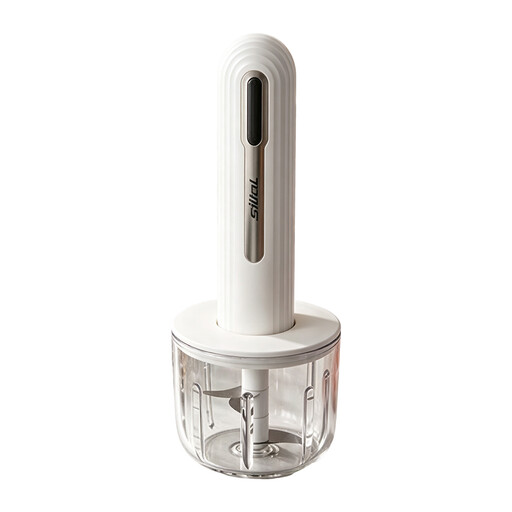
The KÜCHENminis chopper is an electric option with a 0.3-l bowl, according to the manufacturer.
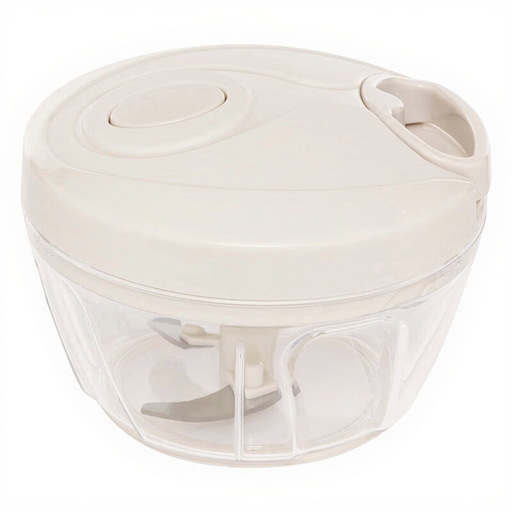
The PULL CHOP small is a manual chopper with a pull-cord mechanism.
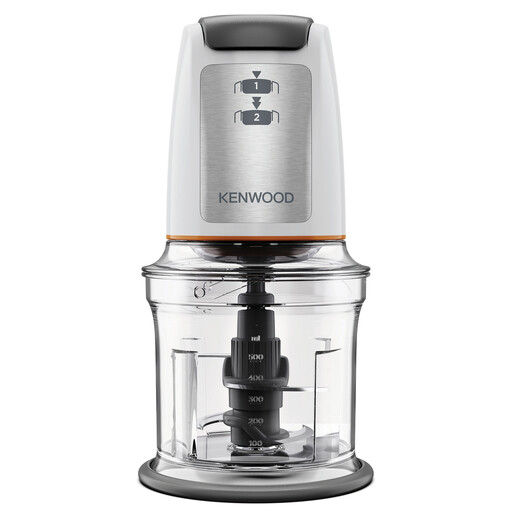
According to the manufacturer, the electric Easy Chop CHP61.100WH has a 0.5-l working bowl.
The MMR08A1 is an electric multi-purpose chopper; Bosch lists a power rating of 400 W.
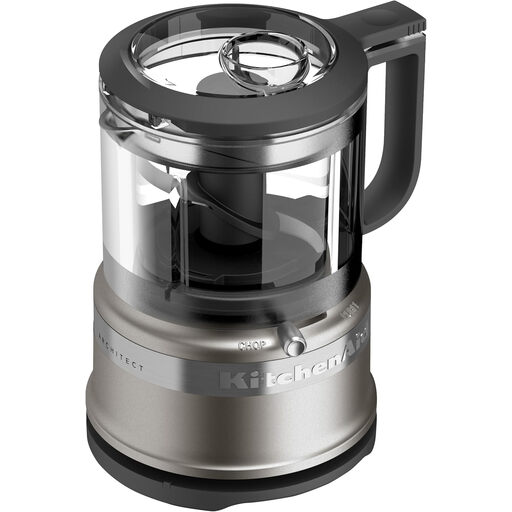
The Daily Collection HR1393/00 is an electric chopper operated by pressing down.
This selection includes manual and electric choppers whose product descriptions list small quantities, dips or sauces as possible uses. Before buying, check that the operating method, capacity and cleaning requirements suit your tapenade recipe.
 No image available
For small quantities; the product description lists salsa and dressings as possible uses.
Cordless operation and a transparent bowl. The removable parts should be washed by hand; follow the specified short operating intervals.
 No image available
A manual option for preparing food without electricity; the product information lists salsa and dressings as possible uses.
The chopper is operated with a pull cord. Make sure you have enough clear space to use it.
 No image available
The two stated bowl capacities may be useful when planning different batch sizes.
According to the product information, continuous operation is limited to 40 seconds, followed by a break. The blades are sharp, so handle them with care.
 No image available
For dips and sauces; Kenwood specifies a 0.5-l working bowl.
Check whether the stated bowl capacity suits your recipe quantity. The wattage alone doesn’t tell you how well the appliance will process olives.
 No image available
The product information lists pesto and sauces as possible uses.
According to the product information, the motor unit must not be immersed in water. The blade is sharp, so handle it with care.
Start with the quantity you usually make and check the permitted filling capacity for the specific model. WMF gives a capacity of 0.3 l for the KÜCHENminis, and Kenwood lists 0.5 l for the Easy Chop. These are bowl capacities, not a promise that you can make the same volume of tapenade in one go.
Read the instructions for your model, fit the lid and blade as directed, and check the care guidance for each removable part separately. WMF specifies a removable blade for the KÜCHENminis; Kenwood says some parts of the Easy Chop are dishwasher-safe.
For electrical appliances covered by the EU Low Voltage Directive, its requirements apply. These include the required CE marking, necessary documentation and clear safety information; EUR-Lex explains the regulatory framework. This doesn’t mean that any specific appliance mentioned here has been checked for compliance. The Directive doesn’t apply to a manual pull-cord chopper simply because of its design.
Distinguish your statutory rights against the seller from a voluntary manufacturer’s guarantee. The Verbraucherzentrale explains that for purchases made from 31 July 2026, the statutory guarantee period may be extended once if, when a fault occurs within the original period, you choose repair instead of a replacement. Whether the conditions are met depends on the individual case.
Electrical appliances must not be put in household rubbish. The Umweltbundesamt lists recycling centres and retailer take-back points among the available options.