
Lieferung heute & morgen

Qualitätsgarantie

Willkommens-Angebote freischalten: KOSTENLOSE Lieferung | Bis zu 80 % RABATT | Kostenlose 30-Tage-JoyPlus-Testphase
App herunterladen
Tapioca is made from cassava root and is most commonly used in British households as tapioca starch, tapioca flour, pearls for bubble tea or as a crunchy snack. At first glance, these products may look similar, but they differ considerably in terms of ingredients, preparation time, texture and intended use.
As a Joybuy Product Recommendation Officer, I therefore look not only at the product name, but above all at the clear, verifiable information on the packaging. This helps you avoid common buying mistakes – such as bubble tea pearls that are too hard, lumpy starch or snacks that do not suit your preferred diet.
Tapioca starch, also known as cassava starch, is a fine powder. It is used to thicken sauces, soups and puddings, for baking and for creating crispy coatings. Tapioca pearls, on the other hand, are made from shaped starch and must be cooked before eating.
A packet labelled “Tapioca” is therefore not automatically suitable for bubble tea. Check whether the product type is listed as “Starch”, “Flour” or “Pearl”.
A 400 g packet of tapioca can provide very different quantities of prepared food, depending on the product. With starch, a small amount is often enough to thicken a dish. Tapioca pearls, on the other hand, require water, cooking time and usually a liquid or syrup afterwards.
The size of bubble tea pearls is also important: large pearls often require a longer cooking time than small pearls or varieties explicitly labelled “Quick-cooking”.
White tapioca pearls often contain only tapioca starch and water. Coloured or flavoured bubble tea pearls, however, may contain additional flavourings, thickeners, preservatives and colourings.
If you prefer a short ingredient list, compare this information before buying. For products containing colourings, the information on the packaging is decisive. This labelling should be checked particularly carefully for children.
Fine tapioca starch is suitable for sauces, gluten-free baking and Asian desserts. It has a neutral flavour and can thicken liquids. For homemade boba pearls, however, you need a recipe specifically intended for making pearls or the corresponding dough.
With tapioca pearls, size determines both texture and preparation:
Tapioca is naturally a gluten-free starch. However, this does not automatically mean that every processed product is suitable for every dietary requirement. The complete ingredient list, allergen information and any details about the manufacturing process are what matter.
For the pure starch products mentioned here, the product information states, for example, 100% tapioca starch or cassava starch. Depending on the variety, pearls may also contain water, salt, flavourings, colourings or technological additives. If you follow a vegan diet, you should also check the specific information on the packaging.
For occasional baking or thickening, a smaller 200 g packet may be a sensible choice. A 400 g packet is more suitable for households that regularly prepare Asian desserts, sauces or gluten-free baked goods.
Starch and dry pearls should be stored in a cool, dry place and protected from moisture. After opening, an airtight container is recommended. Cooked pearls do not keep indefinitely and should be used soon after preparation.
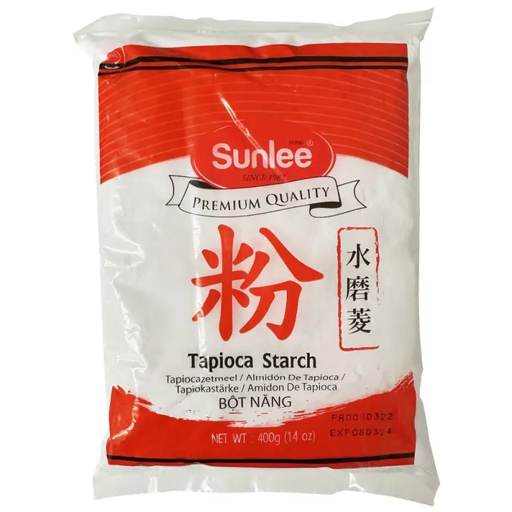
Why this product suits this profile: The 400 g packet covers a range of uses – from thickening sauces to making puddings and baked recipes. The product description lists tapioca and water as ingredients.
The clear product name distinguishes the starch from ready-made boba pearls. This makes it easy to choose the packet specifically for recipes using powder.
100% tapioca starch according to the product description; versatile for thickening, baking and desserts.
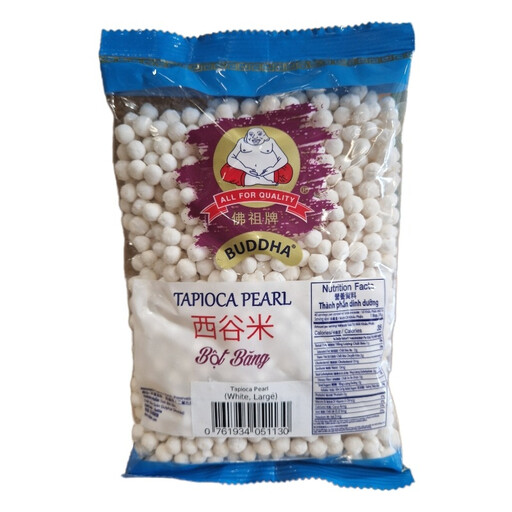
Why this product suits this profile: The large white pearls are intended for visible pieces in drinks and for Asian desserts such as coconut milk pudding or fruit soups.
The size and cooking instructions are clearly stated: boil for 20–30 minutes and then leave to rest. This makes planning easier than with pearls whose size is unclear.
400 g contents; ingredients as stated: 98% tapioca starch and water; intended for drinks and desserts.
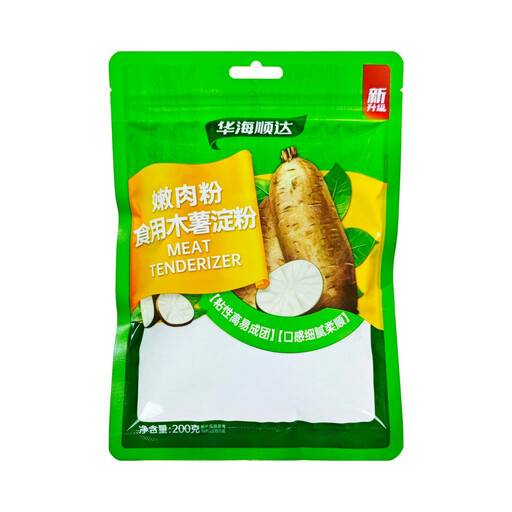
Why this product suits this profile: The smaller packet is aimed at home cooks who want to use tapioca starch for marinades, sauces, crispy coatings or baking recipes.
The description lists several specific kitchen uses. This makes the intended use clearer than a general product name with no recipe guidance.
200 g contents; tapioca starch listed as the only ingredient; intended for marinating, sauces, frying and baking.
For starch, it is best to start with a cold liquid: mix the powder with a little water, then add the mixture to the warm sauce or soup. This helps prevent lumps. The exact quantity depends on the recipe and the consistency you want.
Tapioca pearls are cooked in plenty of boiling water. Depending on the product, they are then rinsed and added to a drink, syrup or dessert. Always follow the instructions on the packet, as cooking and resting times may vary.
Tapioca chips are ready to eat. These include simple or seasoned South Indian snacks, for example. With fried products, you should consider the ingredients, salt content and storage instructions after opening.
We have put together a complete, regularly updated list of products that fully meet these strict selection criteria and the safety regulations applicable in the EU.
Tapioca, or cassava starch, is gluten-free by nature. However, you should still check the ingredients list and allergen information for processed products. If you need to follow a medically necessary gluten-free diet, the specific labelling of the product in question is what matters.
Cooked tapioca pearls change in texture and should therefore be eaten as soon as possible. For the exact storage period, follow the manufacturer’s instructions. Dry pearls remain suitable for use until the best-before date when stored in a cool, dry and airtight place.
The terms are sometimes used similarly in retail, but they are not always identical. Check the texture and intended use. For sauces and puddings, a product explicitly labelled tapioca starch is the more reliable choice; for baking recipes, follow the instructions for the specific recipe.