
Lieferung heute & morgen

Qualitätsgarantie

Willkommens-Angebote freischalten: KOSTENLOSE Lieferung | Bis zu 80 % RABATT | Kostenlose 30-Tage-JoyPlus-Testphase
App herunterladen
A high-quality tarp is an essential accessory for your home, garden, and outdoor activities. It protects your valuable property from the elements, including rain, sun, and dirt. But the market is saturated, and many products don't live up to their promises. Before you make a decision, it's crucial to understand the common weaknesses that can quickly turn a supposedly budget-friendly tarp into a bad investment.
Many buyers rely on marketing claims that often don't hold up in practice. Pay attention to these three critical points to avoid disappointment:
To make the right choice, you should focus on objective and verifiable criteria. These three factors determine the durability and functionality of your tarp.
The material is the foundation of any tarp. The most common types are polyethylene (PE) and polyvinyl chloride (PVC).
A protective cover is only as tear-resistant as its weakest point. Look for the following details:
Depending on the application, other properties are crucial. A sun shade for the patio must be primarily UV-resistant and breathable to prevent heat build-up. A picnic blanket should be waterproof to protect against ground moisture, while also being comfortable and easy to transport. In contrast, a cover for firewood or garden furniture must be completely waterproof and UV-stabilised to provide reliable protection all year round.
Here are some product recommendations tailored to specific use cases that meet the quality criteria mentioned above.
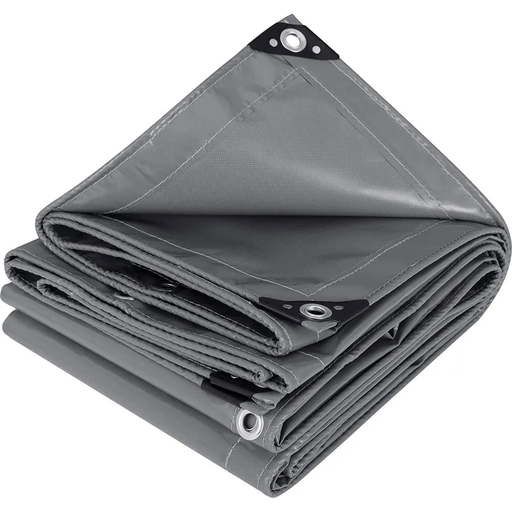
Why This Fits Their Persona: Ideal for homeowners seeking a durable, year-round solution to protect garden furniture, firewood stacks, or pools, and who prioritise robustness.
The high grammage of 500 g/m? PVC is objective proof of its tear resistance. The galvanised metal eyelets in reinforced, welded hems prevent tearing under load.
High UV and temperature resistance (-30°C to +60°C) for year-round use. The PVC coating is completely waterproof and easy to clean.
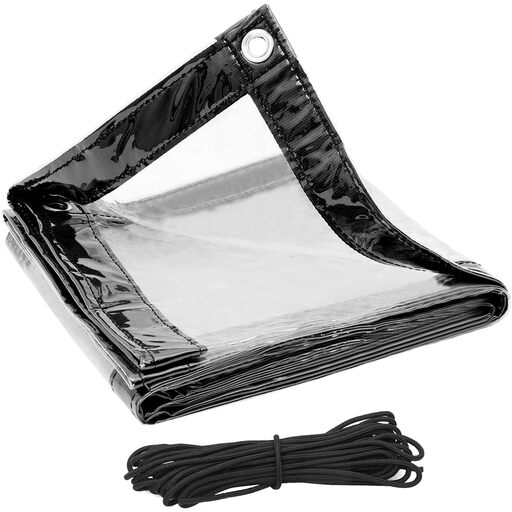
Why This Fits Their Persona: Perfect for gardeners or balcony owners who want to protect plants in a greenhouse or on a balcony from rain without blocking essential sunlight.
Unlike thin plastic sheets, this tarp is made of robust 380 g/m? PVC. The 5 cm wide, stitched hems and aluminium eyelets every 50 cm ensure stability and longevity.
Offers 100% transparency while being completely waterproof. The material is rot-proof and easy to clean.

Why This Fits Their Persona: For families and outdoor enthusiasts who need a comfortable, dry, and easily portable ground cover for picnics in the park, at the beach, or while camping.
The dedicated waterproof PEVA backing reliably prevents moisture from seeping through, a common issue with simple wool blankets. The 3-layer construction ensures genuine comfort.
It folds effortlessly into a compact tote with an integrated carrying handle. The large 200x200 cm surface provides space for several people.
We have compiled a complete, up-to-date list of products that fully meet these strict selection criteria.
A secure attachment is crucial. Use all available eyelets to distribute the tension evenly. Use elastic bungee cords instead of rigid ropes, as they better absorb wind gusts and reduce the strain on the eyelets. Ensure the tarp is pulled taut and cannot form "pockets" where rainwater can collect. During severe storms or hurricane warnings, it is advisable to temporarily remove large tarps.
Grammage indicates the fabric weight of the material in grams per square metre. It is a direct and objective indicator of the material's thickness and, therefore, its robustness and tear resistance. A higher grammage (e.g., 500 g/m? or more) points to a more resilient material suitable for demanding, long-term use, while a lower grammage (e.g., 90-180 g/m?) is sufficient for lighter, short-term applications.
Yes, high-quality PVC tarps are designed for it. Check the manufacturer's specifications for temperature resistance. Many PVC tarps are rated for temperatures from -30°C to +60°C. They remain flexible and do not become brittle even in freezing conditions. This makes them a reliable choice for year-round coverage of garden furniture, vehicles, or as a winter pool cover.