Detail-focused artists with a fixed workspace
If you want to work on outlines directly on the visible design and have room for a connected computer and pen display, a display for drawing is one option.


If you want to see your lines directly beneath the pen tip and work on a computer, a pen display could be right for you. If you already have a monitor and want to position your drawing surface independently, consider a screenless graphics tablet instead. For designs without a connected computer, a standalone tablet is another option. The key things to consider are the usable drawing area, a comfortable setup for sitting and standing, and the connections, software and accessories required for the specific model.
If you want to work on outlines directly on the visible design and have room for a connected computer and pen display, a display for drawing is one option.
If you switch between sitting and standing, you should be able to position the drawing surface and screen so they’re easy to reach and see at both desk heights.
If you want to work on designs without a connected computer, the device, pen and drawing app need to suit your workflow.
Best suited to: You want to work on outlines directly on the design displayed on screen.
Things to consider: The display, your hand and cables all need space; the connections and power supply must be compatible with your computer.
Best suited to: You use a monitor you already own and want to position the drawing surface independently of it.
Things to consider: When drawing, you look at a separate monitor rather than the pen tip; check that this way of working suits you.
Best suited to: You want to create designs without a connected computer and move your workspace around more easily.
Things to consider: The drawing app, file sharing and compatible pen accessories must all work with your device and workflow.
| Buying criterion | What to check before buying | Who is this important to? |
|---|---|---|
| Seeing lines and working on details | Compare the display type and active drawing area. Wacom lists 345 × 215 mm for the Cintiq 16 DTK168K0B and 263 × 148 mm for the Intuos Pro Medium PTK670K0B. | If I want to work on fine outlines directly on the image on screen, I want to see the line beneath the pen tip. Around 33% of consumers would make detail work their top buying priority. |
| Setup at different desk heights | Check the overall dimensions and stand for the specific version. The BAuA describes sit-stand working as alternating between sitting and standing; consider whether you can position the work surface comfortably at both desk heights. | If I draw sitting down and standing up, I want to be able to reach the screen and drawing surface comfortably in either position. Around 27% of consumers would put adapting to their working posture first. |
| Connections and complete setup | For a pen display, check the video, data and power connections; for a standalone tablet, check pen compatibility and the drawing app. | If I want to keep using my existing devices, the new setup needs to work with my computer, operating system and planned drawing workflow. Around 20% of consumers would put compatibility first. |
| Moving and storage | Consider the space and weight required for the complete setup. Huion lists the connected Kamvas 13 (Gen 3) as weighing 865 g; it still requires a computer. | If I often rearrange my workspace or want to draw somewhere else, how much I need to carry and connect matters to me. Around 20% of consumers would make portability their top buying priority. |
A pen display works with a connected computer. A standalone tablet can let you work on designs without one, but you’ll need a suitable app and compatible pen accessories.
First decide whether you want to draw on a computer or independently of one. Then check the connections, operating system, software and what’s included with the specific setup.
Depending on the type of device, you may still need a compatible computer or additional accessories, such as a pen sold separately.
Display size or pressure levels alone don’t tell you how easily you’ll be able to work on lines with your drawing app, hand position and pen settings.
Compare the usable drawing area and controls with your planned design workflow, rather than treating one figure as the whole story.
Stands and setup options vary by model and version. Huion doesn’t list a stand as part of the standard package for the Kamvas 13 (Gen 3); the integrated feet on the Wacom Cintiq 16 are not the same as its adjustable stand, which is sold separately.
Before buying, check what’s included and whether you can position the drawing surface to suit your sitting and standing desk heights.
A suitable additional stand may require extra accessories and workspace.
The models listed cover drawing on a connected display and working with a monitor you already own.
The Artist Pro 16 (Gen 2) is a pen display for a fixed design workspace connected to a computer.
Kamvas models offer connected drawing surfaces in a range of display sizes.
The iPad Pro with M5 is a standalone option for creating designs without a connected computer.
The M908 is a screenless graphics tablet designed for use with a monitor you already own.
The products below are standalone tablets with a pen, for creating designs without a connected computer. Before buying, check that the drawing app and pen suit your workflow.
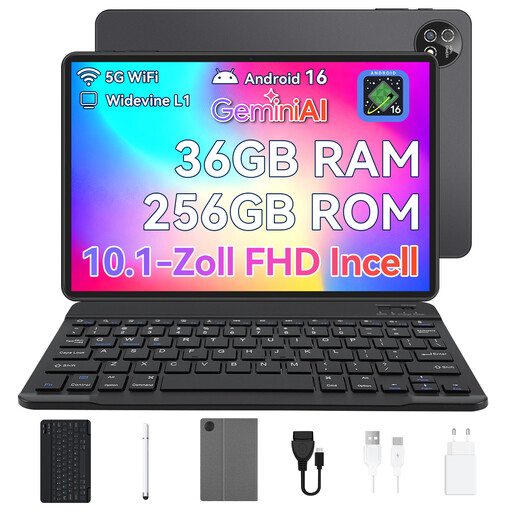 Image unavailable
A standalone option for creating designs without a separate computer; check that the drawing app and stylus suit your workflow.
10.1-inch touchscreen; 36 GB RAM (6+30); 256 GB storage; keyboard set and stylus listed in the product name.
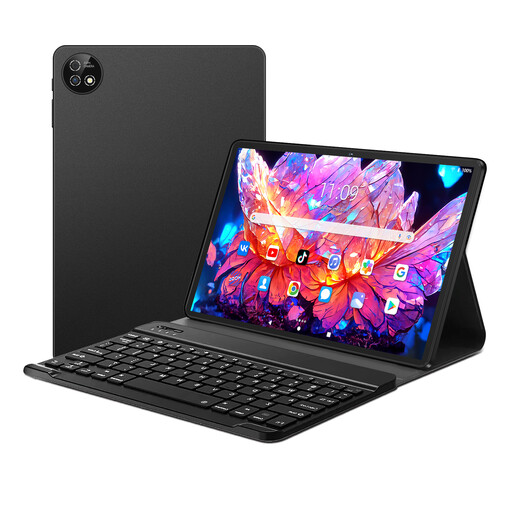 Image unavailable
A standalone tablet option for creating designs without a connected computer; check that the drawing app you want to use suits your workflow.
10.1-inch display; touch pen; Unisoc T310; 36 GB RAM and 256 GB ROM; keyboard listed in the product name.
 Image unavailable
A standalone tablet for creating designs without a connected computer; check that the drawing app and pen features meet your needs.
13.4-inch 2K display; T-Pen with 4,096 pressure levels; Helio G99; Android 15.
No, a pen display isn’t your only option. With a screenless graphics tablet, you draw on a separate surface and view your design on a monitor you already own. If you want to work without a connected computer, a standalone tablet could be right for you.
For a pen display, check that the required video, data and power connections are compatible with your computer and included in the package. For a graphics tablet, check that a suitable driver is available for your operating system; according to Huion Support, the Kamvas 13 (Gen 3) doesn’t come with a stand as standard.
There isn’t a single answer to this. Under § 2 UrhG, designs may be protected works if they represent the creator’s own intellectual creation, as explained by the Federal Ministry of Justice and the Federal Office of Justice. Whether you can use a specific design created by someone else depends on the circumstances.
ASR A6 doesn’t specify a standard angle for every drawing tablet. It sets out requirements for display screen workstations within its scope, so if you’re using one for work, you should consider the whole workstation. The regulation was drawn up by the Committee for Workplaces and published by the BAuA.