Households with no drying space
If you have little room to hang washed tea towels, check whether a washer-dryer’s drying capacity will suit your usual loads.


If you can hang your tea towels out to dry after washing, a washing machine is all you need; limited space alone doesn’t mean you need a washer-dryer. If you don’t have a practical place to dry them, a washer-dryer may be worth considering. Compare its drying capacity with the size of your usual load, as well as its energy use and programme duration when washing and drying in one cycle. For tea towels, the Verbraucherzentrale recommends letting them dry thoroughly after use, changing them at least once a week and washing them at a minimum of 60 °C.
If you have little room to hang washed tea towels, check whether a washer-dryer’s drying capacity will suit your usual loads.
If you can hang your towels out to dry, you could consider a washing machine, while also checking that you have enough room for the appliance and weighing up its energy use.
If you regularly wash kitchen textiles, look for a suitable wash programme and plan your load size so the towels can dry completely afterwards.
A good choice if: You can hang used and washed towels out to dry thoroughly.
Consider: There’s no machine drying cycle, so you’ll still need a suitable place to dry your towels.
A good choice if: You don’t have a practical place to dry your laundry and can fit a single appliance.
Consider: Plan wash-and-dry cycles around the drying capacity. Combined cycles have their own energy consumption figures and programme durations.
A good choice if: You have room for both appliances and regularly machine-dry larger loads of laundry.
Consider: You’ll need space for a second appliance. Check the tumble dryer’s own energy label.
First, check whether you can air-dry your towels completely after washing. For kitchen textiles, the Verbraucherzentrale recommends washing at a minimum of 60 °C, provided the fabric and care label allow it.
| Priority | What to check before buying | Who it matters to most |
|---|---|---|
| Drying thoroughly | Available space to hang laundry; for a washer-dryer, drying capacity and the duration of a combined programme. | If I have nowhere to hang washed towels out to dry, I need a suitable drying option. Around 29% of consumers put thorough drying first when space is limited. |
| Hygienic washing | Care label and temperature: the Verbraucherzentrale recommends washing tea towels at a minimum of 60 °C. | If I use tea towels in the kitchen, I want to match the wash temperature to the care label. Around 29% of consumers prioritise a suitable wash for kitchen textiles. |
| Fitting the appliance | Check the appliance’s full dimensions, door clearance and connections against the intended location. | If there’s only one possible place for the appliance, it needs to fit there with enough room for the door to open. Around 24% of consumers prioritise finding a suitable spot for their appliance. |
| Weighing up running costs | For a washer-dryer, compare the washing and combined-cycle consumption figures separately; for a separate tumble dryer, check its own energy label. | If running costs are important to me, I want to compare the figures for the cycle I’ll actually use. Around 18% of consumers put low running costs first. |
According to Bosch Home Appliances, the Bosch WNG24442 has a 9 kg washing capacity, but can wash and dry a maximum of 6 kg in one continuous cycle.
Plan combined loads around the stated drying capacity, not the higher washing capacity.
The EU energy label gives separate figures for different operating modes. For the AEG LWR9W81609, AEG lists 51 kWh per 100 wash cycles and 206 kWh per 100 combined cycles.
Compare figures for the same operating mode and think about how often you’ll actually want to machine-dry your laundry.
The Verbraucherzentrale recommends washer-dryers mainly for very small flats without room for a separate tumble dryer or clothes airer.
Before opting for a drying function, check whether a small hanging space is enough to air-dry your laundry completely.
The examples below refer to specific models. Capacities, energy consumption figures and dimensions can’t necessarily be applied to other appliances from the same brand.
The WNG24442 washer-dryer is an example of an all-in-one option when drying space is limited.
The LWR9W81609 washer-dryer is a heat pump model for shoppers weighing up regular machine drying.
The V5WD95SLIM is described as a slim washer-dryer, making it an option if appliance depth is a factor when choosing where to put it.
The WWA120 WCS 8kg Active washing machine is an example of a standalone washer for households that can air-dry their laundry.
The iQ500 WN44G243 washer-dryer is another specific model whose dimensions and capacities can be compared.
This selection includes washer-dryers, washing machines and offers with a separate tumble dryer. The key questions are whether you can air-dry your laundry and whether the drying capacity suits your loads.
 No image available
A good fit if you’re planning to wash and machine-dry your laundry in a stacked appliance set-up. This is two appliances, not a washer-dryer with a single drum.
The product details list a 12 kg washing capacity and a 10 kg drying capacity.
 No image available
For households without a practical place to dry laundry that want to combine washing and drying in one appliance.
The product details list a 12 kg washing capacity and a 10 kg drying capacity. For a continuous wash-and-dry cycle, the drying capacity applies.
 No image available
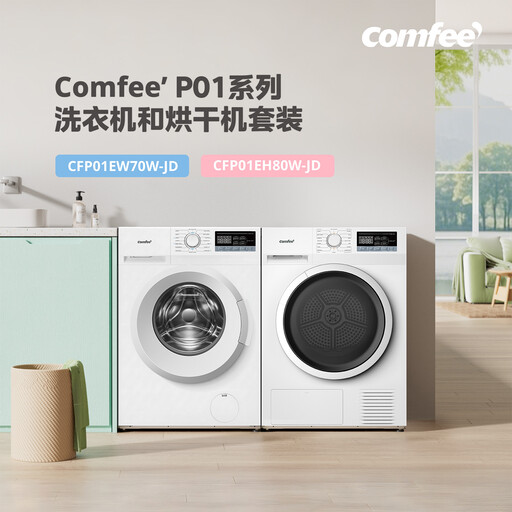
A good fit if you have room for a washing machine and separate heat pump tumble dryer, and plan to machine-dry your laundry.
This offer includes two separate appliances. Check that there’s enough room for both at the intended location.
 No image available
An option if you can air-dry your towels and are looking for a washing machine without a stated drying function.
The product name lists a 9 kg washing capacity and a spin speed of 1,200 rpm.
 No image available
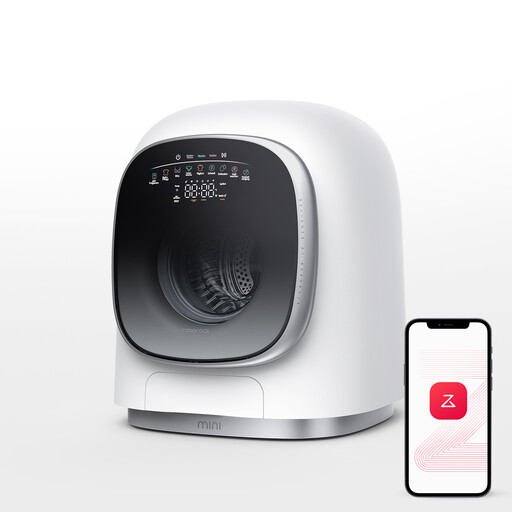
For small loads of towels when you want to wash and dry them in one appliance.
The product details list a 1 kg washing capacity and a 0.5 kg drying capacity, so larger loads can’t be dried in a single cycle.
No. If you can hang used and washed towels out to dry thoroughly, a washing machine is a suitable option. A washer-dryer may be useful if there’s no practical space for either a separate tumble dryer or a clothes airer.
The Verbraucherzentrale recommends letting tea towels dry thoroughly after use, changing them at least once a week and washing them at a minimum of 60 °C. Check the care label on the towel, too.
Make sure the room is well ventilated and heated when you dry laundry indoors. Also check that you can hang the towels out to dry completely in the space you have in mind.
On the EU energy label, compare the figures for washing and for washing and drying separately, paying particular attention to energy use per 100 cycles. For a separate tumble dryer, check its own energy label. These figures relate to the stated test programmes, not every individual load of tea towels.