A toaster is suitable for halved teacakes only if they fit the usable slots; a ‘four-slice’ capacity refers to bread and doesn’t guarantee space for four teacake halves. For whole teacakes, a bun warmer may be suitable, provided the instructions say it can be used for this purpose. More slots can save you time, as long as the teacakes fit and you have enough worktop space. TÜV SÜD recommends putting dry, unfilled baked goods in toaster slots.
Which toaster is right for you?
Families making several portions
If you want to toast several suitably sized teacake halves in a few rounds, compare the slot dimensions, number of slots and the space the toaster takes up. Severin and WMF give bread-slice capacities for their respective long-slot models; this doesn’t confirm that teacakes will fit.
Families with different browning preferences
If you want to prepare lightly and more deeply toasted portions at the same time, look for independently adjustable toasting chambers and check whether there’s a stop button. Bosch says the TAT7S45 has independently adjustable toasting chambers.
Households that warm whole teacakes
If you want to warm whole teacakes rather than toast their cut sides, check whether a bun warmer is included and whether the instructions say it’s suitable for this purpose. Severin and WMF list a bun warmer with their respective long-slot models.
What should you look for when choosing?
TÜV SÜD recommends using toaster slots for dry, unfilled baked goods. Measure the teacake halves you usually eat and check the instructions for the specific appliance before relying on capacity claims or a bun warmer.
Four short slots
A good fit if: several halved teacakes fit in the individual slots after you’ve checked the measurements, and you want different browning settings.
Keep in mind: Capacity for four slices of bread doesn’t mean the toaster can hold the same number of teacake halves. The manufacturer doesn’t list a bun warmer for the Bosch TAT7S45.
Two long slots
A good fit if: you also toast longer slices of bread and, after checking the measurements, your halved teacakes fit comfortably in the slots. The Severin AT 2509 and WMF Bueno Pro are examples with a bun warmer.
Keep in mind: The manufacturer’s capacity applies to bread, not automatically to teacakes. The long design also needs enough worktop space.
Two slots with a bun warmer
A good fit if: you usually toast just a few halves at a time or warm whole teacakes on a bun warmer that the instructions say is suitable.
Keep in mind: You may need several rounds to serve a family breakfast. Adjustable chambers don’t remove the need to check the measurements.
| What matters |
What to check before buying |
Who it matters most to |
| Fit of the halves |
Compare their length, height and thickness with the usable slot dimensions of the specific model. |
If my teacake halves don’t fit in the slots, bread capacity figures alone won’t help me. Around 29% of consumers put fit first. |
| Portions per round |
Decide how many halves you want to toast at a time and compare the appliance dimensions with the space you have available. |
For breakfast together, I want to toast as many halves as will actually fit in one round. Around 29% of consumers focus on capacity for the family. |
| How you’ll prepare them |
Choose between toasting halved teacakes and warming them whole; check the bun warmer and its permitted use in the instructions. |
If I want to warm whole teacakes or lightly brown only the cut sides, I need the right preparation method. Around 24% of consumers give this priority. |
| Cleaning and ease of use |
Check for a removable crumb tray and read the operating and safety instructions for the intended location. |
With frequent use, I want to remove crumbs easily and operate the toaster safely in its intended spot. Around 18% of consumers pay particular attention to care and handling. |
New mains-powered toasters covered by EU low-voltage rules must meet the relevant conformity requirements and carry the required CE marking. Under EU Directive 2014/35/EU and the European Union’s Your Europe guidance, CE is a manufacturer’s declaration, not independent proof that a toaster is suitable for teacakes.
Which assumptions should you avoid?
-
Assuming ‘four slices’ means four teacake halves
Stated capacities refer to slices of bread. Teacakes can differ in shape and thickness, so you may need more rounds.
Measure the halves you usually eat and compare them with the usable slot dimensions before estimating how many you can toast for a family breakfast.
-
Treating a bun warmer like a toaster slot
A bun warmer is for warming baked goods; it won’t brown the cut side of a halved teacake in the same way as a suitably sized toaster slot.
First decide whether you want to warm whole teacakes or toast them halved, then check the instructions to see what the bun warmer is designed for.
-
Choosing based only on wattage or the number of browning settings
Wattage alone doesn’t tell you whether teacakes will fit, and having lots of settings doesn’t guarantee even toasting. TÜV SÜD recommends considering wattage alongside the appliance’s size and number of toasting slots.
Check the fit and how many rounds you’ll need first. Treat browning settings as an adjustment option, not proof of a particular result.
Which brands are worth considering?
The information below relates to specific toaster ranges. Capacity and feature claims come from the respective manufacturers and don’t confirm that a particular size of teacake will fit.
Severin
The AT 2509 is a long-slot model for several slices of bread and warming baked goods.
- Severin lists two long slots for up to four slices of bread, plus a fold-up bun warmer.
- Bread capacity doesn’t confirm whether teacakes will fit or how many halves you can toast. The appliance measures 18,5 × 39,7 × 15,7 cm (H × W × D).
WMF
The Bueno Pro double long-slot toaster combines long slots with a removable bun warmer.
- WMF lists capacity for four slices of toast or two long slices of bread, six browning settings and a crumb tray.
- This capacity doesn’t tell you whether teacakes will fit. Also, make sure you don’t confuse the double long-slot toaster with the two-slice version.
Bosch
The TAT7S45 has four short toasting slots with independently adjustable toasting chambers.
- Bosch describes separate settings for different browning preferences.
- The manufacturer doesn’t list a bun warmer for this model; four slots don’t confirm that teacakes will fit.
Philips
The HD2511/70 is a two-slot alternative with variable toast chambers and a bun warmer.
- Philips lists eight browning settings and a bun warmer.
- With two slots, you may need several rounds to prepare a large number of portions. Check the slot dimensions and instructions for your intended use.
Braun
The IDCollection HT 5010 Black comes with a removable bun warmer and a range of browning settings.
- Braun lists 13 browning settings and a removable bun warmer.
- The number of settings isn’t independent proof of even teacake toasting; check that the halves fit the slots separately.
Joybuy products for serving several people at breakfast
This Joybuy selection includes toasters for several slices of toast per round; some models also list a bun warmer or separate controls. The stated bread capacity doesn’t confirm that particular teacake halves will fit.
 No image available
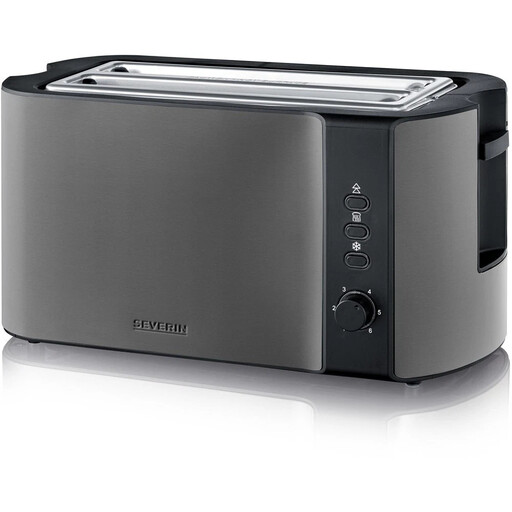
Severin AT 9341 long-slot toaster with bun warmer
The long-slot design may suit several portions or warming whole baked goods; the bread capacity doesn’t confirm that teacakes will fit.
Listed in the product name: 1400 W, defrost function, Dark Inox/Black finish and bun warmer.
View at Joybuy
 No image available
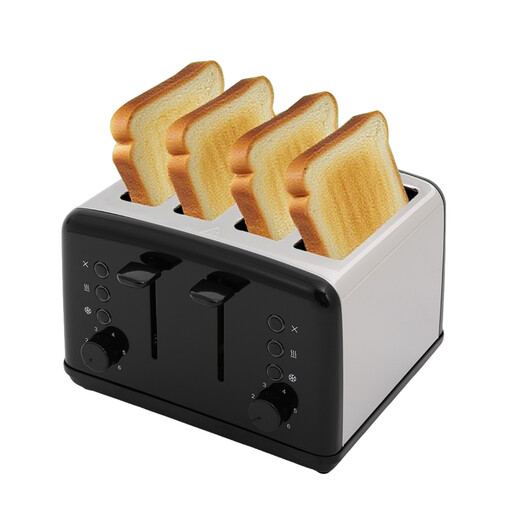
Four-slice toaster with six browning settings
Several settings and a stop function are listed for different browning preferences. Check the slot dimensions for your teacakes before buying.
Listed in the product name: 1460–1750 W, defrost and reheat functions, and a removable crumb tray.
View at Joybuy
 No image available
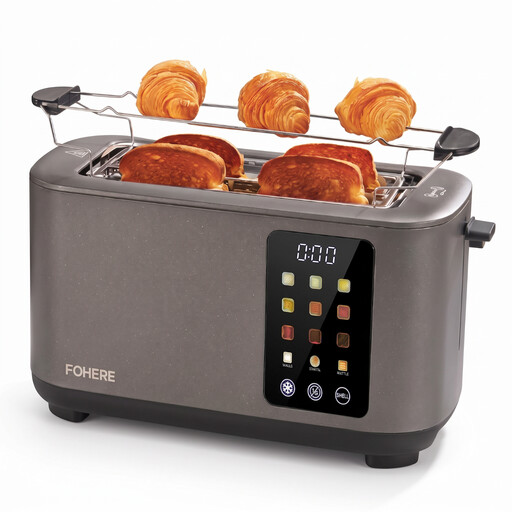
Four-slice long-slot toaster with bun warmer
The long-slot design and bun warmer may suit several portions or whole baked goods. Whether teacakes fit and how to use the warmer depends on their size and the instructions.
Listed in the product name: 1400 W, LCD touchscreen, nine browning settings, three bread programmes, plus defrost, reheat and stop functions.
View at Joybuy
 No image available
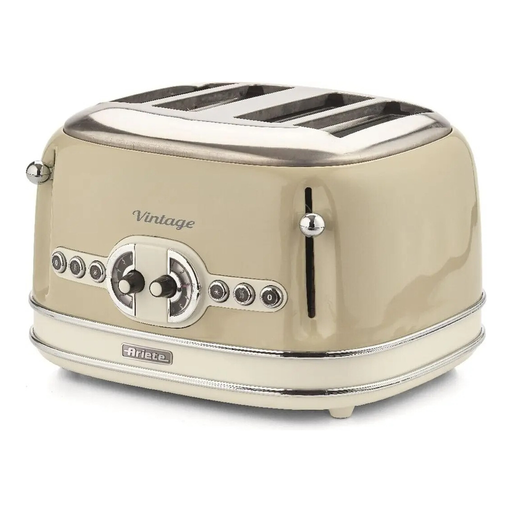
Ariete Vintage 156 four-slice toaster
The product name lists capacity for four slices and separate controls for two pairs of slices, which may be useful if you prefer different browning levels. Check separately whether teacake halves will fit.
Listed in the product name: six settings, defrost function, automatic lift, stainless-steel housing, 1600 W and beige finish.
View at Joybuy
 No image available
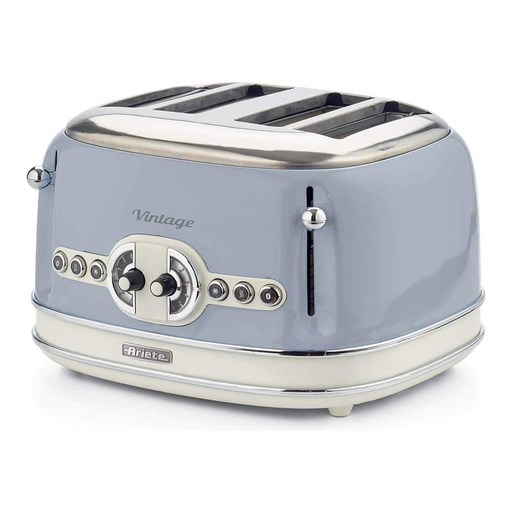
Ariete Vintage four-slice toaster
The product name lists independently operated pairs of slots for different browning preferences. Compare the usable slot dimensions with your teacake halves.
Listed in the product name: 31,9 × 28,9 × 20,5 cm and blue finish.
View at Joybuy
Frequently asked questions
Can I put a whole or buttered teacake in a toaster slot?
TÜV SÜD recommends using toaster slots for dry, unfilled baked goods. For whole or buttered teacakes, check the instructions for the specific appliance and only use a bun warmer for the purposes stated there. Warburtons recommends toasting Fruity Teacakes until light golden and adding butter afterwards.
How should I care for and position my toaster?
Check whether the crumb tray can be removed and whether the cable is long enough to reach the intended spot. Clean the appliance according to its instructions. TÜV SÜD points out that moisture must not get inside the appliance or reach the heating elements.
Is a manufacturer’s guarantee the same as your statutory rights?
No. Your statutory rights apply to claims against the seller if goods are faulty; a manufacturer’s guarantee is an additional voluntary promise with its own terms and conditions. The Verbraucherzentrale recommends considering the specific guarantee terms separately from your statutory rights.
Which marking matters for a new mains-powered toaster in Germany?
For new mains-powered toasters covered by EU low-voltage rules, the manufacturer must meet the applicable conformity requirements and affix the CE marking. EU Directive 2014/35/EU and the European Union’s Your Europe guidance explain that CE is the manufacturer’s declaration, not a test certificate issued by a central EU body. Also check the model details and safety information in the specific listing.


