
Lieferung heute & morgen

Qualitätsgarantie

Willkommens-Angebote freischalten: KOSTENLOSE Lieferung | Bis zu 80 % RABATT | Kostenlose 30-Tage-JoyPlus-Testphase
App herunterladen
A teapot with an infuser makes brewing loose-leaf tea easier when its filter, capacity and cleaning requirements suit your daily routine. But there are clear differences between a classic glass teapot, an insulated stainless steel teapot and an electric tea maker.
Many disappointing purchases aren’t down to the price, but to details that only become apparent with daily use. The points below will help you look beyond the marketing claims and choose the right model for your home, office or guests.
A 1-litre teapot has a theoretical capacity of around 1,000 millilitres. However, the infuser, space beneath the lid and clearance needed below the rim leave slightly less room for water. So if you’re making several cups, don’t just consider the stated capacity.
As a guide:
A filter that’s too small won’t give tea leaves much room to unfurl. This can make it less suitable for large-leaf tea, herbal tea or fruit tea. On the other hand, a very coarse filter may not hold back fine particles reliably.
Look for:
A tea maker with a stainless steel filter is especially handy for loose-leaf tea if you can remove the filter after brewing. With a press-filter teapot, you can stop the brewing process directly in the pot.
A heat-resistant borosilicate glass teapot may be suitable for hot drinks. Even so, sudden changes in temperature can put the material under strain. So don’t pour boiling water straight into a cold glass teapot unless the manufacturer specifically says it’s safe to do so.
Also check:
With an electric model, you’ll also need to consider details such as power, temperature settings, keep-warm function and automatic shut-off. These features can make it more convenient, but they may also affect cleaning and energy use.
A glass teapot lets you see the colour of the tea and watch it brew. Borosilicate glass is often used because it’s designed for hot liquids. Even so, always follow the manufacturer’s instructions.
Stainless steel isn’t transparent, but it’s less prone to damage from knocks. An insulated teapot with a double-wall vacuum design can keep the heat inside for longer. The outside may stay cooler, but you should still handle it with care.
Ceramic and stoneware teapots often retain heat well, but they’re heavier and generally more susceptible to damage from knocks. If you’ll be using one every day, take its weight when full into account too.
A removable filter makes it easier to dispose of tea leaves. A wide opening is especially useful, as it lets you reach inside the teapot with a brush or cloth. Otherwise, limescale and tea stains can build up in hard-to-reach areas.
If a tea maker has lots of extra parts, check whether each one can be washed separately. A simple design is often easier to manage every day than a teapot with awkward gaps and hard-to-reach spaces.
An electric teapot or tea maker may combine temperature selection, a keep-warm function and a timer. This can be useful for households where tea needs to be ready at different times. These appliances also need a dry surface, regular descaling and careful handling around electricity and hot water.
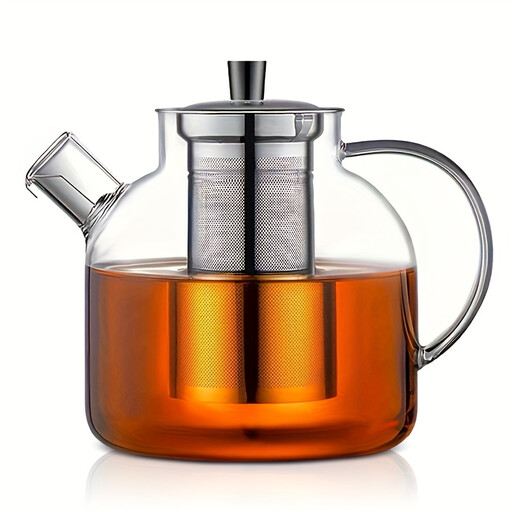
Why this product suits this profile: This glass teapot with a removable infuser has a straightforward design, making it a good starting point for brewing loose-leaf tea.
The removable infuser means tea leaves don’t stay at the bottom of the pot, where they’d be difficult to reach.
Transparent body and separate filter; suitable for loose-leaf tea and lets you keep an eye on the brewing process.
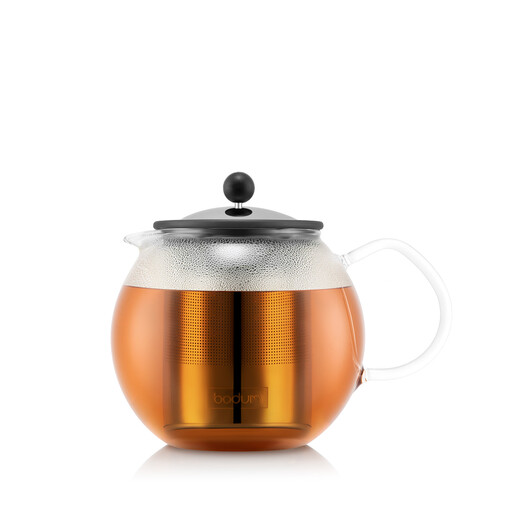
Why this product suits this profile: This 1-litre model combines visible glass brewing with a stainless steel filter system and a press mechanism.
The filter can be pressed down inside the pot, so you can control when brewing stops without removing the infuser.
Borosilicate glass, a stainless steel filter and stated dishwasher-safe suitability according to the product description.
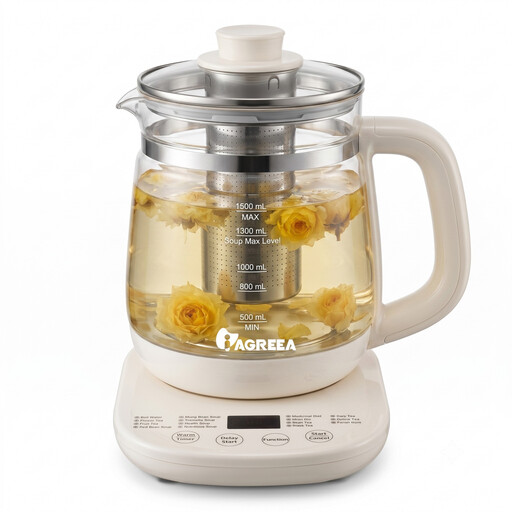
Why this product suits this profile: This electric model is designed for households that want to prepare tea, herbal infusions or other hot drinks using selectable temperature settings.
The wide opening and removable stainless steel filter make it easier to reach the filter and the bottom of the pot when cleaning.
1.5-litre capacity, 800 W heating element, six temperature settings, plus keep-warm and delay functions according to the product description.
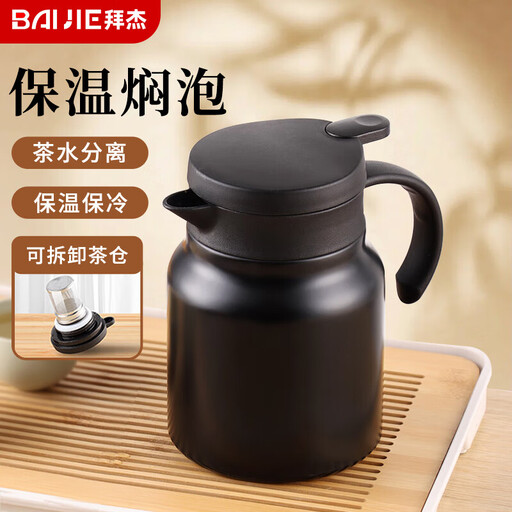
Why this product suits this profile: This double-walled stainless steel teapot is designed for serving tea and other hot drinks at home or when entertaining guests.
The insulated design reduces heat transfer to the outer wall. Even so, take care when handling the pot, as it contains hot liquid.
1,000-millilitre capacity, double-wall vacuum insulation and stainless steel construction according to the product details.
We’ve put together a complete, regularly updated list of products that meet these strict selection criteria and the safety regulations in force across the EU.
A capacity of 400 to 600 millilitres is often enough for one person. For two to four cups, 800 millilitres to 1 litre is a practical choice. If you regularly entertain guests, you could choose a model with a capacity of 1.25 to 1.5 litres. Bear in mind that the filter takes up some space inside the pot.
Remove the filter straight after brewing and dispose of the tea leaves. If possible, rinse the pot, lid and filter separately with warm water. You can use suitable household products to remove tea stains. Check the product description for information on whether the teapot is dishwasher-safe.
It depends on the power, running time, amount of water and whether you use the keep-warm function. An 800-watt appliance used for a short time may use less energy than a model that stays heated continuously. So running costs depend not just on the wattage, but also on heating time and how long the tea is kept warm.