
Lieferung heute & morgen

Qualitätsgarantie

Willkommens-Angebote freischalten: KOSTENLOSE Lieferung | Bis zu 80 % RABATT | Kostenlose 30-Tage-JoyPlus-Testphase
App herunterladen
A teapot with infuser can make preparing loose-leaf tea easier, provided its capacity, filter and material suit your daily routine. However, many products look very similar at first glance. Hidden drawbacks often only become apparent during use: tea leaves pass through the infuser, the pot drips when pouring, or the stated capacity does not match the amount that can actually be used.
This Joybuy selection guide explains which details matter before you buy and which models suit different households, budgets and usage scenarios.
A 1-litre teapot does not always hold exactly 1 litre of tea up to the rim. For safe use, pay attention to the maximum fill line. A teapot with a tea infuser also needs room for the filter, while leaving a small gap below the rim reduces the risk of hot water spilling over when pouring.
For several people, a 1.5-litre teapot or a model with a 1.7-litre capacity may be a sensible choice. However, the specific manufacturer’s information on the maximum fill volume is what matters. This should be checked particularly carefully with electric appliances.
A tea infuser needs to have a sufficiently fine mesh without restricting the tea too much. Large tea leaves need room to expand in the water. For fine teas, herbal blends or teas with small particles, a dense stainless-steel filter is usually more practical than a coarsely perforated infuser.
Check how the filter is attached. A removable filter is easier to clean. A permanently integrated infuser can be convenient, but it should remain easy to access so that residue does not build up in hard-to-reach areas.
A glass teapot lets you watch the brewing process, but depending on its construction, it may be more sensitive to knocks and sudden temperature changes. Borosilicate glass is often used for heat-resistant vessels; even so, the teapot should be placed on a flat, heat-resistant surface.
Stainless-steel teapots with double walls are often designed to provide thermal insulation. Check whether the handle remains cool and whether the lid stays securely in place while pouring. For an electric teapot, automatic switch-off, boil-dry protection, cable management and a stable base are important features to look for.
A classic teapot for loose-leaf tea usually uses a hanging filter or a permanently integrated infuser. A tea press, on the other hand, uses a movable filter that allows you to stop the brewing process directly inside the vessel. This can be appealing if you want to control the steeping time as precisely as possible.
A kettle with tea infuser combines heating water with preparing tea. Check whether the model is genuinely designed for brewing tea or merely has a removable filter for limescale particles. An electric teapot with a filter is not automatically suitable for every type of tea. Temperature settings or a keep-warm function must be explicitly listed in the product details.
For one person, 0.5 to 0.8 litres is often sufficient. A 1-litre model can provide two to three cups. Families or offices are more likely to benefit from 1.3 to 1.7 litres, provided there is enough space to place the teapot.
Useful features include:
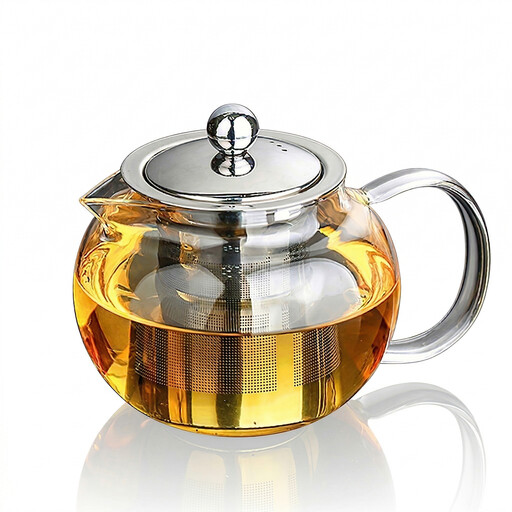
Why this product suits the profile: The stated 1.3-litre capacity offers a practical mid-range size for everyday use and several cups. The stainless-steel filter is designed for preparing loose-leaf tea.
The prominent stainless-steel filter addresses the common need for a sturdy infuser instead of a paper filter that is difficult to clean.
1.3-litre capacity and stainless-steel filter according to the product information.
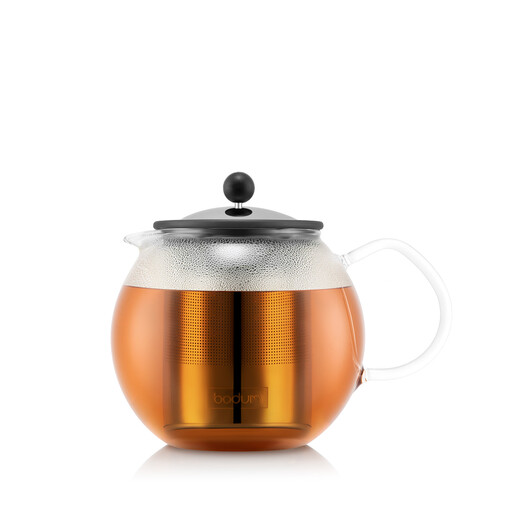
Why this product suits the profile: The heat-resistant borosilicate glass pot lets you watch the brewing process. The stainless-steel filter with silicone rim and French press design allow you to stop brewing without removing the filter.
The product information states that it is dishwasher-safe and has an attached filter. This removes the need to look for a loose-fitting infuser.
1-litre capacity, borosilicate glass and stainless-steel filter according to the product description.
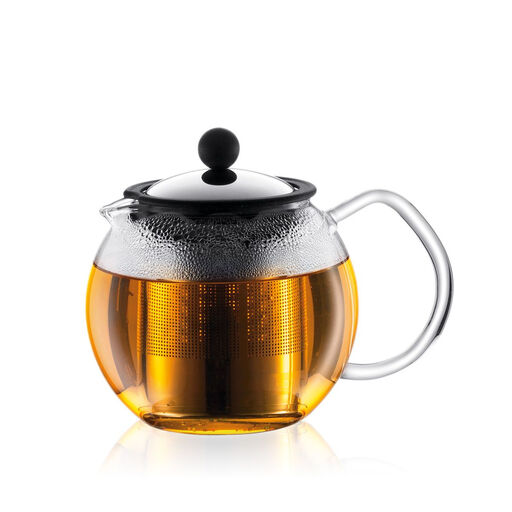
Why this product suits the profile: With a capacity of 0.5 litres, this tea press is suitable for individual servings or use in the office. The stainless-steel filter is moved using a press mechanism, while the glass vessel lets you watch the brewing process.
The filter does not need to be removed during brewing. This reduces the number of loose parts and makes it easier to control the steeping time.
0.5-litre capacity, heat-resistant glass and BPA-free plastic components according to the product description.
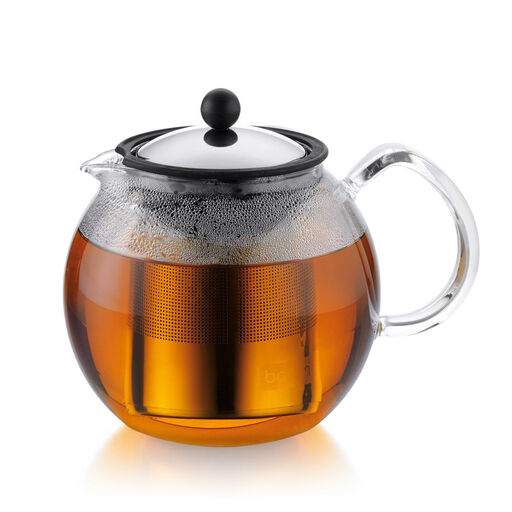
Why this product suits the profile: The stated 1.5-litre capacity is designed for several cups at the breakfast table, at home or in the office. The French press construction supports controlled preparation.
The larger capacity reduces the need to brew several small pots one after another. However, the maximum fill line should still be observed.
1.5-litre capacity and stainless-steel filter according to the product information.
We have put together a complete, regularly updated list of products that fully meet these strict selection criteria and the safety regulations applicable in the EU.
According to the product details, an electric option such as the Ariete Vintage Kettle 2869 offers a power output of 2,000 watts, a 360-degree base and automatic switch-off. The model is listed with a capacity of 1.7 litres; however, the usage instructions state a maximum fill volume of 1 litre. When deciding which product to buy, the actual fill line marked on the appliance should therefore be the deciding factor.
If you only need hot water and brew your tea separately, you can also choose a stainless-steel electric kettle with safety features. A model with an integrated tea infuser is particularly useful if you want to heat water and brew tea in the same vessel. Before buying, check the temperature control, keep-warm function and filter position.
The filter and lid should be rinsed with warm water after every use. Depending on the material, tea stains can be removed with a mild cleaning solution. Stainless steel and glass are not automatically dishwasher-safe; the relevant manufacturer’s instructions are what count. Electric appliances must not be immersed in water.
For two people, 0.8 to 1 litre is often sufficient, depending on the size of the cups. If you want to serve several infusions or additional cups at once, you can choose a model with a capacity of 1.3 or 1.5 litres. The usable fill volume should always be determined using the markings and product description.
Its lifespan depends on the material, cleaning routine, temperature changes and daily use. Glass should be protected from knocks, while stainless steel is less prone to breakage. A replaceable or separately available tea infuser can help you continue using the teapot if the filter becomes damaged over time.