
Lieferung heute & morgen

Qualitätsgarantie

Willkommens-Angebote freischalten: KOSTENLOSE Lieferung | Bis zu 80 % RABATT | Kostenlose 30-Tage-JoyPlus-Testphase
App herunterladen
A teapot should not only look appealing but also work reliably in everyday use. When buying one, many households initially focus on colour, shape or a particularly low price. However, key differences often only become apparent when preparing tea: the filter is difficult to remove, the capacity is insufficient for several cups or the material cannot withstand sudden changes in temperature.
These three common buying mistakes are particularly likely to lead to unnecessary expense:
For one person or a small office, a teapot with a capacity of 750 to 800 ml may be sufficient. A 1-litre teapot is often suitable for several cups, depending on the cup size and the desired strength of the tea. For families, meetings or social gatherings, a 1.5-litre teapot provides more capacity to spare.
As well as checking the capacity in litres, consider the dimensions. A large teapot needs enough space on the table and in the kitchen cupboard. With a teapot featuring an integrated filter, the usable volume may be slightly lower than the stated nominal capacity.
A glass teapot lets you see the infusion. This is particularly useful for flowering teas and tea blends, whose unfurling can be observed as they steep. With glass, look for details such as borosilicate glass or glass explicitly described as heat-resistant. Direct heat sources and sudden changes in temperature are only suitable if the manufacturer expressly permits them.
A stainless steel teapot is generally resistant to knocks and is suitable for frequent use. The brewing process is not visible, however. Ceramic and stoneware retain heat differently and can stand securely on the table thanks to their weight. For example, the Atmosphera Nature Mint set is made from stoneware and also includes a cup and a bamboo base.
A teapot with an infuser or teapot with a filter is usually more practical for loose-leaf tea than a separate tea strainer. Key points include:
A Japanese teapot or a model for Gongfu tea may deliberately have a smaller capacity. These teapots are designed more for concentrated infusions and several short brewing sessions than for preparing a large quantity of tea for several people.
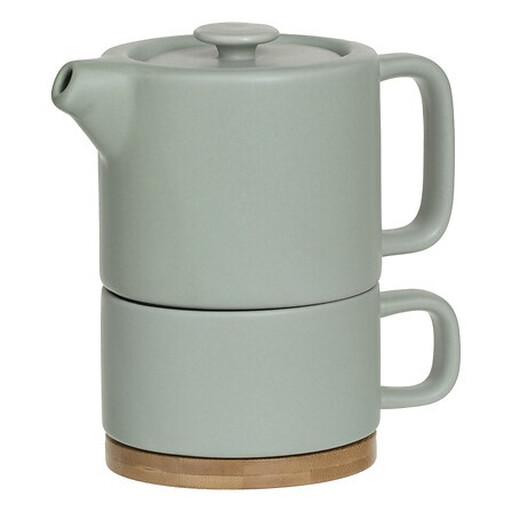
Why this product suits this profile: The set combines a stoneware teapot with a matching cup and bamboo base. It is designed for individual teas or a short tea break without the need for additional accessories.
The included components are clearly specified. The manufacturer recommends washing by hand with warm water and mild washing-up liquid, as well as avoiding naked flames and sudden changes in temperature.
Stoneware teapot, cup and bamboo base as a coordinated set; total set weight according to the product details: 0,750 kg.
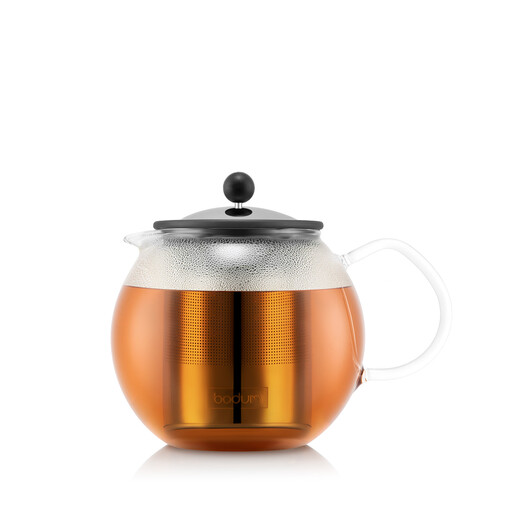
Why this product suits this profile: This teapot combines a 1-litre capacity with a filter and press system. You can stop the brewing process without removing the filter completely.
The product details specify borosilicate glass, a stainless steel filter system and a silicone rim around the filter. The maximum fill level of 1 litre must be observed, and overfilling should be avoided.
Borosilicate glass, stainless steel filter and 1-litre capacity; dishwasher-safe according to the product description.
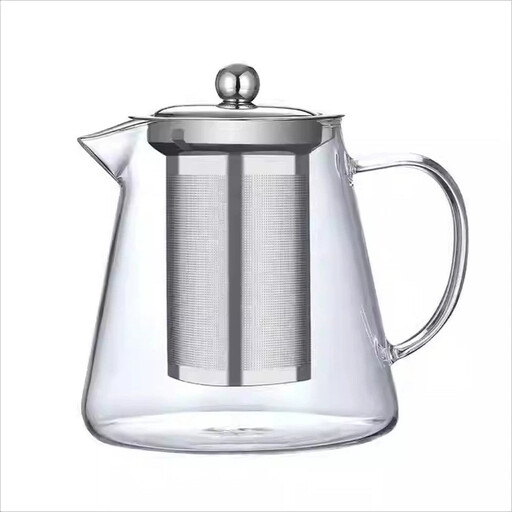
Why this product suits this profile: The stated capacity of 750 ml suits smaller tea gatherings, concentrated infusions and preparing flowering tea at home.
The smaller capacity reduces the risk of buying a teapot that is too large for your needs. Before use, check the specific instructions regarding temperature changes and cleaning.
750-ml format for smaller quantities; according to the product name, intended for Gongfu tea, flowering tea and use at home.
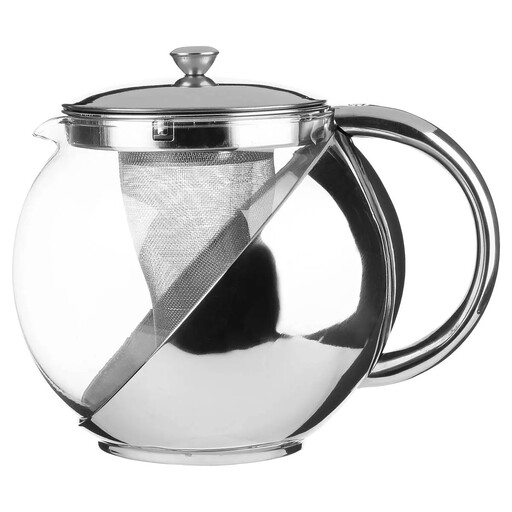
Why this product suits this profile: The 1.1-litre capacity, glass body and integrated stainless steel filter are designed for preparing several cups of loose-leaf tea at home or in the office.
According to the product description, the filter is integrated and intended for loose-leaf tea. The instructions rule out direct heat from a hob and sudden changes in temperature, clearly defining the intended use.
1.1-litre capacity, glass body for monitoring the infusion and stainless steel filter with stainless steel handle and lid.
We have put together a complete, regularly updated list of products that fully meet these strict selection criteria and the safety regulations applicable in the EU.
For loose-leaf tea, first add the recommended quantity to the filter. Then pour in water at the appropriate temperature for the type of tea. Follow the steeping time stated on the tea packaging. For flowering tea, a transparent body is helpful because the flowers can unfurl during infusion.
After pouring, remove tea leaves and residue promptly. Use warm water and a mild cleaning product unless the product details specify otherwise. Abrasive cleaners can scratch surfaces. With glass teapots, even heating is also important: do not pour boiling water into a very cold vessel, and do not place the teapot on a direct heat source unless this is expressly permitted.
A teapot for loose-leaf tea should have a sufficiently large, fine-mesh filter that is preferably removable. For several cups, models with a capacity of around 1 litre or more are suitable. For concentrated infusions or smaller portions, a 750-ml teapot may be more practical.
This depends on the material and the manufacturer’s instructions. Borosilicate glass is often used for heat-resistant teapots, but sudden changes in temperature can still cause damage. Always check the instructions regarding the maximum temperature, use on a hob and cleaning.
Its lifespan depends on the material, how it is used and how well it is cared for. Stainless steel and stoneware are relatively resistant to knocks during normal use. Glass requires careful handling. Cracks, chips or a loose filter are reasons to stop using the teapot for hot drinks.