
Lieferung heute & morgen

Qualitätsgarantie

Willkommens-Angebote freischalten: KOSTENLOSE Lieferung | Bis zu 80 % RABATT | Kostenlose 30-Tage-JoyPlus-Testphase
App herunterladen
A good technical jacket is an investment in comfort and protection, whether for your daily commute, a weekend hike, or demanding trekking tours. But the market is flooded with marketing promises that often confuse more than they help. Many buyers quickly find that their new jacket either fails in heavy rain or feels like a plastic bag during light exertion.
As your Joybuy Product Recommendation Officer, I'll help you navigate the common pitfalls. We'll focus on the facts so you can make an informed decision and find a jacket that serves its purpose for years to come.
Before we dive into the important features, let's look at the most common mistakes that lead to a bad purchase.
To avoid these traps, you should focus on three objective criteria. These will give you a reliable basis for your purchasing decision.
The waterproofness of a rain jacket or outdoor jacket is measured in millimetres of water column (mm). This value describes the water pressure a material can withstand before moisture penetrates.
Also, look for sealed or welded seams. Without this protection, even the best material can let water in at the seams.
A jacket's ability to transport water vapour (sweat) from the inside to the outside is crucial for comfort. There are two common metrics:
Additional ventilation zips under the arms (pit zips) can significantly improve air circulation when needed.
The choice between a hardshell and a softshell jacket depends on your primary use case.
Here are some models that represent a considered choice for specific user profiles, based on objective features.
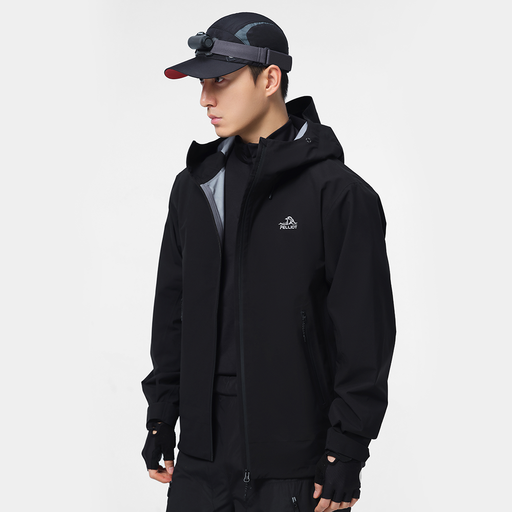
Why This Fits Their Persona: This jacket is designed for versatile use—from city commuting to light hikes. Its clean design fits well into everyday life, while its functional properties offer reliable protection in unpredictable weather.
The description as "storm-proof waterproof" indicates a reliable membrane that goes beyond a simple DWR coating. At the same time, high moisture permeability is emphasised, which counteracts the breathability trap.
Versatile all-terrain performance for city and nature; abrasion-resistant fabric for durability.

Why This Fits Their Persona: This jacket is made for movement. It's lightweight and designed for breathability and quick-drying, ideal for running, tennis, or fitness. The focus is clearly on performance, not extreme weather protection.
It avoids the "wrong jacket type" trap by being explicitly positioned as a lightweight training jacket, not claiming to be a hardshell. Prioritising breathability and quick-drying material prevents heat build-up during exertion.
Lightweight, breathable material; quick-drying properties for high comfort during sports.
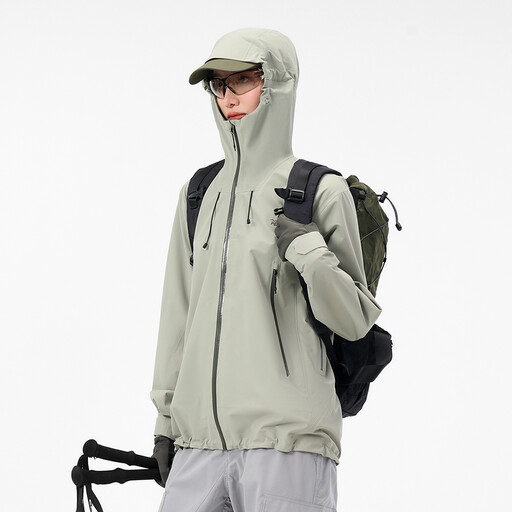
Why This Fits Their Persona: This jacket is built for extreme environments and demanding tours. With features like a RECCO avalanche reflector, enhanced waterproofing, and abrasion resistance, it's aimed at users who refuse to compromise on protection and safety.
This is a true hardshell that advertises "enhanced waterproof/breathability," thus avoiding the trap of vague promises. The extended underarm vents are a direct response to the need for temperature regulation during high exertion.
High-level protection for extreme conditions; integrated RECCO reflector for added safety in the backcountry.
We've compiled a complete, up-to-date list of products that fully meet these strict selection criteria and all relevant standards.
Proper care is crucial. Only machine wash your jacket when necessary, using a special detergent for technical apparel. Do not use fabric softener, as it clogs the membrane's pores. The water-repellent DWR finish can be reactivated with gentle heat in a tumble dryer (low setting) or by ironing (low setting, with a cloth in between). If water no longer beads off the surface, the DWR treatment should be reapplied with a suitable spray.
The RET value (Resistance to Evaporating Heat Transfer) is a measure of the resistance a fabric presents to the passage of water vapour. Unlike the MVTR value, a lower RET value is better. An RET value below 6 indicates very high breathability, ideal for intense physical activity. Values between 6 and 13 are good for most outdoor activities.
Yes, that's perfectly fine. Modern hardshells are often lighter and more comfortable than older models. Their main advantage in daily life is reliable protection against heavy rain and wind. However, for purely urban use without high physical exertion, a hardshell can sometimes feel too stiff. In this case, a versatile hybrid or a lighter rain jacket might be a more comfortable alternative.