
Lieferung heute & morgen

Qualitätsgarantie

Willkommens-Angebote freischalten: KOSTENLOSE Lieferung | Bis zu 80 % RABATT | Kostenlose 30-Tage-JoyPlus-Testphase
App herunterladen
A telescopic clothes rack system promises a flexible and straightforward solution for clothes storage, especially in rental apartments, shared flats, or alcoves where a conventional wardrobe won't fit. The ability to install it without drilling is a decisive advantage. However, not every system delivers on its promise. Many buyers are frustrated by unstable constructions that buckle under the weight of clothes, or by unsightly marks left on the ceiling and floor.
To help you avoid such a poor purchase, we'll highlight the most common weaknesses and show you which features to look for before you buy.
The selection of extendable wardrobe systems is vast, but so are the differences in quality. Pay special attention to these three potential flaws:
To find a durable and functional solution, you should check three core parameters. These determine whether an adjustable clothes rack is suitable for your needs.
The load capacity is the most important metric. It indicates how much weight the system can safely support. Look for clear specifications from the manufacturer.
A good extendable wardrobe system adapts to your space, not the other way around. Before buying, measure the exact ceiling height and the available width of your niche or wall.
The main advantage is the installation as a no-drill clothes stand. This is achieved through a tension mechanism that clamps the vertical poles between the floor and the ceiling.
Based on the criteria mentioned, we have identified a few models that are suitable for different user profiles.
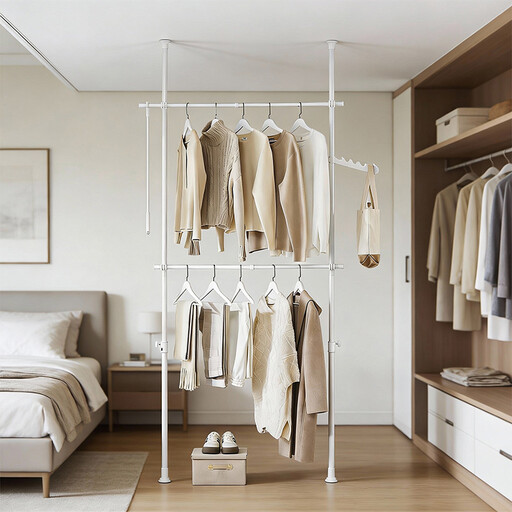
Why This Fits Their Persona: Ideal for students or a first apartment. It offers a simple, no-drill solution for a manageable amount of clothing in small rooms or niches.
The clearly defined load capacity of up to 25 kg (according to the manufacturer) prevents overloading and bending of the rails—a common problem with no-name products.
Simple assembly and flexible adjustment of width (75–126 cm) and height (200–295 cm) for standard rooms.
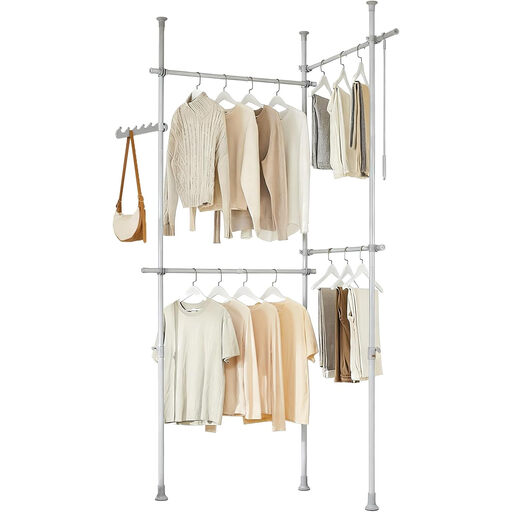
Why This Fits Their Persona: Suitable for couples or individuals with a larger wardrobe who want to use an entire wall or a larger niche as an open closet.
The robust metal construction and high load capacity of up to 65 kg (according to the manufacturer) directly address the weakness of unstable systems. This model is designed for a heavier load.
High load capacity and extensive configuration options with four clothes rails on three levels. Large adjustment range in width (124–226 cm) and height (200–295 cm).
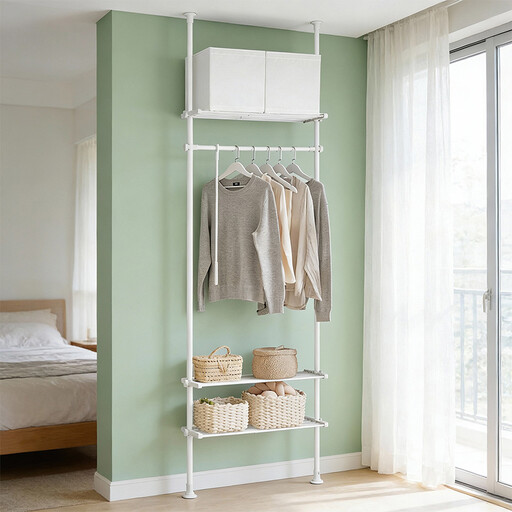
Why This Fits Their Persona: Perfect for transforming unused corners or narrow niches into a functional walk-in closet system that combines hanging and shelf space.
This system solves the problem of rigid configurations. By combining a clothes rail and shelves, it offers a more versatile storage solution than simple rail-only systems.
Three integrated, adjustable shelves for folded clothes, shoes, or boxes. Ideal for maximizing space in a small footprint (width 52–80 cm).
We have compiled a complete, up-to-date list of products that fully meet these strict selection criteria and UK safety regulations.
The load capacity varies greatly depending on the model and manufacturer. Simple systems for light clothing are often rated for 20-25 kg. Robust models made of steel tubes can support up to 65 kg or more, according to manufacturer specifications. Always check the product description for the exact maximum load capacity and distribute the weight evenly.
High-quality systems are equipped with rubberised or soft plastic caps on the ends of the telescopic poles. These protect surfaces and prevent scratches or pressure marks. For very delicate floors or ceilings, it may still be advisable to place a thin felt or rubber mat underneath.
Most telescopic clothes rack systems are designed for installation between a horizontal floor and a horizontal ceiling. Installation on a sloped ceiling is generally not possible, as the vertical poles cannot find a secure grip and the pressure cannot be applied perpendicularly. Other shelving systems are better suited for such cases.