
Lieferung heute & morgen

Qualitätsgarantie

Willkommens-Angebote freischalten: KOSTENLOSE Lieferung | Bis zu 80 % RABATT | Kostenlose 30-Tage-JoyPlus-Testphase
App herunterladen
A telescopic clothes rail system promises a flexible and straightforward solution for more storage space—all without drilling or making permanent changes to your home's structure. It seems like the ideal choice, especially for renters, students, or for utilising alcoves and unused corners. However, the market is flooded with products of widely varying quality. Before you invest, it's crucial to understand the typical weak points that can quickly turn a practical idea into a poor purchase.
As your Joybuy Product Recommendation Officer, I'll help you identify the key features and make an informed decision.
Many products look convincing at first glance but reveal their shortcomings only through daily use. Pay close attention to these three critical points to avoid disappointment:
To avoid the problems mentioned above, you should carefully check three technical aspects before buying. These largely determine the functionality and longevity of your new clothes storage system.
The foundation of stability is the material. Systems made of powder-coated steel are generally more robust and resistant to bending than those made of lightweight aluminium. Pay attention to the diameter of the telescopic poles—thicker tubes offer greater strength. The connectors are just as crucial. High-quality, durable plastic (like ABS) is a better choice here than brittle, thin-walled plastic. A solid telescopic wardrobe system relies on a thoughtful combination of materials.
Critically evaluate the maximum load capacity specified by the manufacturer. A value of 25 kg might be sufficient for light summer clothes, but it is quickly exceeded by heavy winter coats. Plan for a buffer and choose a model whose capacity is well above your estimated needs. Also, precisely measure the ceiling height and the available width of your alcove or wall. Compare these measurements carefully with the minimum and maximum adjustment range of the system to ensure the adjustable clothes rail will actually fit.
The tension-mounted clothes rail is fixed between the floor and the ceiling. Systems with a screw-based mechanism, where the pole is tensioned by turning it, often provide a firmer and more lasting hold than simple spring systems. The end caps are also important: large, non-slip caps made of rubber or soft plastic distribute the pressure evenly and protect both your floor and ceiling from marks or damage. This is especially important if you want to fit a clothes rack for an alcove snugly.
Based on the criteria above, we have identified several models suitable for different user profiles.
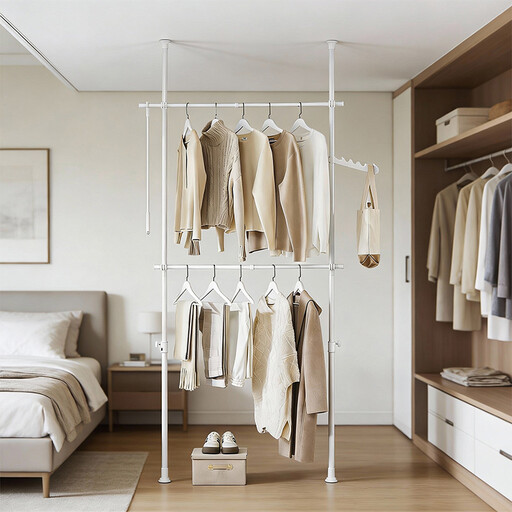
Why This Fits Their Persona: Ideal for students or as a supplement in the bedroom. With a width of 75–126 cm, this system fits perfectly into small alcoves or narrow hallways without overwhelming the space. It offers a basic but functional solution for a first apartment.
The load capacity is clearly defined at 25 kg and designed for lighter clothing. This prevents the risk of overloading and ensures the system remains stable within its intended use.
Very space-efficient and quick to assemble thanks to its simple design. The side hook provides additional space for bags or scarves.
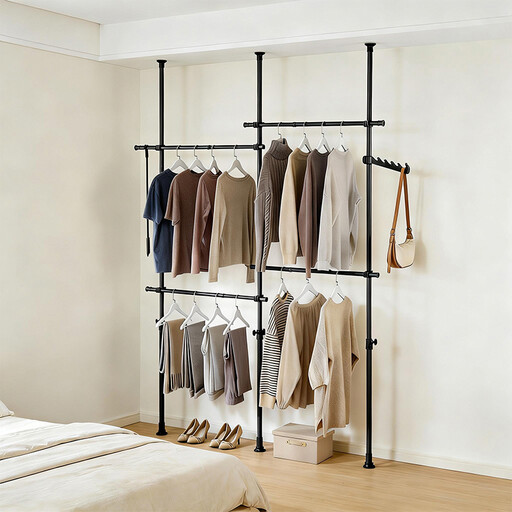
Why This Fits Their Persona: For individuals with a large clothing collection or couples sharing a system. The variable width of 124–226 cm and four clothes rails offer enormous space. It can replace a traditional wardrobe and serve as an open dressing system.
It addresses the instability trap with three vertical telescopic poles and a specified load capacity of up to 65 kg. The load is distributed more evenly, which reduces sagging of the crossbars even when fully loaded.
High capacity and flexible arrangement thanks to four individually positionable clothes rails. The tool-free assembly remains straightforward despite its size.
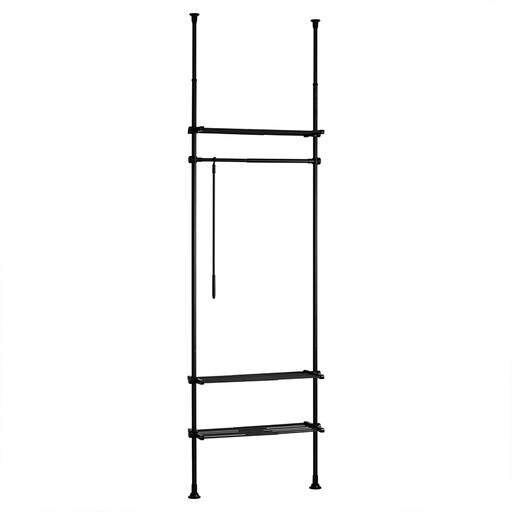
Why This Fits Their Persona: Perfect for anyone looking to create a complete open wardrobe system. This model combines a clothes rail with three shelves, making it suitable for storing folded clothes, shoes, or storage boxes.
It solves the trap of an "impractical configuration" by offering a multifunctional structure from the outset. The combination of hanging and shelf space allows for organised and clear storage.
Combines hanging and shelf storage in one compact, adjustable system. The stepless adjustment of the rail and shelves offers maximum flexibility.
We have compiled a complete, up-to-date list of products that fully meet these strict selection criteria and German safety regulations.
Stability depends on three factors: material quality (steel tubes are preferable), correct installation, and adherence to the specified load capacity limit. A system is stable when it is firmly and perfectly vertically tensioned between a solid floor and a solid ceiling (not suspended ceilings or soft plasterboard).
Usually not. High-quality systems have end caps made of rubber or soft plastic that distribute pressure and protect surfaces. Before installation, you should ensure that the floor and ceiling are clean and free of dust to prevent scratches. For very delicate floors (e.g., softwood), a thin felt pad can offer additional protection.
Always read the included instructions. However, the general process is usually similar: the telescopic poles are adjusted to a length slightly greater than your room height. They are then inserted between the floor and ceiling by compressing them. The built-in spring or screw mechanism creates the necessary tension. Use a spirit level to ensure the poles are perfectly vertical before loading them.