
Lieferung heute & morgen

Qualitätsgarantie

Willkommens-Angebote freischalten: KOSTENLOSE Lieferung | Bis zu 80 % RABATT | Kostenlose 30-Tage-JoyPlus-Testphase
App herunterladen
A Telescopic Clothes Rail promises a flexible storage solution without drilling into your walls or ceilings. It seems ideal for renters, students, or for creating a walk-in wardrobe. However, the market is flooded with products of widely varying quality. Many buyers face nasty surprises after a short time: sagging rods, damaged ceilings, or an unstable system that collapses under the weight of their clothes.
As your Joybuy Product Recommendation Officer, I'm here to help you spot the common pitfalls and make an informed decision. We'll focus on the three most frequent flaws that can render a promising product useless:
To avoid a bad buy, you should carefully examine three technical features before making a decision. These determine the stability, durability, and functionality of your new wardrobe system.
The stability of a clothes rail system lives and dies by the material of its poles. Models made of powder-coated steel or iron are generally more resilient than those made of lightweight aluminium. Pay attention to the tube diameter and wall thickness. A larger diameter provides greater resistance to bending. Systems with thin rods tend to sag in the middle as soon as they are hung with more than just a few light shirts. Robust connectors made of hard plastic or metal are also an indicator of a more durable construction.
The maximum load capacity is one of the most critical manufacturer specifications. Be realistic when assessing your needs: a wardrobe with heavy winter coats and suits requires a significantly higher load capacity than a rail for summer dresses and blouses. A good extendable clothes rail system has a reliable tension mechanism that ensures a firm hold through compression. Systems where the pole is extended slightly beyond the room height and then pressed into position often offer a more secure hold than simple twist-lock mechanisms. This is the core principle of a functional floor-to-ceiling clothes rail.
An adjustable clothes rail should adapt precisely to your space. Check the minimum and maximum adjustment range for both height and width. Will the system fit into the intended niche or under a sloped ceiling? A flexible wardrobe system allows you to set the height of the crossbars individually, creating a custom open wardrobe. Systems with multiple vertical and horizontal rods offer the greatest flexibility for growing wardrobes.
Based on these objective criteria, we have identified several products that offer a well-designed solution for different user profiles.
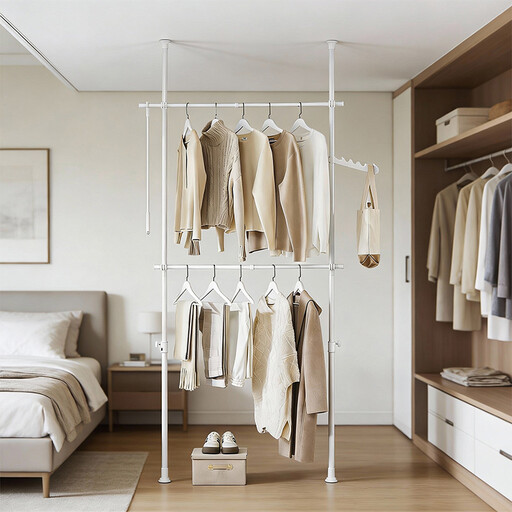
Why it's a match: Ideal for students or a first apartment. This system provides a solid basic setup for smaller rooms or niches without breaking the bank. It's a practical, no-drill solution for keeping a basic wardrobe organised.
The iron tube construction is designed for its stated 25 kg load capacity, preventing sagging with proper use. The clear weight limit helps prevent overloading.
The width is flexibly adjustable from 75 cm to 126 cm, allowing for a perfect fit in most standard alcoves. A side hook provides additional space for accessories.
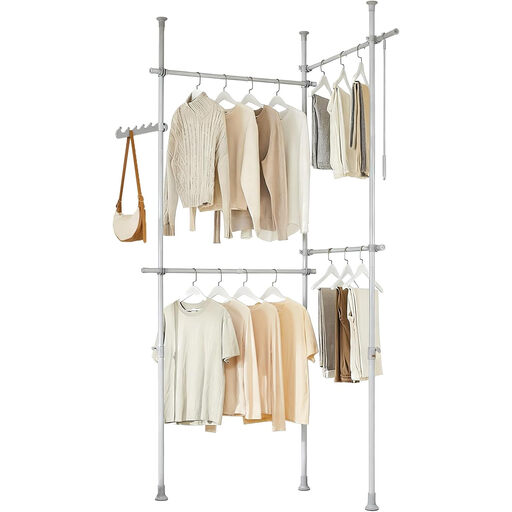
Why it's a match: For users with a large collection of clothes, including heavy winter jackets and coats. This system serves as a full-fledged replacement for a large wardrobe and is ideal for structuring a walk-in closet.
The three vertical poles distribute the load more evenly and prevent the crossbars from sagging. The high load capacity of up to 65 kg is based on a more robust overall construction and stronger materials.
Four horizontally adjustable clothes rails and a wide extendibility (124–226 cm) offer maximum organisational possibilities. The 10 additional hooks expand storage space for accessories.
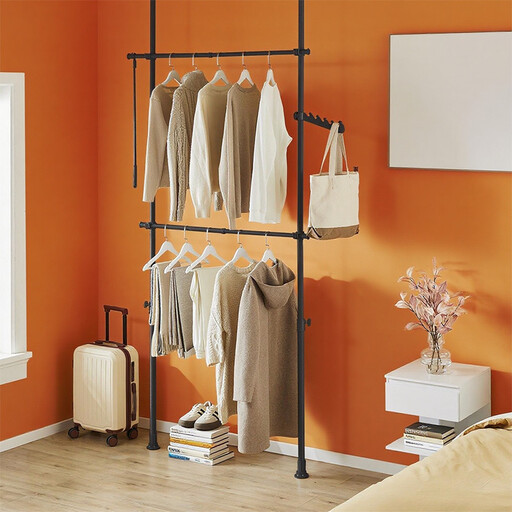
Why it's a match: Perfect for anyone looking for a visually appealing, minimalist, yet adaptable solution. The black design fits well into modern interior concepts and can serve as a room divider or a deliberate accent in the bedroom.
The system can be assembled, disassembled, and repositioned without tools. The reliable tension mechanism ensures a secure hold without leaving marks, allowing for frequent redesigns without worry.
The combination of adjustable height (200–295 cm) and width (75–126 cm) makes this model extremely versatile for various room heights and widths, from older buildings to modern apartments.
We have compiled a complete, up-to-date list of products that fully meet these strict selection criteria and UK safety regulations.
1. How stable is a telescopic clothes rail really? The stability directly depends on the material quality, tube diameter, and tension mechanism. A system with steel tubes and a solid compression mechanism, used within its stated load limits, can be very stable. The key is to tension the pole correctly and with sufficient pressure between the ceiling and floor.
2. Can a no-drill clothes rail damage the ceiling and floor? With high-quality models, this risk is minimal. Look for end caps with soft, non-slip rubber pads of a sufficient size. These distribute the pressure and prevent marks or scratches. Clean the contact surfaces on the ceiling and floor before installation to prevent dirt particles from causing damage.
3. How do I assemble a telescopic clothes rail system correctly? Always read the manufacturer's assembly instructions. A general tip is to adjust the vertical pole to a length that is a few centimetres more than your room height. Then, position the bottom end and compress the top, spring-loaded end to press the pole into place. The pressure created ensures a firm and secure hold. Check that it is secure before mounting the crossbars and hanging clothes.