
Lieferung heute & morgen

Qualitätsgarantie

Willkommens-Angebote freischalten: KOSTENLOSE Lieferung | Bis zu 80 % RABATT | Kostenlose 30-Tage-JoyPlus-Testphase
App herunterladen
A temperature control kettle promises precision for the perfect tea, coffee, or the safe preparation of baby formula. However, the market is flooded with models whose advertised features often fail to deliver in practice. Many devices fall short due to inaccurate sensors, low-quality materials, or complicated controls. The result is not only a disappointing taste experience but also unnecessary expense.
This guide highlights the common pitfalls to watch for when buying and explains which technical parameters truly matter. This will enable you to make an informed decision that meets your specific needs.
Before you choose a model, you should examine three key areas. These determine the kettle's durability, safety, and real-world usability.
The material of the water container directly impacts water quality and the appliance's longevity.
The core function of such a device is heating water to a specific degree. There are significant differences here:
The size and power should match your household's needs.
Here are some models that represent a considered choice for specific user profiles based on their technical specifications.
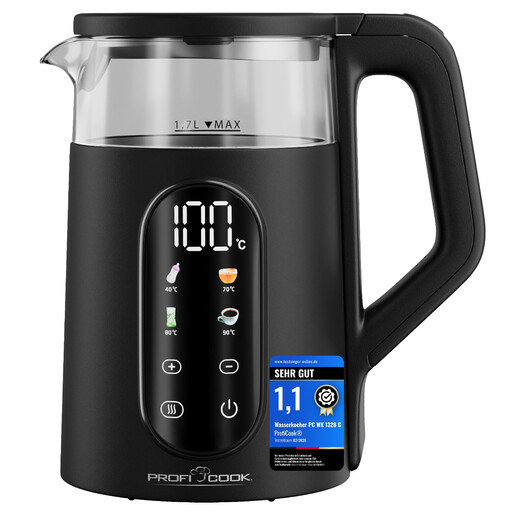
Why This Fits Their Persona: This model is aimed at users who require full control over the water temperature. The precise adjustment from 40°C to 100°C via a touch display allows for the exact preparation of delicate tea varieties, specialty coffee, or even baby formula.
The digital control with a real-time temperature display solves the problem of inaccurate analogue dials. The heat-insulated glass container is BPA-free and prevents any alteration of taste.
High flexibility due to a wide temperature range (40-100°C); integrated keep-warm function; 100°C quick-start function.
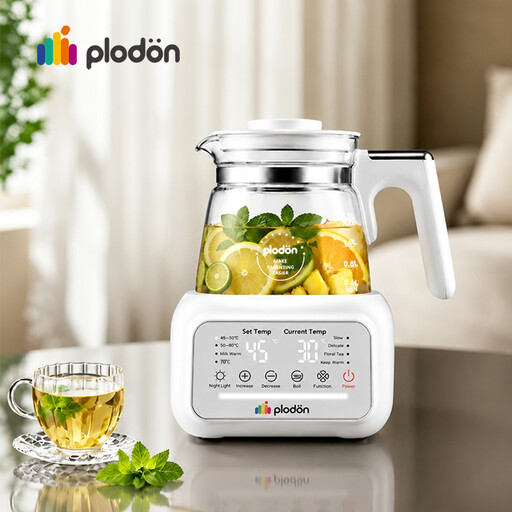
Why This Fits Their Persona: This appliance is tailored to the needs of parents. It offers special programs like milk warming, dechlorination, and precise temperature control. The keep-warm function, which the manufacturer states can last up to 72 hours, ensures that water for baby formula is available at any time.
It avoids the risk of incorrect temperatures when preparing baby formula by using dedicated, safe programs. The body, made of thick borosilicate glass, is BPA-free and ensures pure water.
Multifunctionality specifically for baby care; very long keep-warm time; integrated night light for use during the night.
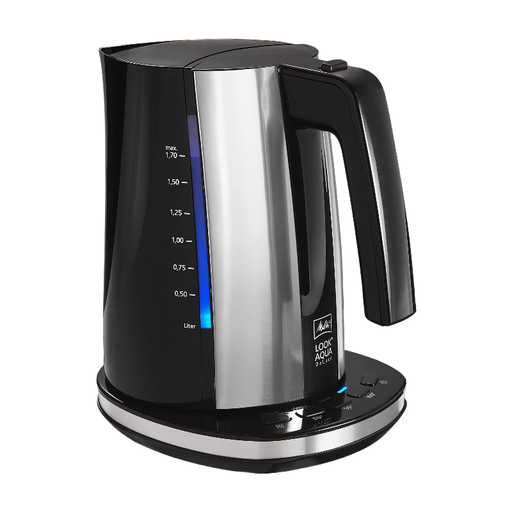
Why This Fits Their Persona: This model is ideal for users who want simple yet effective temperature selection without dealing with too many options. The three levels (80°C, 95°C, 100°C) cover the most common use cases. The high power of 2400 watts ensures very fast boiling.
It avoids cluttered and confusing menus by focusing on three practical temperature levels. The construction with BPA-free materials and stainless steel elements stands for solid build quality.
Very fast heating time thanks to 2400W power; simple operation with the three most important temperature presets; 30-minute keep-warm function.
We have compiled a complete, up-to-date list of products that fully meet these strict selection criteria and rigorous safety standards.
The frequency of descaling depends on the water hardness in your area. With hard water, descaling every four to eight weeks is recommended. Limescale buildup on the heating element and sensors can reduce energy efficiency and impair the accuracy of the temperature measurement.
Both materials are safe when of high quality. A glass kettle (especially one made of borosilicate glass) is chemically inert and imparts no taste to the water. A stainless steel kettle is more resistant to impacts. The important thing for both variants is that they are certified as BPA-free and do not have any low-quality plastic parts inside. The choice is ultimately a matter of personal preference regarding design and robustness.
The power consumption of a keep-warm function depends on the kettle's insulation and the duration of use. Modern, well-insulated kettles are relatively efficient in this regard. Maintaining a temperature generally consumes less energy than completely re-boiling water multiple times in a short period. For households where hot water is frequently needed, the function can therefore even contribute to energy savings.