
Lieferung heute & morgen

Qualitätsgarantie

Willkommens-Angebote freischalten: KOSTENLOSE Lieferung | Bis zu 80 % RABATT | Kostenlose 30-Tage-JoyPlus-Testphase
App herunterladen
A cracked display is one of the most expensive and frustrating types of smartphone damage. A high-quality tempered glass or a good protective film is a relatively small investment to avoid repair costs in the hundreds. However, the market is confusing and full of marketing promises that don't always deliver. This guide will help you identify the crucial features and make an informed choice for your device.
Many users invest in a screen protector that later proves to be inadequate or impractical. Watch out for these three common problems to avoid a bad purchase:
To find the right protection, you should focus on objective criteria rather than pure marketing messages.
The choice of material is the foundation of its protective capability. Each material has specific advantages and disadvantages:
Compatibility goes beyond just the model. Determine which type of coverage makes sense for your use case:
Modern screen protectors often offer more than just basic protection. Depending on your needs, these features can provide real added value:
Based on these objective criteria, we have compiled some products for typical user groups.
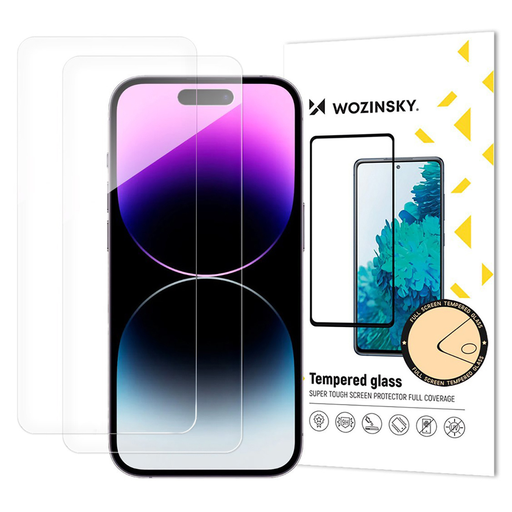
Why This Fits Their Persona: Ideal for users seeking reliable basic protection without the high cost. The double pack offers excellent value for money and ensures a replacement is immediately available in case of damage or a botched installation.
This set focuses on the core function: solid scratch protection with 9H hardness. It comes with a complete installation kit, which minimises the risk of a failed bubble-free application.
Two protectors in the set provide a direct replacement. The high transparency preserves the iPhone's original display quality.
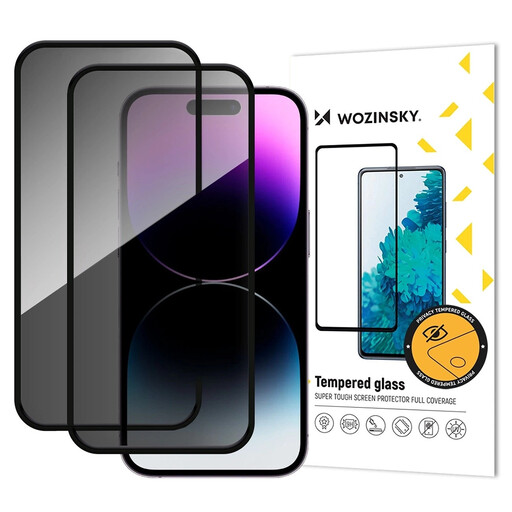
Why This Fits Their Persona: Perfect for commuters, frequent travellers, and anyone who handles sensitive data on their smartphone in public. Protects not only from damage but also from prying eyes.
This product goes beyond mere scratch protection to solve a specific problem. The privacy filter is a clearly defined function, not an empty marketing promise.
Combines an effective privacy filter with the proven 9H hardness of tempered glass. The reinforced frame provides additional edge protection.
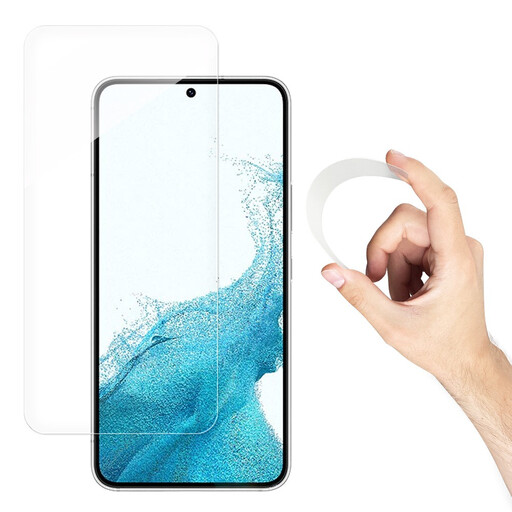
Why This Fits Their Persona: For users who value modern materials and greater resilience. The hybrid glass offers an advanced alternative to conventional tempered glass, especially for owners of high-end devices like the Samsung screen protector for the Galaxy S25+.
The hybrid construction of glass and PET film addresses the weakness of cheap tempered glass: it's more flexible and doesn't shatter as easily, increasing everyday impact resistance.
Combines the scratch resistance of glass with the shatter-proof nature of a film. At only 0.15 mm thick, it is extremely thin and barely affects the tactile experience.
We have compiled a complete, up-to-date list of products that fully meet these strict selection criteria and German safety regulations.
1. Can you really install a tempered glass screen protector bubble-free? Yes, a bubble-free installation is possible. The key is careful preparation. Clean the display thoroughly with the provided alcohol wipe and microfibre cloth, and use the dust removal sticker immediately before applying the glass. Work in an environment that is as dust-free as possible. An alignment tool, included in many kits, makes precise positioning much easier.
2. How long does a tempered glass protector last? The lifespan heavily depends on usage. A tempered glass protector does not need to be replaced regularly. However, it should be replaced as soon as it has cracks, chips, or deep scratches, as its structural integrity and thus its protective effect are compromised. Minor, superficial scratches are normal and not a reason for an immediate change.
3. Does a tempered glass protector also protect the camera? A standard screen protector only covers the screen. Since the camera modules on modern smartphones often protrude slightly, they are also at risk of scratches and impacts. For complete protection, a separate camera protector is recommended. This consists of a small, precisely-cut piece of tempered glass designed specifically for the camera module.