What should you look for when buying?
First, compare the space you need for the map and tools with the room available on your desk. Then check whether you have any particular requirements for colour display or laptop connectivity.
| Consideration |
What to check |
Who is it important to? |
| Space for the map and tools |
Screen size and native resolution; whether the map and controls remain legible at your text size. |
If I want to view the map and tools side by side, usable screen space is my main concern. Around 29% of consumers prioritise map space. |
| Desk space and positioning |
Monitor and stand dimensions, available desk space and height adjustment. |
If my desk is small, I want the screen size and position to fit the space I have. For around 23% of consumers, desk space comes first. |
| Clearly distinguishable map colours |
Specified colour gamut and colour modes; if needed, the conditions of a factory calibration report. |
If colours distinguish elevation levels or map layers, I want to be able to assess how they are displayed. Around 18% of consumers prioritise colour display for maps. |
| Laptop connection and charging |
Your laptop’s video output, supported USB-C features and required charging power. |
If I regularly connect a laptop, I want to know whether the monitor supports its video signal and the charging power it needs. Laptop connectivity is the main concern for around 18% of consumers. |
| Purchase and running costs |
The total cost of the model you want, any accessories you need and the EU energy label for the specific device. |
If I want to keep costs down, I need to weigh up extra features and required accessories against what I actually need. Around 12% of consumers put cost first. |
Key brands at a glance
The models below demonstrate a range of features. Manufacturer specifications apply to the specific variants listed and are not independent GIS tests.
Dell
The P2725D is a 27-inch QHD monitor for map work where screen space and an adjustable position are important.
- Dell lists IPS, 2.560 × 1.440 pixels and height adjustment for the P2725D.
- The USB-C hub is a feature of the differently named P2725DE model and should not be attributed to the P2725D.
Philips
The models listed include a more compact Full HD option and a 27-inch QHD monitor with USB-C.
- Philips specifies the 242B1G/00 as a 23.8-inch Full HD model and the 276B9/00 as a 27-inch QHD model.
- Laptop charging is described for the 276B9/00 with a compatible device, not for the 242B1G/00.
BenQ
The PD2705Q is designed for workflows where QHD and specified sRGB features matter.
- BenQ lists 27-inch QHD, 100% sRGB, a factory calibration report and USB-C with 65 W Power Delivery for this model.
- The manufacturer’s specifications and report do not prove the colour accuracy of every individual device supplied, or that it will provide sufficient charging power for every laptop.
LG
The 27UP850K-W is a 27-inch 4K option if you want a screen view with a high pixel count.
- LG specifies IPS, 3.840 × 2.160 pixels, USB-C and a height-adjustable stand.
- Check that text and tools remain legible at your chosen scaling; resolution alone does not prove that a monitor is especially suited to cartography.
ASUS
The ProArt PA278QGV is a QHD option with documented colour modes and an adjustable stand.
- ASUS lists 27-inch QHD, 100% sRGB, factory calibration and height adjustment for the PA278QGV.
- PA278QGV is the model designation for the Gen2 version; its specifications cannot automatically be applied to the older PA278QV.
Monitors at Joybuy
This Joybuy selection includes 27-inch QHD monitors for viewing maps and control panels, including models with an adjustable stand or USB-C connectivity.
 No image available
MSI MAG 272QPDE QD-OLED X24, 27-inch
The 27-inch QHD specification suits a workspace with a map window and control panels.
QD-OLED; 2.560 × 1.440 pixels; 240 Hz; USB-C with up to 15 W Power Delivery.
The stated USB-C charging power is limited, so check that it’s suitable for your laptop.
View at Joybuy
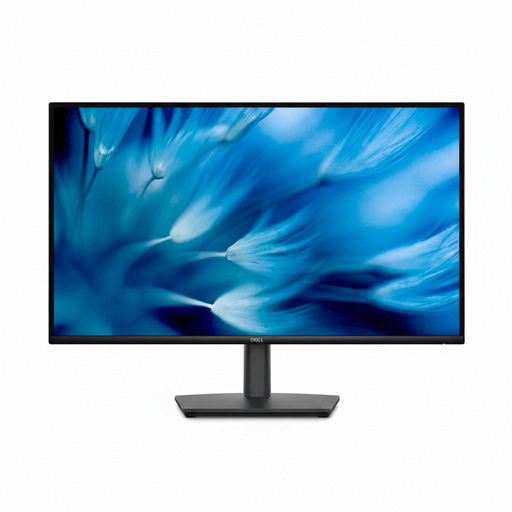 No image available
Dell Pro 27 E2726DS, WQHD
QHD resolution is a good starting point if you want more room for maps and tools.
27 inches; 2.560 × 1.440 pixels; IPS; 100 Hz; height-adjustable stand with pivot function.
View at Joybuy
 No image available
Philips 276B9, 27-inch, QHD
An option if you want a QHD workspace with USB-C laptop connectivity.
2.560 × 1.440 pixels; IPS; 75 Hz; USB-C with up to 65 W Power Delivery; USB hub.
Charging is designed for compatible laptops; check the power and video requirements.
View at Joybuy
 No image available
MSI PRO MP275QPDGDE, 27-inch, WQHD
The QHD specification suits anyone looking to fit maps and controls on screen.
IPS; 100 Hz; USB-C with 98 W Power Delivery; KVM and built-in webcam.
USB-C docking and charging require a compatible laptop.
View at Joybuy
 No image available
Dell Pro Plus P2725DE, 27-inch, QHD
QHD and USB-C are worth considering for map work that needs more screen space and laptop connectivity.
2.560 × 1.440 pixels; IPS; USB-C with up to 90 W Power Delivery; USB hub.
USB-C charging is designed for compatible laptops; check that the power output suits your device.
View at Joybuy
Frequently asked questions
Will a 4K monitor automatically make an exported terrain map more detailed?
No. A monitor’s native resolution affects the on-screen view in the first instance. QGIS processes the elevation model and can export a map layout as a PDF, SVG or image, for example. The map data and export settings also affect the result.
Can I use a USB-C cable to connect my laptop to the monitor?
Only if both your laptop and the specific monitor support the required video transmission and the charging power is sufficient. BenQ specifies DisplayPort Alt Mode and 65 W Power Delivery for the PD2705Q; these features are not automatically available on other models or laptops.
How should I set up a monitor in a student room?
Before you buy, check the dimensions of the monitor and stand, and plan a spot where maps, text and controls will be easy to read. Height adjustment and adjustable brightness can help you set it up. Rules for display screen equipment are not blanket legal requirements for a private student room.
What rights do I have in Germany if my new monitor is faulty?
For a typical purchase, claims for defects under sales law generally become time-barred two years after delivery. As a remedy, you can generally request a repair or replacement; the seller may refuse your chosen option if it would involve disproportionate costs, subject to the statutory conditions. A voluntary manufacturer’s guarantee is separate. The Federal Ministry of Justice and Consumer Protection and the Federal Office of Justice set out the relevant provisions in the German Civil Code.
What do energy labels and disposal rules tell you?
EU energy labels also cover computer monitors; compare the label and EPREL entry for the specific model. Old monitors should not go in household waste: the German Environment Agency lists recycling centres and suitable retail take-back points. A retailer’s obligation to take back electrical equipment depends on the requirements of the Electrical and Electronic Equipment Act.


