Choose your PC to suit the way you work. For large 3D landscapes, RAM, graphics memory and software support matter more than the gaming label; simple height maps don’t automatically need a high-spec setup. A mini PC saves desk space, but check noise levels under load and upgrade options carefully. A tower gives you more room for future changes, but takes up more space.
Which PC is right for you?
3D terrain creators
If you work with large landscapes or render detailed scenes, consider RAM, VRAM and software support together. The Blender Foundation and Epic Games list requirements and recommendations for their respective software versions; these don’t replace checking the needs of your specific project.
People sharing a desk
If your PC needs to sit alongside other work equipment, consider its dimensions, connections and noise under load. A compact design alone won’t tell you how noisy a device is or how easy it is to upgrade.
Creators of simple height maps
If you mainly prepare or import elevation data, choose your specs to suit the specific application. Unity Technologies and Epic Games document height-map workflows; this doesn’t mean that every PC needs a particular level of performance.
What should you look for when buying?
First decide whether you’ll mostly work with height maps or create demanding 3D scenes. Then choose a case and specification to suit your shared workspace.
| What you need |
What to check before buying |
Who is this important to? |
| Performance for complex 3D terrain |
Check the software version, supported rendering path, RAM and VRAM for the exact configuration. The Blender Foundation recommends 32 GB RAM and 8 GB VRAM for Windows; Epic Games recommends 32 GB RAM and at least 8 GB of graphics memory for the documented version of Unreal. |
For large scenes, I want to choose memory and graphics to suit the software I use. Around 36% of consumers prioritise performance and memory for complex 3D work. |
| Space and noise at a shared desk |
Check the case dimensions, allowing for cables and ventilation clearance, as well as the connections and noise measurements under comparable loads. A small form factor alone doesn’t guarantee quiet operation. |
When several people share a workspace, I want to save desk space without overlooking distracting noise under load. Around 29% of consumers put space and noise at a shared desk first. |
| Specs for height maps and mixed use |
Decide whether you’ll be preparing data, working on a landscape in a 3D viewport or rendering. Then compare the requirements for the relevant software version. |
For height maps without frequent large rendering projects, I don’t want to choose specs based on the gaming label alone. Around 21% of consumers prioritise simple height maps and occasional 3D use. |
| Upgrades and workspace requirements |
Check the upgrade options and what’s included with the exact model. If you plan to use it for a long time, also look for a comparable power consumption figure. |
If I might change components later or set up a new workspace, upgrade options and the peripherals I’ll need matter. Around 14% of consumers give these additional considerations the most weight. |
Common buying pitfalls
-
Assuming ‘mini’ means ‘quiet and easy to upgrade’
A compact design doesn’t guarantee quiet operation under load or easy upgrades. A 2025 mini PC comparison by heise lists noise and limited upgrade options as possible compromises.
Check the dimensions and connections, and look for noise measurements taken under loads comparable to those you’ll run.
-
Buying based on the graphics card name alone
For 3D work, RAM, VRAM and the rendering path supported by your software also matter. The Blender Foundation notes that complex GPU-rendered scenes can be limited by a lack of graphics memory.
Compare the specs of the exact configuration with the recommendations for the software version you use.
-
Assuming a tower includes everything you need
The Lenovo Legion Tower 5i Gen 10 reviewed here, model number 90YACTO1WWDE2, doesn’t include a keyboard or mouse.
Check what’s included with each offer and whether you’ll need additional input devices.
You may need to buy a keyboard, mouse or other workspace equipment separately.
Brands to consider
Zotac
According to Zotac, the documented MAGNUS ONE EU275070C (Windows) is a compact desktop with an 8.48-litre case and an RTX 5070 with 12 GB VRAM.
- Zotac describes access to the memory and graphics in this specific model as tool-free.
- The documented Windows configuration has 16 GB RAM. Before demanding 3D work, compare this with the recommendations for your software.
Lenovo
According to Lenovo, the Legion Tower 5i Gen 10 reviewed here, model number 90YACTO1WWDE2, comes with 32 GB RAM, an RTX 5060 Ti with 8 GB VRAM and a 1 TB SSD.
- The documented configuration meets the stated RAM and VRAM recommendations for the Blender and Unreal versions considered here; this doesn’t guarantee a particular level of performance for your project.
- This configuration doesn’t include a keyboard or mouse.
Captiva
According to the manufacturer, the Highend Gaming R89-085 reviewed here comes with 64 GB RAM, an RTX 5080 with 16 GB VRAM and a 2 TB SSD.
- This configuration offers the stated memory capacity for buyers specifically looking for these specs.
- The manufacturer’s gaming frame-rate figures don’t demonstrate performance for terrain-map workflows. Check how much space it needs and whether your project will benefit from the additional specs.
HP
According to HP, the German OMEN 35L configuration reviewed here, GT16-1770ng, comes with 32 GB RAM, a 2 TB SSD and an RTX 5080 with 16 GB VRAM.
- HP describes the OMEN 35L range as upgradeable.
- This specific configuration isn’t representative of every variant. Check the connections and components in the model on offer.
ASUS
The ROG NUC is a range of compact PCs. On its German product page, ASUS says the device can be positioned vertically or horizontally.
- The stated positioning options let you adapt it to the space you have available.
- You can’t assume the same performance or noise levels across the whole range. Check the full model number, GPU, RAM and what’s included with the specific version.
Joybuy products for terrain maps
This selection from Joybuy includes towers and compact PCs for different space requirements and 3D workloads. For demanding projects, compare the actual memory and graphics specs with the software you use.
 No image available
Dell Alienware Aurora ACT1250 1J3N5, Core Ultra 9-285K
This tower is worth considering if you’re looking for a configuration with 32 GB RAM and 16 GB of graphics memory for 3D projects.
RTX 5080 with 16 GB GDDR7, 32 GB DDR5, 2 TB SSD and Windows 11. Keep the ventilation openings clear.
View at Joybuy
 No image available
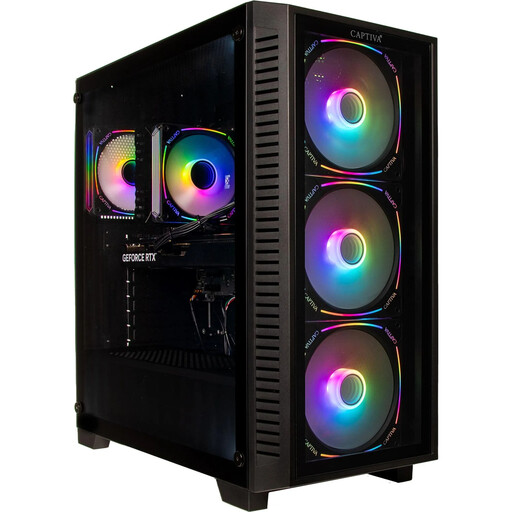
Captiva Highend Gaming PC R89-503, Ryzen 7 7800X3D
This tower configuration is worth shortlisting if you’re looking for 32 GB RAM and 16 GB of graphics memory for 3D work.
RTX 5070 Ti with 16 GB, 32 GB DDR5 and 2 TB SSD. Check the stated case dimensions and allow enough space for ventilation. Remove any internal protective foam before switching it on.
View at Joybuy
 No image available
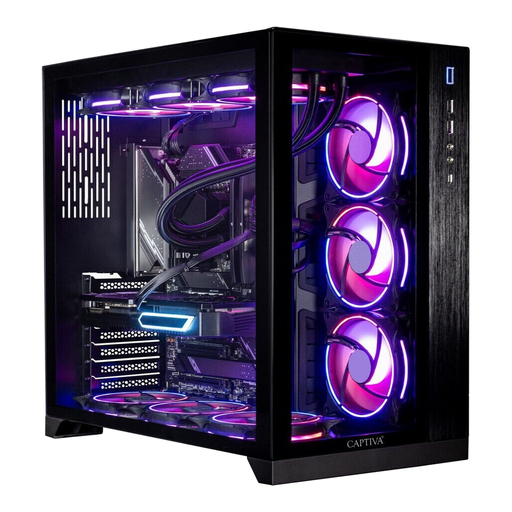
Captiva PC Highend Gaming R90-463, Ryzen 7 7800X3D
If you’re specifically looking for more memory in a tower, the product description lists 64 GB RAM for this configuration.
RTX 5070 Ti with 16 GB and 2 TB SSD. Check that the stated dimensions fit on your desk. Remove any protective foam before switching it on and leave at least 10–15 cm between the PC and the wall for ventilation.
View at Joybuy
 No image available
FIREBAT F1 mini PC, Ryzen 5 7640HS
This compact design could suit you if desk space is limited and the listed specs are enough for your workflow.
24 GB LPDDR5, 512 GB PCIe 4.0 SSD and Radeon 760M. Its 24 GB RAM is below the 32 GB recommendations for the documented Blender and Unreal versions, so check carefully that it’s enough for your project.
View at Joybuy
 No image available
FIREBAT A8 mini PC, Ryzen AI 9 365
This compact design is an option if space is limited and you choose the specs to suit your specific 3D workflow.
24 GB DDR5, 1 TB PCIe 4.0 SSD and Radeon 880M. Its 24 GB RAM is below the 32 GB recommendations for the documented Blender and Unreal versions, so check that the configuration suits your projects.
View at Joybuy
Frequently asked questions
Does a PC need to meet Unreal Engine’s recommendations for every height map?
No. Unity Technologies documents how to import height maps; Epic Games recommends 32 GB RAM and at least 8 GB of graphics memory for the documented Unreal version. What matters is whether you’re just preparing data or working on large 3D landscapes in this software.
What should I check before GPU rendering in Blender?
Check that your specific graphics card is supported by the rendering path you’re using and that its graphics memory is sufficient for your scenes. The Blender Foundation explains how to select a supported Cycles GPU device in the system settings and then in the scene; complex scenes can be limited by a lack of graphics memory.
What are my rights in Germany if I buy a faulty PC online?
Your statutory rights for faulty goods are against the seller and are separate from a voluntary guarantee. The Verbraucherzentrale also explains that online purchases generally come with a 14-day right to cancel; exceptions and the terms of the specific contract should be taken into account.
What should I know about CE marking and disposal?
For products covered by the relevant rules, the European Commission outlines the manufacturer’s responsibility for conformity assessment, the EU Declaration of Conformity and CE marking. stiftung ear explains registration requirements for manufacturers of electrical equipment and the free one-for-one take-back of an old device of the same type by retailers required to offer take-back when you buy a corresponding device. Check the requirements set by the retailer.


