3D landscape creators
If you create terrain in Blender or a game engine, consider memory, graphics memory and project scope together.


You don’t automatically need a gaming PC to create a simple elevation map or hillshade in QGIS. First, check whether your existing computer can handle your data. For 3D landscapes in Blender or larger projects in a game engine, compare the specific software and project scope with the RAM and graphics memory in the complete PC configuration. Manufacturers’ recommendations are useful guidance, but they don’t guarantee how well your project will perform.
If you create terrain in Blender or a game engine, consider memory, graphics memory and project scope together.
For elevation models and hillshading, it’s worth checking your current computer against your actual data and planned QGIS workflow first.
For a workspace in a student room, think beyond the tower: floor space, the equipment you need and the cost of the complete set-up all matter.
A good fit if: You mainly analyse elevation models, create hillshades or design maps. QGIS Documentation explains hillshading from a digital elevation model; that alone isn’t a reason to buy a new gaming PC.
Consider: If you’re working with large datasets or a 3D view, check the specific workflow separately.
A good fit if: You model or render terrain as a 3D scene. For Windows, Blender lists 8 GB RAM and 2 GB VRAM as the minimum, and recommends 32 GB RAM and 8 GB VRAM.
Consider: These recommendations aren’t essential for every small project. GPU rendering with Cycles has additional requirements, which you should check separately.
A good fit if: You want to turn your terrain map into a world that players can explore. Epic Games recommends 32 GB RAM and at least 8 GB of graphics memory for Unreal Engine 5 on Windows; Unity Technologies notes that larger projects require more RAM.
Consider: The recommendations from the two engine manufacturers aren’t interchangeable. Meeting a memory specification alone doesn’t guarantee a particular frame rate or editing speed for your project.
| Buying criterion | What to check | Who should pay particular attention? |
|---|---|---|
| RAM and graphics memory | Decide on the software version, project scope and rendering features you need; compare the RAM and stated VRAM in the complete configuration. | If I want to work on larger 3D scenes or engine projects, I compare my software’s memory requirements with the specific model. Around 33% of consumers prioritise suitability for demanding 3D work. |
| Complete set-up | Consider what’s included, the operating system and the equipment you already have; weigh extra performance against your software needs. | If I have to pay for the whole workspace, I want to consider more than just the graphics card. I also need to factor in the equipment I already own and the final specification. Around 27% of consumers put their overall budget first. |
| Space and airflow | Check the case dimensions, ports, cable routes and the space available for airflow at the intended location. | If my desk is cramped or I share my room, I plan for the space needed and how the PC will operate in its actual location. Around 20% of consumers prioritise a small or shared room. |
| Whether you need a new PC | For basic mapping, test your existing computer with representative data of your own; don’t treat 2D work as if it were a 3D game world. | If I create elevation maps or hillshades in QGIS, I want to know whether my current computer can handle the work before buying a new one. Around 20% of consumers prioritise basic elevation mapping. |
Creating a hillshade in QGIS and designing a landscape in Unreal are different tasks. The German Environment Agency points out that overpowered computers can increase purchase and electricity costs.
Start by deciding which software and type of work you need. For basic mapping, you can first test how your existing computer handles your own data.
MEDION offers the Bandit P20 with different RAM configurations. A test of one version therefore doesn’t confirm the specification or performance of every configuration.
Compare the full model number and components of the device actually tested with the version you’re considering.
Whether the operating system, monitor and input devices are included depends on the specific configuration. For ONE item 64258, you can choose the operating system in the configurator.
Before buying, check the final parts list and take into account any equipment you already own.
If a monitor or input devices aren’t included, you’ll need to budget for them separately to complete your workspace.
A case description isn’t a substitute for noise measurements. COMPUTER BILD rated the Acer Predator Orion 3000 PO3-650 it tested as quiet, but noted that this model’s 500 W power supply limited upgrade options.
Measure the space available and check reliable specifications and possible upgrades for the exact configuration on offer.
The Bandit, Engineer and Hunter ranges include a variety of desktop configurations, which you can compare by RAM, graphics card and the space available.
The OMEN 35L desktops are worth comparing if a tower fits the space you have available.
The Legion Tower 5i Gen 10 is available in several configurations, with different standard specifications and options for future upgrades.
The Predator Orion range includes towers in several sizes; Acer describes the Orion 3000 range as compact.
Configurable gaming PCs may be worth considering if you want to choose the final specification before placing your order.
This Joybuy selection includes desktop PCs for 3D and engine projects, as well as a compact mini PC for a space-saving workspace. Compare the RAM, graphics memory, storage and case dimensions with your software and available space.
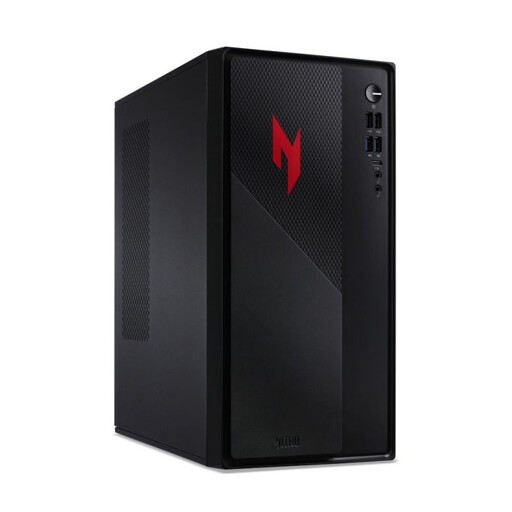 No image available
For 3D or engine projects, compare the listed specification with the requirements of the specific software you use.
32 GB RAM, RTX 5060 with 8 GB graphics memory, 1 TB SSD and an additional 1 TB HDD; Windows 11 Home.
Leave at least 10 cm of clearance all around for ventilation.
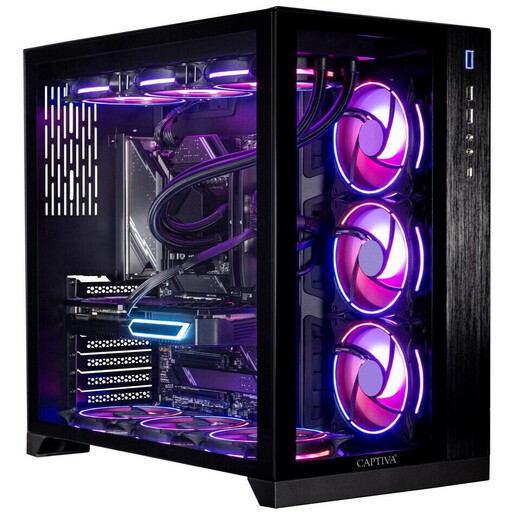
 No image available
If you’re creating a 3D landscape in Blender, compare your project’s specific requirements with this tower configuration.
32 GB RAM, 2 TB SSD and RTX 5080 with 16 GB graphics memory; 240 mm liquid cooling.
Good ventilation is required during use. Keep the vents clear and the device away from sources of heat and moisture.
 No image available
For larger 3D or engine projects, compare the memory specifications with the recommendations for your application.
64 GB RAM, 16 GB graphics memory and 2 TB M.2 SSD; RTX 5080.
Place on a hard, level surface, keep the ventilation grilles clear and leave 10–15 cm of clearance at the back.
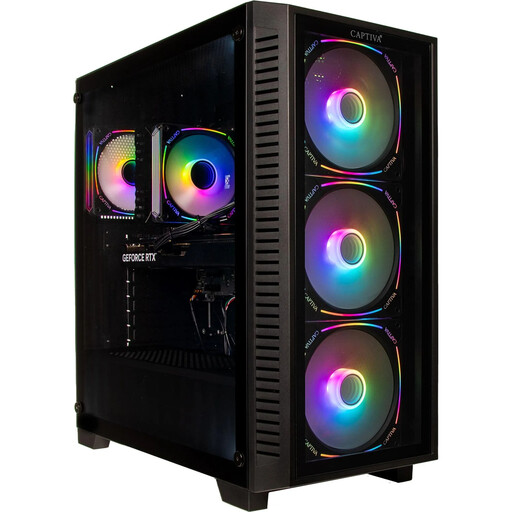 No image available
Compare this specification with your project’s requirements to see how it measures up for 3D landscapes and engine work.
32 GB DDR5 RAM, RTX 5070 Ti with 16 GB graphics memory and 2 TB NVMe SSD; Windows 11 Home.
Place on a hard, level surface, keep the ventilation grilles clear and leave 10–15 cm between the back of the PC and the wall.
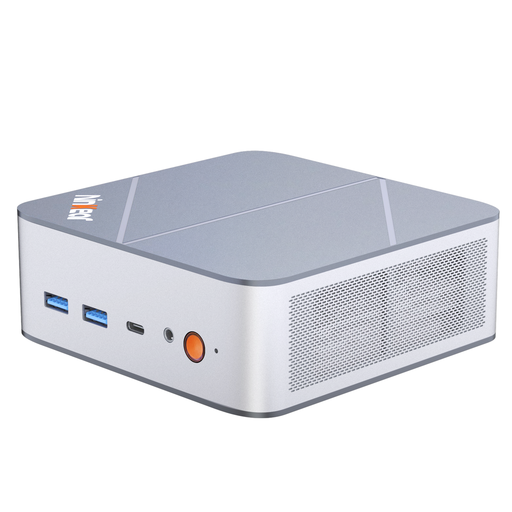 No image available
If desk space is limited, compare the compact dimensions with your QGIS or creative workflow before deciding.
16 GB DDR5 RAM, 1 TB SSD and case dimensions of 130 × 127,5 × 52 mm. The product listing states Windows 10/11; check which version is included with the configuration on offer.
Not for this task alone: QGIS Documentation explains how to create a hillshade from a digital elevation model. Test a representative project of your own to see whether your current computer can handle your data; the answer may be different if you’re working with a 3D view.
No, it depends on your software and the size of your project. Epic Games recommends 32 GB for Unreal Engine 5; for Windows, Blender lists 8 GB as the minimum and recommends 32 GB. Unity Technologies notes that larger projects may need more RAM.
Measure the available space, including cable routes and the clearance needed for airflow, and check the ports and upgrade options for the exact configuration. If your current computer might still be suitable, you could also consider repairing or upgrading it before buying a new one; the German Environment Agency recommends looking into these options.
Online purchases in the EU generally come with a 14-day right to cancel, although legal exceptions apply. Faulty goods are covered by a statutory guarantee of at least two years from delivery; this is separate from any additional manufacturer’s warranty on offer.