Who is this workstation for?

3D artists working with UVs and model views

If you check texture transitions on both the model and the UV view, a clear main display can make the job easier. Adobe describes both views in Substance 3D Painter, but that doesn’t mean you need two physical monitors.

Artists preparing colour-critical work

If you assess textures for a specific output target, differences between displays shouldn’t be mistaken for texture errors. Adobe explains how colour management affects what you see on screen, while EIZO describes calibration for a defined workflow.

Artists with a dual-monitor workstation

For tools and references on a second display, the connections, signal path and available desk space all need to suit your preferred layout. ASUS lists DisplayPort connections for daisy chaining on the PA279CRV; whether it works with your computer depends on the whole setup.

What should you look for?

What matters What to check before buying Who is it important to?
Spotting fine texture seams Native resolution, screen size and comfortable scaling; decide which monitor you’ll use to assess detail. For me, it’s important to see small transitions clearly on the main display, while the second screen can show tools. Around 36% of consumers prioritise checking fine detail.
Comparing colours across displays Your project’s output target, suitable monitor modes, and profiling and calibration options. When I assess colours for a specific output target, I don’t want to mistake differences between displays for texture errors. Around 29% of consumers prioritise colour matching across screens.
Connecting two screens Your computer’s video outputs, the inputs on both monitors, and the resolutions and refresh rates supported by the signal path. I want both displays to work at the settings I need, so I’ll check the entire connection path before buying. Around 21% of consumers put a reliable connection first.
Fitting both displays on your desk Available desk space, the stand and its height adjustment; if you’re using a mount, check the VESA specification for the exact model. If I’m putting two screens on my desk, I need to be able to position them properly. Around 14% of consumers prioritise setting up their workspace.

Which mistakes should you avoid?

  • Assuming that differences between displays mean there’s a texture error

    Colour management and your calibration target affect how a texture appears on each monitor. Calibration also can’t compensate for a colour gamut that’s too small or an uneven display.

    Check any suspicious transitions in both the 2D UV and 3D views, and distinguish texture or geometry issues from differences in how they’re displayed.

    Profiling and calibration can involve extra setup and take additional time.

  • Assuming USB-C or multiple DisplayPort sockets guarantee two 4K displays

    Whether both monitors work as you want depends on the features supported and the available bandwidth across the entire signal path. Dell documents limitations for a specific dock and monitor combination; these don’t necessarily apply to other devices.

    Check that your computer, dock, cables and both monitors support the resolution and refresh rate you want. For HDMI daisy chaining, Dell says HDMI isn’t a supported signal path for this type of connection.

    Depending on your equipment, you may need a different connection method or a compatible dock.

  • Assuming advertised colour gamut coverage guarantees suitable colour management

    A monitor’s colour gamut coverage alone doesn’t tell you whether your project and display settings suit your output target, or whether two specific devices will show colours in the same way.

    Choose a monitor mode that suits your output target, and don’t treat manufacturers’ colour coverage figures as an independent measurement of your dual-monitor setup.

Which brands are worth considering?

ASUS

The ProArt range is worth considering when choosing a monitor for creative work; this guide looks at the PA279CRV.

  • ASUS lists a 27-inch 4K display, DisplayPort daisy chaining and 96 W USB-C Power Delivery for the PA279CRV.
  • These manufacturer specifications don’t guarantee the bandwidth of your particular dual-monitor setup or matching colours across both displays.

BenQ

The DesignVue PD2705U is a 27-inch 4K option if sRGB or Rec.709 suits your output target.

  • BenQ lists 99% sRGB and Rec.709 coverage, as well as factory calibration, for the PD2705U.
  • These are model-specific manufacturer specifications, not proof that the monitor will match any second screen.

EIZO

The ColorEdge CS2740 is a 4K option for a defined colour workflow.

  • EIZO specifies hardware calibration and colour presets for the CS2740.
  • EIZO notes that calibration can’t remedy a colour gamut that’s too small or panel non-uniformity. These features aren’t essential for every second monitor.

Dell

The S2725DC is a QHD option for tools and references on a second screen.

  • Dell lists an IPS panel, 27-inch screen, 2560 × 1440 pixels, USB-C and height adjustment for this model.
  • Its native resolution is lower than that of the 4K models featured here. Dell’s information about MST bandwidth applies to the specific device combinations mentioned.

LG

The UltraFine 27UP850K-W is a 27-inch 4K IPS option with USB-C and an adjustable stand.

  • LG lists typical DCI-P3 coverage of 95% for this model, as well as support for hardware calibration with LG Calibration Studio.
  • LG notes that the software isn’t included. DCI-P3 or HDR specifications don’t prove that colours will match across a particular dual-monitor setup.

Joybuy monitors for checking fine detail

The following Joybuy models are 4K monitors suited to a detail-focused main display. Also check that their connections and colour settings suit your computer and output target.

MSI PRO MP273UPDE E6 27-inch 4K UHD IPS monitor

MSI PRO MP273UPDE E6, 27-inch

For a detail-focused main display: this model is specified at 3,840 × 2,160 pixels.

IPS, 60 Hz, HDMI and DisplayPort inputs. The product specifications also list 10-bit colour depth and an sRGB preset.

Height adjustment, pivot and VESA 100 × 100 mm are listed in the product description.

View at Joybuy

INNOCN CB27U1 27-inch 4K UHD monitor

INNOCN CB27U1, 27-inch 4K UHD

For checking fine detail on your main display: this model is specified at 3,840 × 2,160 pixels and has an IPS panel.

The product specifications list 100% sRGB and 99% Adobe RGB coverage; these aren’t independent measurements. HDMI, DisplayPort and USB-C with video transmission and 90 W Power Delivery are also listed.

Height adjustment and PIP/PBP are mentioned in the description.

View at Joybuy

KTC M27P6 27-inch 4K Mini-LED monitor

KTC M27P6, 27-inch 4K Mini-LED

For a detail-focused main display: the title specifies 4K UHD on a 27-inch monitor.

The title lists a dual mode of 4K at 160 Hz and FHD at 320 Hz. The product description specifies Fast IPS, USB-C with 65 W Power Delivery, and HDMI and DisplayPort connections.

Height adjustment, tilt and swivel are specified for this model.

View at Joybuy
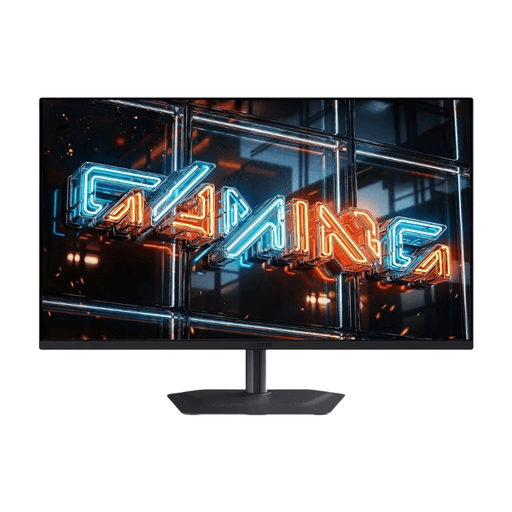
GIGABYTE MO32U24 32-inch 4K OLED monitor

GIGABYTE MO32U24, 32-inch OLED

For checking detail on a larger main display: the title specifies a 32-inch screen and 3,840 × 2,160 pixels.

The product description lists DisplayPort and HDMI inputs. Height adjustment, pivot, tilt and VESA 100 × 100 mm are also specified.

View at Joybuy
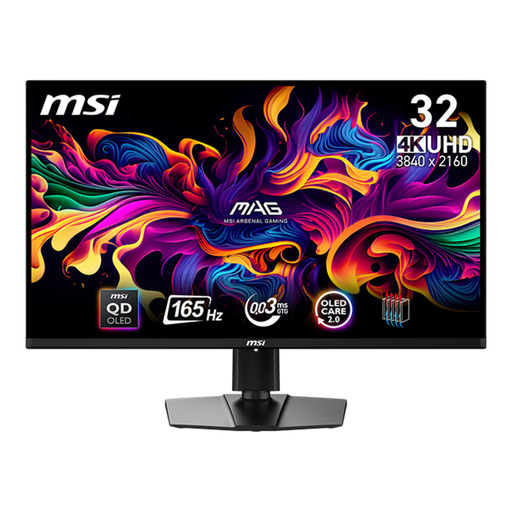
MSI MAG 321UPDE 31.5-inch 4K QD-OLED monitor

MSI MAG 321UPDE, 31.5-inch QD-OLED

For a detail-focused main display: this model is specified at 3,840 × 2,160 pixels.

The product description lists 10-bit colour depth and support for Adobe RGB and DCI-P3; this doesn’t mean its colours will match a second screen.

HDMI, DisplayPort, USB-C and a KVM switch are listed in the description.

View at Joybuy

Frequently asked questions

Do I need two monitors to use the 2D UV and 3D views?

No, not just to use the views in Substance 3D Painter: Adobe describes a standard mode that shows both views in one viewport. Using two physical monitors is a choice about your workspace layout; check whether your software version lets you arrange windows as you want.

How do I set up colour checking across two displays?

First, decide on your project’s output target, then choose suitable display and colour management settings. Adobe describes display transforms for on-screen viewing, while EIZO explains calibration for a defined target. Having identical model names alone doesn’t prove that colours will look the same.

Can I connect the second monitor to the first using HDMI?

Not for the daisy-chain setup described here: Dell lists supported DisplayPort/MST, USB-C DisplayPort Alt Mode or Thunderbolt signal paths, and rules out HDMI for this type of connection. Alternatively, you can connect both displays to suitable separate video outputs on your computer.

What ongoing costs or extra requirements should I allow for?

Check which calibration software and, if needed, measuring device your planned workflow requires. LG notes that LG Calibration Studio isn’t included with the 27UP850K-W model reviewed here.

Can I return a monitor bought online if it doesn’t fit my setup?

For consumer purchases from online retailers in Germany, you generally have the right to cancel within 14 days of receiving the goods; the terms and any exceptions depend on the circumstances. Verbraucherzentrale distinguishes this right from statutory rights relating to faulty goods and voluntary warranties.