
Lieferung heute & morgen

Qualitätsgarantie

Willkommens-Angebote freischalten: KOSTENLOSE Lieferung | Bis zu 80 % RABATT | Kostenlose 30-Tage-JoyPlus-Testphase
App herunterladen
The search for the perfect Thai curry paste can quickly become overwhelming. Shelves are filled with a multitude of brands, colours, and heat levels. Anyone wanting to cook an authentic Thai curry at home that evokes memories of their last holiday or a visit to their favourite restaurant faces the challenge of making the right choice. But not every paste that promises to be "authentic" actually delivers.
This guide will help you navigate the common pitfalls of buying curry paste and make an informed decision. We'll clarify which criteria truly matter to avoid disappointment and bring the full flavour of Thailand into your kitchen.
Many home cooks grab the wrong product because they fall for common marketing promises or unclear labelling. You should pay attention to these three points:
To buy the right Thai curry paste, you should focus on objective characteristics rather than advertising slogans.
A high-quality Thai curry paste is distinguished by a clear, traditional ingredients list. Look for the following core components, which are essential for the characteristic aroma:
If you are looking for a vegan curry paste, explicitly check the ingredients list for the absence of "shrimp paste" or "crustaceans".
Each curry colour has its own flavour profile, suitable for different dishes:
Brands like Mae Ploy, Cock Brand, and Nittaya are well-established in Thailand and are also used in professional kitchens. Products made in Thailand often follow more traditional recipes.
Here are some recommendations tailored to different needs and preferences.
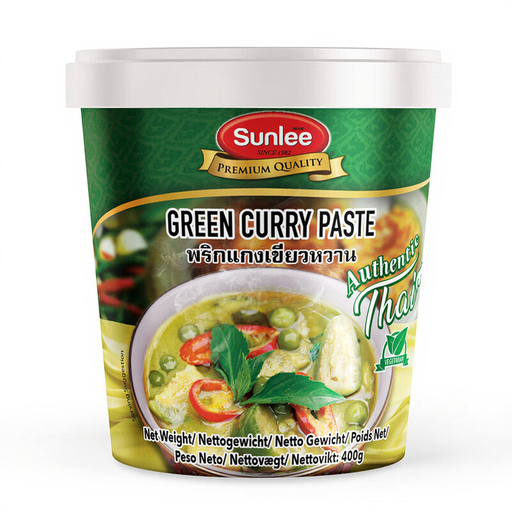
Why This Fits Their Persona: Ideal for anyone following a purely plant-based diet without wanting to sacrifice the classic taste of a hot, herbaceous green curry.
This paste is explicitly formulated as a vegan curry paste and completely omits shrimp paste or other animal products. The ingredients list is transparent and clear.
Offers an authentic flavour profile based on green chillies, lemongrass, and galangal. The 400g pack is convenient for regular use.

Why This Fits Their Persona: Perfect for those who cook Thai food regularly and seek an uncompromisingly bold, spicy, restaurant-quality flavour. Traditionally contains shrimp paste for maximum depth of flavour.
This paste avoids the trap of "diluted" heat. The Nittaya brand is known for its intense and authentic spice, delivering a reliably hot result.
Professional quality with a powerful flavour. The 1kg value pack offers excellent value for money for frequent users.
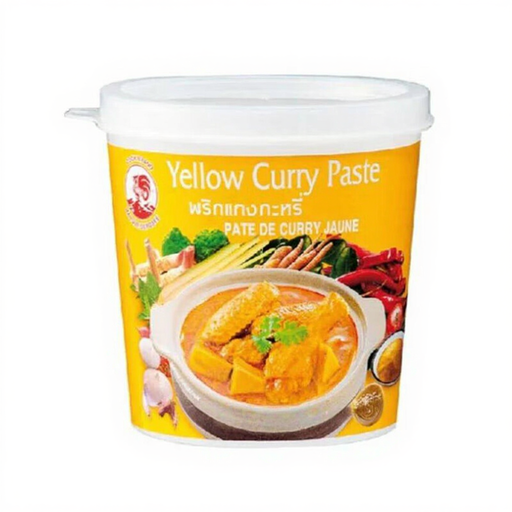
Why This Fits Their Persona: An excellent choice for anyone new to Thai cuisine or who generally prefers milder, aromatic dishes.
This yellow curry paste avoids the risk of a dish that's too spicy. Its flavour is balanced and approachable without losing aromatic depth.
Mild yet complex flavour from turmeric and spices. The Cock Brand stands for reliable quality and great value for money.
We have compiled a complete, up-to-date list of products that meet these strict selection criteria.
Once opened, curry paste should be stored in the refrigerator. The exact shelf life is indicated on the packaging but is typically between a few weeks and several months. A practical tip: flatten the paste in the jar and cover the surface with a thin layer of vegetable oil. This minimises contact with oxygen and can extend its shelf life.
The main differences lie in the chillies and spices used:
No, this is not recommended as the flavour profiles are fundamentally different. Thai pastes are built on a base of fresh herbs like lemongrass and galangal. A Korma paste, on the other hand, comes from Indian cuisine and is characterised by a creamy texture and spices like cardamom, cinnamon, and often ground nuts. A substitution would result in a completely different dish.