
Lieferung heute & morgen

Qualitätsgarantie

Willkommens-Angebote freischalten: KOSTENLOSE Lieferung | Bis zu 80 % RABATT | Kostenlose 30-Tage-JoyPlus-Testphase
App herunterladen
Thai jasmine rice is a staple of Asian cuisine for many households, families and catering businesses. Its distinctive aroma and soft, slightly sticky texture make it ideal for curries, stir-fries, steamed vegetables and many other recipes. However, similar product names, large rice sacks and promotional quality claims do not always make it easy to choose the right product.
The terms fragrant rice, jasmine rice and aromatic rice initially describe a rice variety or product characteristic. On their own, they do not necessarily indicate that the rice comes from Thailand. Long-grain rice from Cambodia or Vietnam can also have a similar aroma and comparable texture.
If you are specifically looking for Thai Hom Mali rice, check for the following information:
A sack of 18 kg jasmine rice or 20 kg jasmine rice can be practical for families, restaurants and catering businesses. For smaller households, however, it may remain open for a long time. Once opened, the risk increases that moisture, kitchen odours or pantry pests will affect the quality.
The important considerations are therefore not just the price per kilo, but also:
Rice from different harvests and regions may require different amounts of water. For the products available, the stated ratios range, for example, from 1:1 to 1:1.5 or 1:1.2 for rice to water. The instructions on the individual packaging should therefore take priority.
Too much water can produce a very soft, sticky texture. Too little water can leave the grains hard. Washing, resting time and the cooking appliance used can also affect the result.
For classic Thai fragrant rice, Thailand as the country of origin is an important selection criterion. Products such as ROYAL UMBRELLA Thai Hong Mali Jasmine Rice 10kg and Green Dragon Fragrant Rice 10kg are described as Thai products. Other products in the range come from Cambodia or Vietnam and may taste similar, but they are not the same as Thai jasmine rice.
Thai Hom Mali rice is a specific designation within the Thai fragrant rice category. If this designation matters to you, look for it directly on the product label rather than choosing solely based on a general term such as “Fragrant Rice”.
A short ingredients list is typical for rice. According to the product information, several of the products listed consist of 100% rice and state that they contain no allergens. The specific labelling on the packaging remains decisive, particularly if the rice is transferred into another container or stored alongside other foods in the kitchen.
Typical nutritional values per 100 g for the products mentioned are approximately between 320 and 365 kcal, with between 75 and 81 g of carbohydrates. These are product details and do not indicate any particular suitability for specific dietary requirements.
For occasional use, smaller quantities such as 1 kg, 4.5 kg or 5 kg are suitable. 5 kg of jasmine rice is a practical middle ground for many households. Households with higher consumption are more likely to choose 10 kg, 18 kg or 20 kg packs.
Regardless of the pack size, rice should be:
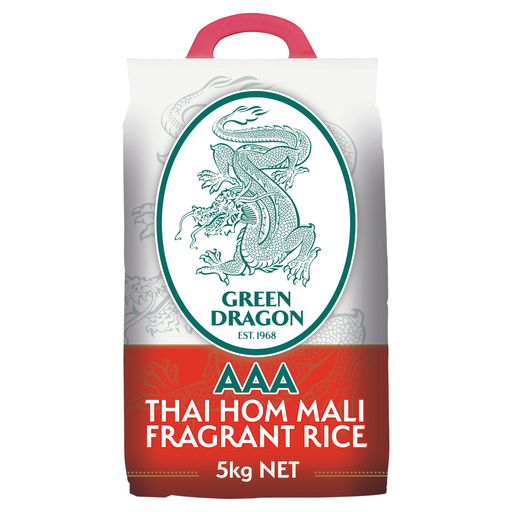
Why this product suits this profile: The 5 kg pack is suitable for households that use Thai fragrant rice regularly but do not want to store a very large supply.
The product information specifies long-grain jasmine rice, clear cooking instructions and storage in an airtight container.
5 kg net quantity, a described soft texture and 100% rice according to the product description.
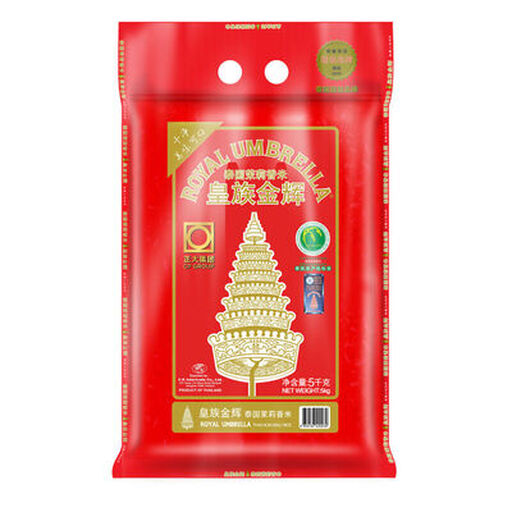
Why this product suits this profile: The 10 kg pack is aimed at households with regular consumption that are specifically looking for Thai Hong Mali and clear ingredient information.
The description specifies 100% rice, no listed allergens and storage in an airtight container.
10 kg net quantity, an ingredients statement of 100% rice and specific nutritional values per 100 g.
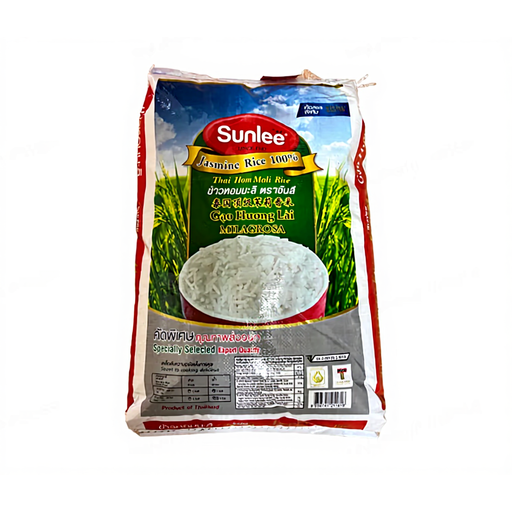
Why this product suits this profile: This large pack of rice is designed for catering, food service and high-volume users with predictable daily requirements.
The product information specifies airtight aluminium foil packaging, along with guidance on protecting the rice from moisture and pests.
18 kg net quantity, Thai Hom Mali listed as the ingredient and described suitability for curries and Asian dishes.
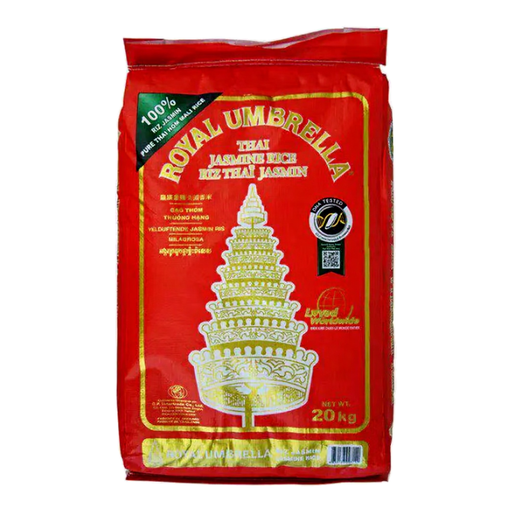
Why this product suits this profile: The 20 kg pack is suitable for larger households and professional kitchens, provided there is enough dry storage space.
The description states that it is 100% Thai jasmine rice with no added ingredients and specifically recommends dry storage away from light.
20 kg net quantity, Thai Hom Mali as the product designation and described suitability for curries and stir-fries.
We have put together a complete, regularly updated list of products that fully meet these strict selection criteria and the safety regulations applicable in the EU.
The exact instructions are provided on the individual packaging. As a practical guide, the following steps apply to the products mentioned:
For rice served with curries, a slightly softer and lightly sticky consistency can be ideal. A looser texture may be more suitable for fried rice or rice salad. Adjust the variety, amount of water and resting time accordingly.
Thai jasmine rice is an aromatic long-grain rice that usually has a softer, slightly sticky texture. Basmati is often cooked to produce a drier, more separate grain. The right choice depends on the dish and the texture you prefer.
The best-before date is shown on the packaging. Unopened rice should be stored in a dry, cool place away from light. After opening, an airtight container is recommended. With a large pack, keep only the amount currently needed in the kitchen and store the remainder securely sealed.
5 kg of jasmine rice is often suitable for households with regular consumption. 10 kg can be a sensible choice for families that eat rice dishes frequently. 18 kg or 20 kg of jasmine rice is mainly worthwhile for high consumption, shared use or professional applications. The key factors are consumption, price per kilo and available storage space.