
Lieferung heute & morgen

Qualitätsgarantie

Willkommens-Angebote freischalten: KOSTENLOSE Lieferung | Bis zu 80 % RABATT | Kostenlose 30-Tage-JoyPlus-Testphase
App herunterladen
Buying a juicer is often the first step toward a more health-conscious diet with fresh juices. But the market is overwhelming, and many well-intentioned purchases end up as unused appliances collecting dust in a cabinet. The reason is often the same recurring design flaws or exaggerated marketing claims. Before you make a decision, you should know the typical pitfalls that lead to frustration and wasted money.
The three most common problems buyers encounter are:
To avoid these problems, focus on the technical fundamentals that separate a good juicer from an impractical one.
The way the appliance works is the biggest factor in the final result in your glass. Each type has specific advantages and disadvantages.
A juicer that is easy to clean is a juicer that actually gets used. Look for the following features:
The size of the feed chute determines how much you need to pre-cut your fruits and vegetables. A wide opening (e.g., 75 mm or more) allows you to process whole apples or large pieces directly. This saves valuable time in your daily routine and makes juicing much more convenient.
Based on these objective criteria, we have identified a few models that offer a suitable solution for different user profiles.
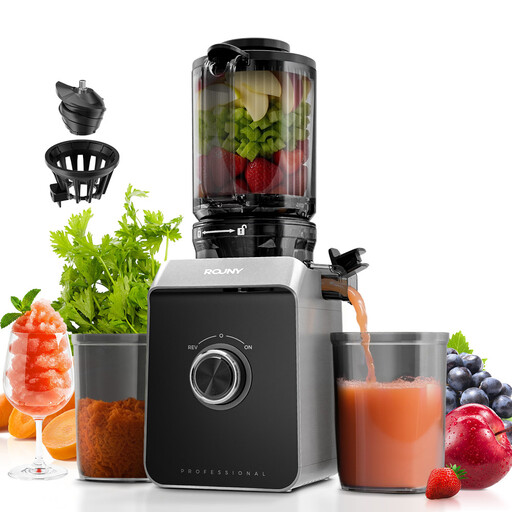
Why This Fits Their Persona: Ideal for those who want to process a variety of fruits and vegetables daily without extensive prep or cleanup. The ability to also make fruit sorbet adds practical value for families.
The filter-free design prevents clogging from fibers and allows for a quick rinse-clean under running water. The 130 mm feed chute minimises chopping, bypassing the two biggest barriers to use: tedious cleaning and prep work.
High juice yield via cold-press technology; pure copper motor for stable operation; reverse function to clear blockages.
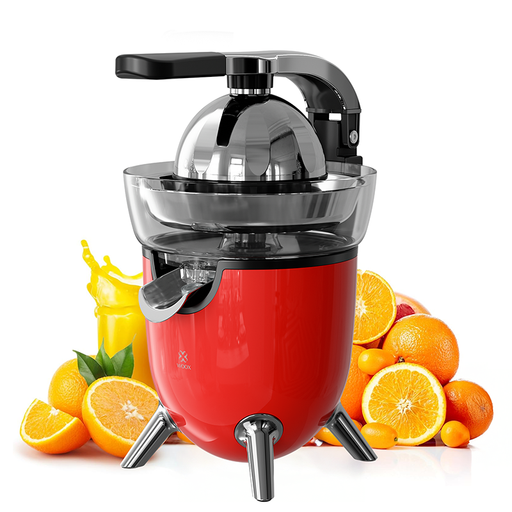
Why This Fits Their Persona: Perfect for anyone who primarily wants fresh citrus juice for breakfast or cocktails and values a robust build, simple operation, and quick cleanup.
As a specialised citrus press, it is optimised for its purpose, avoiding the complexity and cleaning hassle of all-in-one juicers. The dishwasher-safe parts and simple design guarantee straightforward use.
Powerful 100W motor for effortless pressing; adjustable pulp control to customise juice texture; combination of ABS housing and stainless steel components.

Why This Fits Their Persona: Suitable for users who want to quickly and easily extract juice from hard fruits and vegetables (apples, carrots, beets) and prioritise speed over maximum nutrient retention.
This model avoids the "mismatched technology" pitfall by clearly positioning itself as a centrifugal juicer. The wide feed chute reduces prep time, and the stainless steel construction simplifies cleaning compared to older models with complex plastic parts.
High speed from a 600W motor; wide 3-inch feed chute for whole fruits; BPA-free materials and stainless steel components.
We have compiled a complete, up-to-date list of products that fully meet these strict selection criteria and comply with German safety standards.
That depends on your main goal. If you want straightforward orange juice for breakfast, an electric citrus juicer is the simplest and easiest to maintain. For a wide variety of hard fruits and vegetables, a centrifugal juicer offers fast results. If you want to maximise nutritional value long-term and also process leafy greens, you should consider a slow juicer with a simple cleaning system.
Wattage must always be evaluated in the context of the appliance type. Centrifugal juicers require high wattage (e.g., 600W or more) to achieve the high RPM needed for the spinning process. Cold press juicers, on the other hand, operate with torque instead of speed, which is why their wattage ratings are lower (e.g., 150–250W), yet they still press powerfully. High wattage alone is not a universal indicator of quality.
Not all models are equally suited for this. Cold press juicers (slow juicers) are significantly more efficient for fibrous leafy greens like celery and kale and achieve a higher juice yield. Centrifugal juicers often struggle here, as the fast-spinning blades cannot process the fibers optimally, resulting in very wet pulp.