Those responsible for growing performance archives
If you store full recordings and project folders from multiple productions, sufficient capacity and a recoverable backup usually matter more than portability.


For large, growing theatre archives kept at a fixed workstation, a desktop HDD is usually the better choice. If you regularly carry recordings between the theatre and your editing workstation, a USB-powered portable HDD is more practical, although the product ranges mentioned offer less capacity (Seagate; Toshiba Storage). No single hard drive can replace a separate backup that you test restoring from; Germany’s Federal Office for Information Security points out that the lifespan of storage media cannot be predicted precisely. If your recordings show identifiable people, you must also check the legal basis and purpose of use; the BfDI notes that such recordings are generally subject to data protection law.
If you store full recordings and project folders from multiple productions, sufficient capacity and a recoverable backup usually matter more than portability.
If you regularly take recordings to your work computer, check that the power supply, connections and file system are compatible with the devices involved.
If recordings may show identifiable people, include suitable access controls and a data protection plan that reflects how the footage will be used.
First, work out how much space you need for your existing archive and future growth, as well as for a separate backup. Then decide how important portability, computer compatibility and access controls are for your workflow.
| Priority | What to check before buying | Who it matters most to |
|---|---|---|
| Capacity for growing project folders | Check how much space complete productions currently use and allow for expected growth. Remember to factor in the storage needed for a separate backup. | If I want to archive complete productions and their project folders long-term, I need room for both my existing files and future growth; around 33% of consumers prioritise capacity for complete, growing project folders. |
| Recovery after data loss | Plan for a separate copy and test whether you can restore recordings and project files from it. Germany’s Federal Office for Information Security points out that the lifespan of storage media cannot be predicted precisely. | If I need to carry on working after a drive failure, being able to verify recovery is important; around 27% of consumers prioritise protection against data loss and the ability to restore files. |
| Transport between the theatre and the editing suite | Check the capacity of the specific model, as well as the power supply, cables and connections available on the devices involved. | If I regularly take recordings between the theatre and my workplace, a drive that does not need a separate power supply matters; around 20% of consumers prioritise portable data transfer. |
| Computer compatibility and access | Check that the file system works with the Windows and Mac computers you use, and back up any existing files before reformatting. Decide who should be able to access material showing identifiable people. | If I need to use project folders on different computers or restrict access, the file system and permissions are key; around 20% of consumers prioritise compatibility and access control. |
Storage space will not protect you from drive failure or accidental overwriting. Germany’s Federal Office for Information Security distinguishes a backup from simply mirroring data.
Plan for a separate copy and test restoring a selection of project folders.
A separate copy needs additional storage, and regular recovery tests take time.
The Seagate Expansion Desktop needs a power supply, while the Toshiba Canvio Basics is USB-powered and available with up to 4 TB.
Decide whether the drive will mostly stay at your archive location or regularly travel with you to the theatre.
According to the manufacturer, the Toshiba Canvio Basics is formatted as NTFS for Windows and needs reformatting for use with a Mac. Apple points out that formatting erases existing files.
Check the file system and the computers in your workflow before transferring recordings or formatting the drive.
Reformatting takes time, and any files already stored on the drive must be backed up separately first.
The Expansion Desktop range is designed for stationary archives, while One Touch Hub is aimed at users who need extra connections or access controls.
The Canvio Basics is a portable, USB-powered HDD for carrying project folders.
The My Book product range includes desktop storage models with access controls for teams that need these features.
These Joybuy products include desktop and portable external HDDs for archiving and transport.
 No image available
For a permanent archive with large project folders, provided there is a power socket at the location.
 No image available
For carrying project folders between the theatre and your work computer.
No image available
For recordings you want to carry regularly between the theatre and your workplace.
 No image available
For transferring files between Windows and Mac computers while on the move.
 No image available
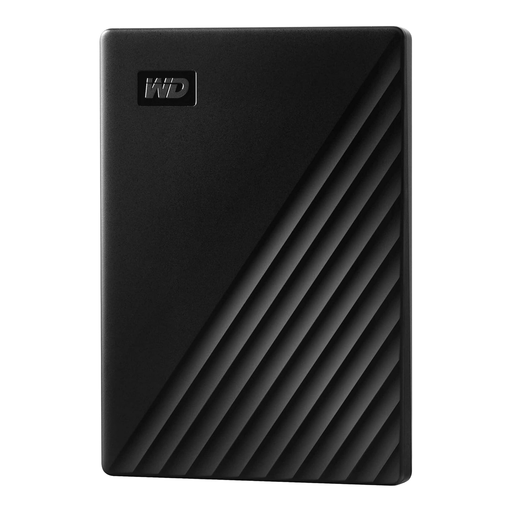
For mobile project files when you also want password protection set up through software.
Work out how much space your previous complete projects use and allow for expected growth. Also factor in the storage needed for a separate backup; the type of work alone does not determine a one-size-fits-all capacity in TB.
It depends on the file system used by the specific model. Toshiba lists the Canvio Basics as using NTFS and says it needs reformatting for Mac. Apple describes exFAT as an option for larger drives that will be used with both Windows and Mac, and notes that formatting erases existing files.
Regularly check that you can restore recordings and project files from a separate backup. Germany’s Federal Office for Information Security points out that the lifespan of storage media cannot be predicted precisely. Also make sure that the file formats you need will remain readable over time.
No. A separately stored, tested copy remains important, because what matters is whether you can actually restore your data. Check the warranty and any data recovery services available for the specific model and regional version.
You cannot assume blanket permission or an unlimited retention period without knowing the recording’s content, who is responsible for it, its purpose and the legal basis. The BfDI notes that recordings of identifiable people are generally subject to data protection law, and that processing requires a legal basis under Art. 6(1) GDPR. Check what retention period and use are permitted in your specific case.