Performers recording in a room where noise is audible
You’re recording on your own, can hear room reflections or everyday noises, and can stay close to the microphone for your takes.


If your room has noticeable reflections and you can stay close to the microphone, a dynamic model is worth considering. In a quiet room, a condenser microphone may suit you if you need more distance or movement while speaking. Also decide whether you want to record directly via USB or use an XLR signal chain, then test both quiet and loud passages from your intended position. The microphone type alone won’t eliminate room echo or prevent clipping.
You’re recording on your own, can hear room reflections or everyday noises, and can stay close to the microphone for your takes.
You switch between whispered and loud passages and want to test your position and input level before recording a full monologue.
You want to record on your computer and monitor your voice through headphones as you perform, without first setting up an XLR signal chain.
| What matters | What to check when buying | Who should pay particular attention |
|---|---|---|
| Clarity in your room | Polar pattern and speaking direction; make a short test recording in your intended space. | If I can hear room ambience or everyday noises, I want to check whether my voice remains clear when I stay close to the microphone in a consistent position. Around 29% of consumers would rank room acoustics as their main concern. |
| Quiet and loud passages | Record the quietest and loudest parts from your planned distance; check the input level and headphone monitoring. | If my monologue shifts between whispers and powerful passages, I want to check both before recording. Around 29% of consumers would put vocal dynamics first. |
| Connection and signal path | Check whether the specific model uses USB or XLR; for XLR, factor in the interface you’ll need. | If I want to get started on my computer without a separate interface, or might change my signal path later, choosing the right connection is essential. Around 24% of consumers would consider connection and setup first. |
| Position and accessories | Allow space for your script and microphone mount; check whether the set includes a stand, shock mount and pop filter. | If I need a consistent position for longer takes, I want to choose a mount and accessories that suit my space. Around 18% of consumers would consider positioning their main concern. |
An XLR microphone needs a suitable signal path. For voice-over, Shure recommends a preamp with at least 60 dB of gain for the SM7B.
Before buying, check your whole setup and what’s included in the box, not just the microphone model.
Depending on the model you choose, you may also need a compatible interface and, in some cases, additional preamp gain.
The polar pattern and distance affect how much of your voice and the room is picked up. A directional recording won’t automatically make room reflections inaudible.
Compare short takes in your actual recording space, using the speaking style you’ll use later.
The shock mount is optional with the AT2020USB-X; RØDE says the NT1 5th Generation comes with a shock mount and pop filter.
Check the specific bundle and exactly which mount and accessories are included.
The AT2020USB-X is designed for direct USB-C recording, while the AT2020 is a separate XLR condenser microphone.
The PodMic USB is a dynamic microphone with USB and XLR connections; the NT1 5th Generation is a condenser microphone with both connection types.
The SM7B is a dynamic XLR vocal microphone designed for a fixed, close position.
The Profile USB is a condenser microphone for computer recording, with controls on the microphone.
The sE2200 is a studio condenser microphone that requires a suitable XLR recording path.
The selection mainly includes dynamic USB/XLR microphones for close-miked speech, as well as USB condenser microphones and condenser bundles for your computer or workspace.
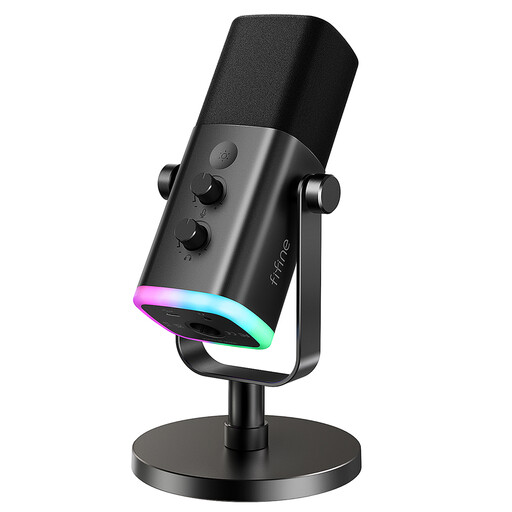 No image available
For close-miked speech, with the choice of USB or XLR; the description says a headphone jack and mute function are available in USB mode.
Features a cardioid pattern and desk stand. The microphone arm and XLR cable are not included, according to the description.
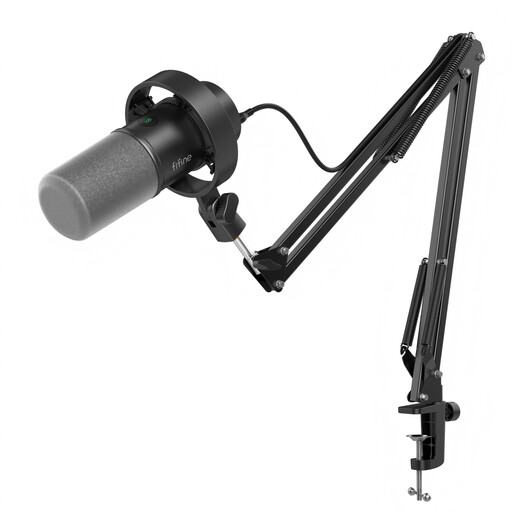 No image available
For speech recording if you’re looking for a USB or XLR recording path and a microphone arm in the same kit.
The title lists a headphone jack, mute function and microphone arm. The description says an XLR cable isn’t included.
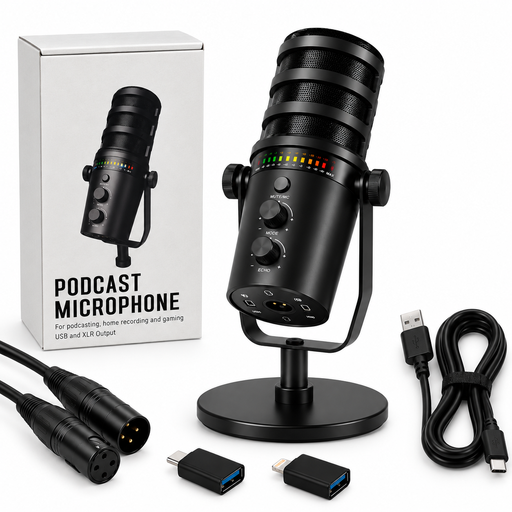 No image available
For speech recording, with the option to choose between USB and XLR; the description lists gain control and headphone monitoring.
The description says the kit includes a desk stand and USB and XLR cables. The title also lists echo control, RGB lighting and a mute function.
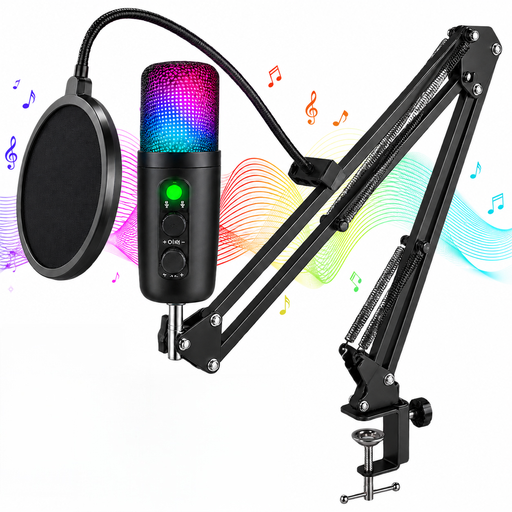 No image available
For computer recording if you’re looking for a USB condenser microphone with a mute button.
The title lists a Type-C adapter, RGB lighting and a 7-piece kit.
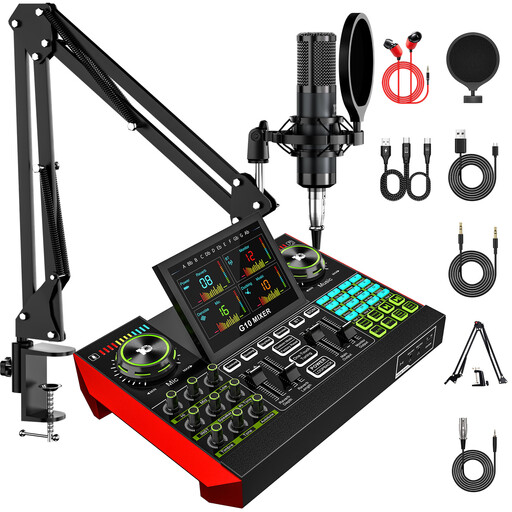 No image available
For a workspace where you want to use a 3.5 mm condenser microphone alongside an audio mixer.
The description lists a microphone arm and voice effects on the audio mixer.
Record both the quietest and loudest parts from your planned distance, then listen back to the short test. With the Sennheiser Profile USB, you can adjust the input level using the gain control and monitor the signal through the headphone output. There’s no single setting that works for every room and voice.
No. The Shure SM7B is an XLR microphone. For voice-over, Shure recommends a preamp with at least 60 dB of gain for this model. So make sure to factor in the interface and, if necessary, additional preamp gain as part of your setup.
For distance purchases made by consumers in Germany, there is generally a 14-day right to cancel. You must notify the seller that you’re cancelling; simply sending the item back isn’t enough. The Verbraucherzentrale recommends checking the terms of your specific purchase and whether return postage may apply.
No. The Verbraucherzentrale distinguishes between your statutory rights against the seller and a voluntary warranty. If a product is faulty, repair or replacement may be the first remedy to consider; check the specific warranty terms separately.
Buying a microphone doesn’t give you permission to publish someone else’s text. Section 19a of the German Copyright Act (UrhG) treats making a work available to the public as a right of exploitation. Whether you need rights for a particular text and intended use, or whether an exception applies, can’t be decided in general terms without details of the work and the rights involved.