Viewing team in a bright rehearsal room
If you regularly watch recordings during the day, faces and stage details should remain clear despite the light from tall windows. RTINGS points out that reflection handling matters just as much as brightness.


For watching your own theatre recordings together in strong daylight, a Mini LED LCD model is a sensible place to start, provided its reflection handling suits your intended setup. A high peak HDR brightness alone won’t eliminate direct reflections from windows: RTINGS treats brightness and reflection handling as separate characteristics. OLED is still an option if you can control the light and dark scenes matter; also check that your files will play, and consider the screen size and viewing angles for your seating arrangement.
If you regularly watch recordings during the day, faces and stage details should remain clear despite the light from tall windows. RTINGS points out that reflection handling matters just as much as brightness.
If you play your own video files, check before buying whether the TV supports their video and audio codecs or whether you’ll need a separate player. LG Germany lists file format and codec as requirements for USB playback.
If several people need to assess the same scene from seats at the sides, factor viewing angles and seating distances into your choice. Germany’s consumer advice centre lists lighting conditions and viewing angles as factors when choosing the right screen size.
When watching your own amateur theatre recordings together in daylight, it’s worth identifying your main priority first, then checking the specific models against it.
| Priority | What to check before buying | Who is this important to? |
|---|---|---|
| Visibility in light from windows | Check the position of the windows, reflection tests for the specific model and picture performance in ambient light. | If tall windows reflect on the screen, I want to make out faces and stage details during the day. Around 33% of consumers therefore put visibility in light from windows first. |
| Playing your own recordings | Test a typical file with sound, and compare its video and audio codecs with the specifications for the exact model variant. | If I want to play my recording directly from USB storage, I want the picture and sound to work without extra steps. Around 27% of consumers prioritise compatibility with their own files. |
| Watching together | Measure seating distances and the furthest seats; take the viewing angle of the specific model into account. | If several people will be sitting to the side, I want everyone to be able to assess the scene from their seat. Around 20% of consumers prioritise a clear view from different seating positions. |
| Dark stage scenes | Compare tests featuring dark scenes and bright points of light under your own lighting conditions. | If dark scenes contain important details, I want to distinguish them even alongside bright stage lights. Around 20% of consumers prioritise how well dark scenes can be assessed. |
A high brightness figure doesn’t prove that reflections from windows will disappear in dark scenes.
Assess reflection tests and brightness in ambient light separately, and take your intended setup into account.
An unsupported video or audio codec can prevent playback, even when the TV has a USB port.
Check a typical original recording against the requirements in the manual for the exact model variant.
Incompatible files may mean you need an additional player or have to convert the file.
People sitting to the side may see colours and brightness differently from those directly in front of the screen.
When comparing models, take account of the furthest seats and how far they are from the TV.
The Q7D Pro is an SQD Mini LED range worth considering for viewing in bright rooms.
The BRAVIA 9 II is an RGB LED option to consider for daytime viewing.
The OLED evo G6 is an OLED option if dark scenes matter and a specifically low-reflection model is suitable.
The 65MLED910/12 is a documented 65-Zoll QD Mini LED option for watching together.
The Joybuy models featured here are mostly large-screen Mini LED TVs, alongside one 65-Zoll QLED TV. Check which screen size suits your seating distances and whether your own recordings can be played directly.
 No image available
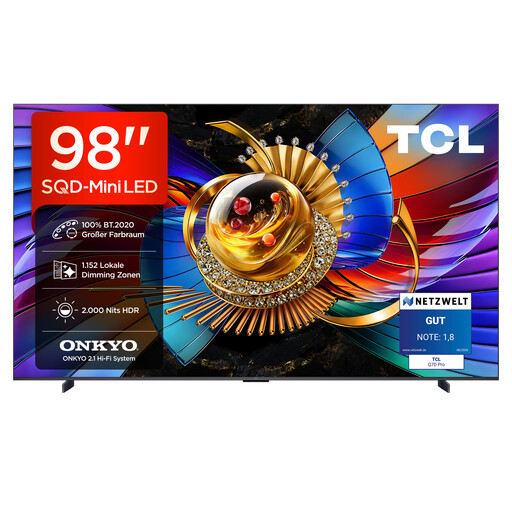
For watching together when a very large screen suits the room and your seating distances.
98 Zoll; 4K; SQD Mini LED; Anti-Reflection; 1,152 local dimming zones; 2,000 nits HDR; 144 Hz.
 No image available
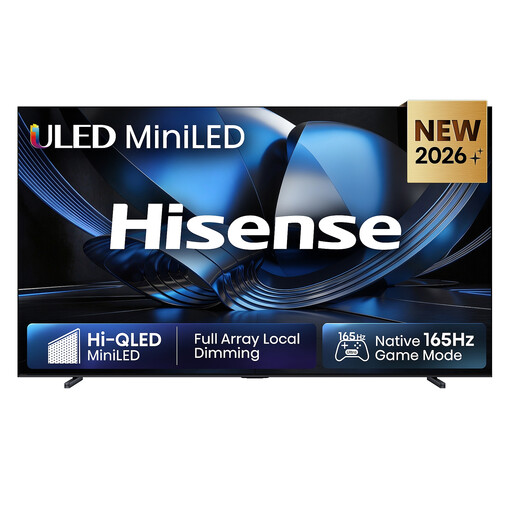
An option for a large viewing group, as long as the 100-Zoll screen suits the room and seating arrangement.
100 Zoll; ULED Mini LED; 4K; 165 Hz; Dolby Atmos; VIDAA Smart OS.
 No image available
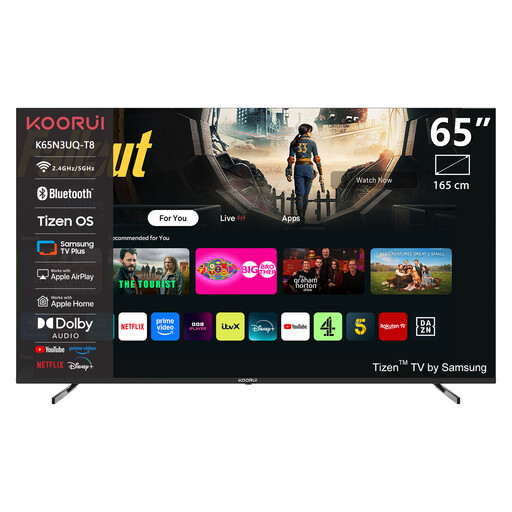
For viewing on a smaller screen, if 65 Zoll suits your seating distances and room.
65 Zoll; 4K UHD; QLED; Tizen OS.
 No image available
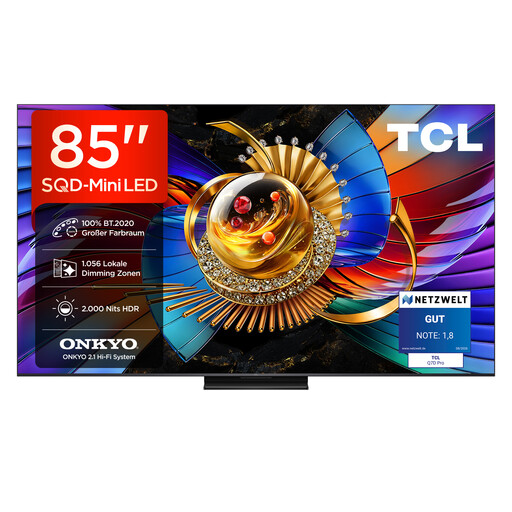
For a larger group, if 85 Zoll suits the viewing distance and available space.
85 Zoll; 4K; SQD Mini LED; Anti-Reflection; 1,056 local dimming zones; 2,000 nits HDR; 144 Hz.
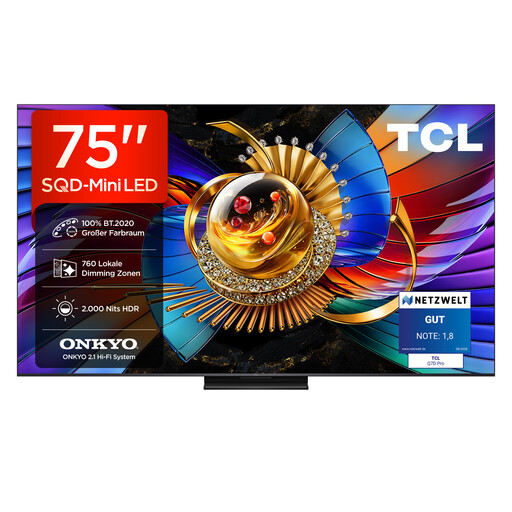 No image available
For watching together, if 75 Zoll suits the distance between seats and the room.
75 Zoll; 4K; SQD Mini LED; Anti-Reflection; 760 local dimming zones; 2,000 nits HDR; 144 Hz.
Compare the video and audio codecs, along with the other file requirements, against the manual for the exact model variant, then test a typical recording. A compatible file extension alone isn’t enough; LG Germany highlights the requirements for file format and codec. If the file isn’t compatible, you could use an external player or a suitably encoded file.
No. Brightness and reflection handling need to be assessed separately. RTINGS explains that brightness can help with light sources, but a TV also needs suitable reflection handling. Check both in your intended setup and at the time you usually watch.
Choose a size that suits your actual seating distances, the resolution and the lighting conditions where the TV will be set up. Also measure the furthest seats and check how the picture looks from there. Germany’s consumer advice centre lists lighting conditions and viewing angles as factors when choosing a screen size; RTINGS highlights wide viewing angles for groups with people seated at the sides.
It depends on whether you can control the light from the windows and how important dark scenes are compared with daytime viewing. RTINGS often describes Mini LED models as a good option for bright rooms. With OLED, check the reflection performance of the specific model and, if images are often left on screen, consider the potential risk of persistent image retention.