Speakers with big changes in volume
If you switch between quiet lines and forceful emphasis, record both extremes as a test and listen back. Zoom and Tascam list 32-bit float as a recording option on certain models.


If you’ll be speaking mainly from one spot, start with a handheld recorder positioned securely and close to the speaker, then record a test take from the quietest to the loudest passage. If you’ll be moving around or want to position the microphone separately, consider a lavalier setup or a recorder with suitable inputs for an external microphone. Zoom and Tascam list 32-bit float as an option on the models mentioned here to handle changing levels. However, this mode won’t remove room echo or plosive sounds, and Shure emphasises the importance of microphone placement.
If you switch between quiet lines and forceful emphasis, record both extremes as a test and listen back. Zoom and Tascam list 32-bit float as a recording option on certain models.
If you don’t have a dedicated recording room, finding a suitable microphone position is key. Shure points out that a microphone can’t effectively separate direct sound from reflected speech.
If you move around while performing, check whether a lavalier microphone can move with you or an external microphone can be positioned separately from the recorder. Zoom describes the F2 as coming with a lavalier microphone; Tascam lists inputs for external microphones on the DR-40XP.
A good fit if: you’ll be speaking from one spot and can position the recorder securely and close enough.
Consider: A position further away may pick up more room sound, so check the placement and listen to a test take.
A good fit if: you’ll be moving around and mainly want to record one voice.
Consider: Test the attachment, clothing and breathing noise during a moving scene.
A good fit if: you want to position the speaker’s microphone separately from the recorder, or record several sound sources separately.
Consider: The microphone, connection and, where necessary, power supply need to suit your setup. Extra inputs won’t change the room sound by themselves.
| Concern | What to check before buying | Who it matters most to |
|---|---|---|
| Changes in volume | Record the quietest and loudest passages, then check that your editing software supports the recording format. | If I switch between restrained lines and forceful emphasis, I want to listen to both in the format I intend to use. Consumers whose main concern is changes in volume account for around 40%. |
| Room sound | Compare possible microphone positions in the room you plan to use. Shure explains that a microphone can’t reliably separate direct sound from reflected speech. | In an ordinary room, I want to know whether my voice will remain clear from a possible position. Consumers most concerned about room sound account for around 30%. |
| Microphone position while moving | Try out the planned movement and attachment, then check the test take for rustling and breathing noise. | If I move while speaking, I need a microphone position that suits the performance. Consumers whose main concern is movement account for around 20%. |
| Recording and editing workflow | Check the storage media, power supply, monitoring options and file formats accepted by your editing software. | Before editing, I want to know how to save and check my takes. Consumers whose main concern is a straightforward workflow account for around 10%. |
This recording mode won’t remove reflected speech from a reverberant room. That’s why Shure highlights microphone placement as a separate factor.
Start by assessing a test take from the planned speaking position, then compare the recording formats.
An input alone doesn’t provide a separately positioned microphone for the speaker. With the Tascam DR-40XP, the connection, microphone and, where necessary, phantom power all need to be part of your planned setup.
Check that the microphone, connection, power supply and items included all work together.
Depending on your setup, you may also need a microphone, cable and mount.
Tascam lists the DR-10L Pro and Portacapture X6 as discontinued.
Use their previous places on lists to understand how the models compare, not as confirmation of current offers or spare parts availability.
The H1essential is a handheld recorder with built-in X/Y microphones and 32-bit float; the F2 combines a compact recorder with a lavalier microphone for recording a single voice.
The DR-05XP is a handheld recorder with built-in microphones. The DR-40XP adds XLR/TRS inputs and four recording tracks for a setup that can be expanded.
The LS-P5 combines built-in microphones, internal storage and a range of recording formats in a compact recorder.
The Joybuy products below are described as voice recorders or recording earbuds. For a theatre voice, pay particular attention to microphone placement, monitoring and exporting files into your editing workflow.
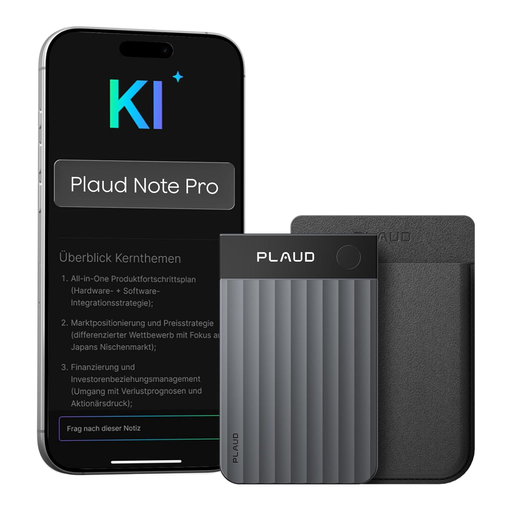 No image available
With its built-in microphones, this device may be suitable for voice recording. Check the microphone position and monitoring before recording your trailer.
64 GB storage; four MEMS microphones; stated battery life of 30 hours; compatible with Android and iOS.
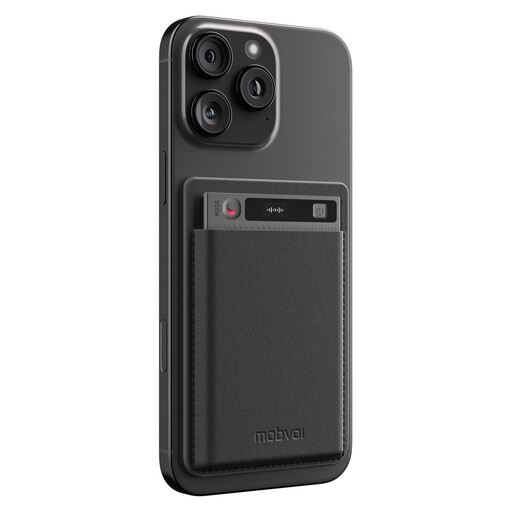 No image available
It’s listed as having a three-microphone system for voice recording. If you want to listen to takes directly on the device, note that it doesn’t have a headphone socket.
4 GB storage; stated weight of 29 g; Bluetooth connection.
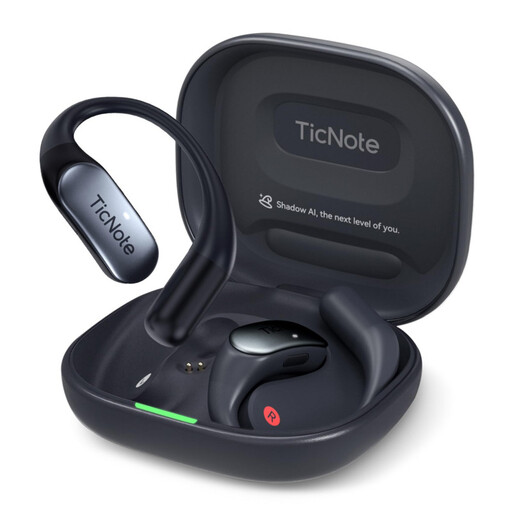 No image available
The described one-button recording mode and dual-microphone array are designed for voice recording; test your setup with a sample take.
32 GB of local storage; stated battery life of five hours. After the initial app setup, recording is said to be possible without a smartphone nearby.
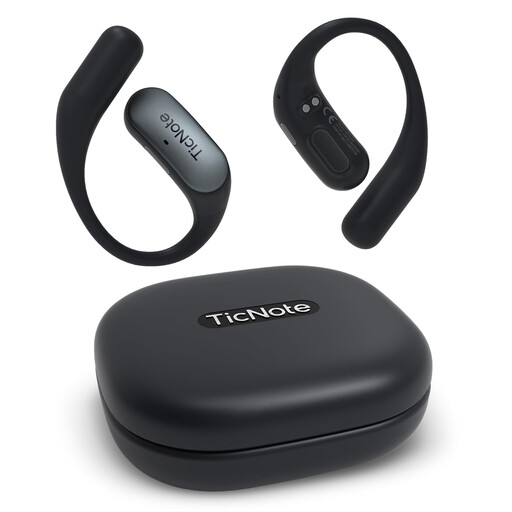 No image available
These recording earbuds are described as recording through the earbuds or charging case; check that this setup suits your speaking position.
32 GB storage; two digital microphones; MP3 and WAV export.
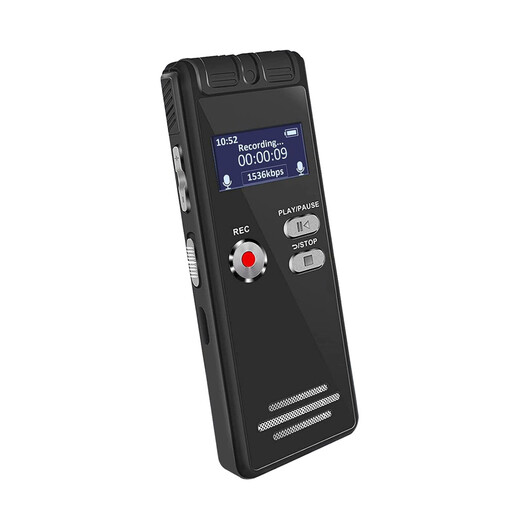 No image available
This portable recorder is described as having two omnidirectional microphones. Check the microphone position and listen to a test take of the emphatic passages.
TF card listed as the storage medium; recording at up to 3072 kbps; headphone playback and a USB connection to a computer are described.
No. This mode may give you more flexibility when recording at varying levels, but microphone position and room echo remain separate factors. Record both extremes as a test and listen back.
Try positioning the microphone slightly to one side and, if needed, using a suitable windscreen or pop filter. Shure’s guidance concerns microphone placement; check how well it works with your voice and the microphone you’ll actually be using.
Check whether you’ll need a memory card, batteries, an external microphone or mounting accessories, and what’s included with the specific offer. If something is faulty, your statutory rights against the seller should be distinguished from a voluntary guarantee; the terms of the latter are set out in the relevant guarantee statement.
No. Making an unauthorised recording of another person’s non-public spoken words may be a criminal offence under Section 201 of the German Criminal Code (StGB). Before recording, check whether other people will be audible and whether you have permission to make the recording. This does not amount to blanket permission to publish or use a trailer take.