
Lieferung heute & morgen

Qualitätsgarantie

Willkommens-Angebote freischalten: KOSTENLOSE Lieferung | Bis zu 80 % RABATT | Kostenlose 30-Tage-JoyPlus-Testphase
App herunterladen
By the Joybuy Product Recommendation Officer, August 29, 2026
Muscle tension from a long day at the office or soreness after a workout are common complaints. A massage gun, also known as a fascia gun, promises quick relief through percussive therapy. However, the market is flooded with devices making grandiose claims that often fall short. Many buyers quickly discover their new gadget is clunky, loud, or simply ineffective.
As your Product Recommendation Officer at Joybuy, my mission is to provide you with objective, practical information. This guide will reveal the three most common buying pitfalls and explain the technical specifications you truly need to focus on to make an informed decision.
Marketing claims often focus on metrics that are easy to measure but not always relevant. Watch out for these three points to avoid falling for exaggerated advertising:
To separate the wheat from the chaff, you should focus on three core features that define a device's performance and user-friendliness.
These two values are critical for the effectiveness of a deep-tissue massage device.
Long battery life is essential for flexible use, whether at home, at the gym, or while travelling. Modern devices often offer several hours of runtime. Also, look for a USB-C port. This standard allows for convenient charging with the same cable you likely already use for your smartphone or laptop.
A quiet massage gun (under 45 decibels) allows for a relaxing session without disturbing housemates or colleagues. Meaningful extra features can significantly enhance its utility. These include a massage gun with heat for improved circulation, a cold therapy function to reduce swelling, or a massage gun with an app that offers guided routines for different muscle groups.
Based on the objective criteria above, we have identified several models that are particularly well-suited for different user profiles.

Why This Fits Their Persona: This device combines a powerful deep-tissue massage with a 12 mm amplitude and innovative, app-controlled heat and cold therapy. Ideal for targeted post-workout recovery.
Instead of numerous useless attachments, this model offers a functional heat and cold head that delivers real therapeutic value beyond simple vibration.
The combination of heating and cooling in one device, controlled via the Renpho Health App with professional video guides, is a clear unique selling proposition.
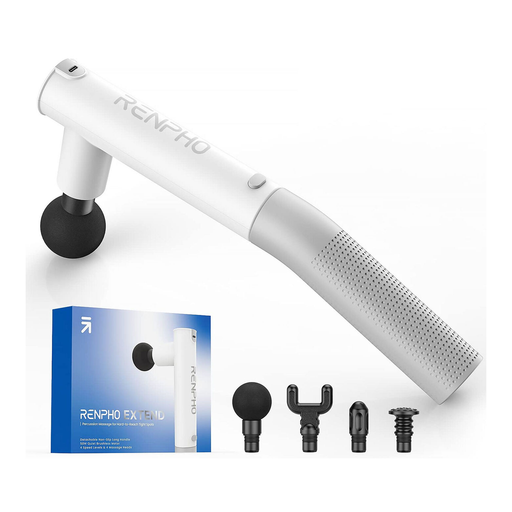
Why This Fits Their Persona: For anyone who wants to massage their back or shoulders without assistance. The detachable extension handle solves the common problem of poor reach.
This model directly addresses the 'impractical design' pitfall by offering a thoughtful solution for hard-to-reach areas, enabling true full-body self-massage.
The detachable extension handle is the standout feature. It allows for comfortable, controlled application on the entire back, shoulder blades, and lumbar region.
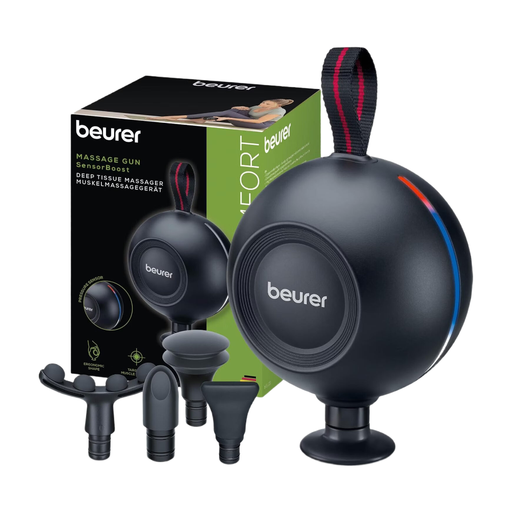
Why This Fits Their Persona: This mini massage gun is extremely lightweight at just 250g and very quiet at 38 dB. Perfect for discreet use in the office or for carry-on luggage when travelling.
It completely sidesteps the 'heavy weight' and 'loud noise' pitfalls. Its low weight and quiet operation make it an exceptionally practical everyday companion.
The smart pressure sensor, which automatically adjusts intensity, is a useful feature for intuitive use. Its extremely low weight of 250g is outstanding in its class.
We've compiled a complete, up-to-date list of products that fully meet these strict selection criteria and safety regulations.
1. How long should you use a massage gun on each muscle group? Generally, a duration of one to two minutes per muscle group is recommended. Avoid lingering on a single spot for too long to prevent overstimulation or tissue damage. Many devices include an automatic shut-off feature after 10 to 15 minutes, which serves as a safety measure.
2. Can a massage gun help with neck tension? Yes, a massage gun can be useful for relieving tension in the neck and shoulder area. However, it is crucial to avoid the front of the neck and the spine itself. Use a flat or U-shaped attachment on the surrounding musculature (e.g., the trapezius muscle) and start with the lowest intensity level. Always follow the manufacturer's safety instructions.
3. What is the difference between a massage gun and a fascia gun? The terms are often used interchangeably in common language. Both refer to percussive therapy devices that act on muscles and fascia (the connective tissue surrounding the muscles). The term fascia gun simply emphasizes the focus on releasing adhesions and tightness in the fascial tissue, which is ultimately the goal of both types of devices.