
Lieferung heute & morgen

Qualitätsgarantie

Willkommens-Angebote freischalten: KOSTENLOSE Lieferung | Bis zu 80 % RABATT | Kostenlose 30-Tage-JoyPlus-Testphase
App herunterladen
Transporting hot meals for work, school, university or on the go sounds straightforward. In practice, however, it’s the details that determine whether a thermal food container stays securely in your bag and is easy to use day to day. Unclear temperature claims, unsuitable closures and the wrong capacity are particularly common causes of disappointing purchases.
Phrases like “keeps warm for a long time” don’t specify a concrete period, so they’re of limited help. What’s more, the actual temperature performance depends on the starting temperature, the fill volume, the surrounding environment and how often the container is opened.
Several of the models featured here state a heat retention time of 4 to 6 hours. That may be sufficient for your commute or lunch break, but it doesn’t replace a personally verified time frame for every use scenario.
A tightly sealing lid reduces the risk of spills. Even so, you should always follow the manufacturer’s instructions. With the Maxcook MCTG0164, for example, it is expressly stated that the container should not be turned upside down or tilted. Before transport, make sure the lid is properly closed and the seal is fitted cleanly.
A large thermos container with 1.5 litres is suitable for several portions, but it’s heavier and needs more space. For a single meal, a smaller model can be more practical. A wide opening, on the other hand, makes filling, stirring and cleaning much easier. Narrow containers look compact, but they’re often less convenient for soups, stews or rice dishes.
A vacuum-insulated stainless steel container usually consists of a double-walled construction in which a vacuum reduces heat transfer. Models made from 304 stainless steel are widely used in the kitchen. 316 stainless steel is also used for robust containers and is listed as the main material for the Maxcook products mentioned here.
Glass linings can retain heat well, but they are more sensitive to impact. The COOKER KING Warmth Series Red Inner Liner is described as having a glass inner lining. The manufacturer advises against carelessly adding ice, using carbonated drinks or dry ice, and subjecting the container to strong shocks.
A leak-proof thermal container should have a clearly visible silicone seal and a lid that closes evenly. Before you buy, check the following:
Several models are designed for hand washing. The seal area should not be left in water for extended periods. A dishwasher can damage the seal or insulation if the manufacturer hasn’t explicitly approved it.
For a single portion, around 0.5 to 1 litre is often sufficient. Families, longer trips or multiple meals benefit from 1.4 to 1.5 litres. A 2-litre model is better suited for serving at the table, in the office or for shared meals than for everyday use in a rucksack.
A thermal lunchbox is designed for solid foods. An insulated container for soup, on the other hand, should have a tight seal and a sufficiently wide opening. A thermos flask, insulated flask or stainless steel thermos flask is primarily intended for drinks and doesn’t replace a food container. For milk or baby food, an electric baby bottle warmer is a different product category with its own application and power supply.
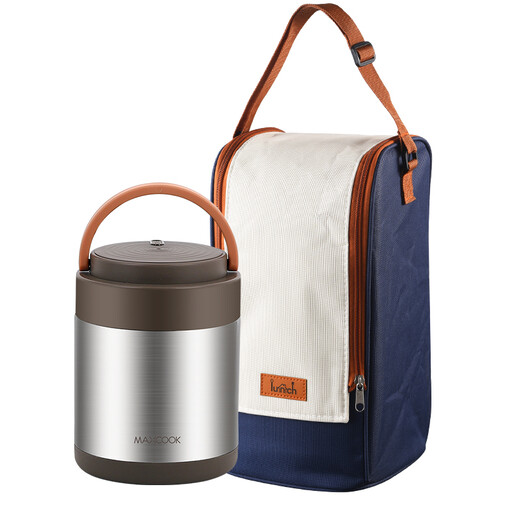
Why this product fits the profile: The 1.4-litre capacity offers room for several portions without needing to go up to a 2-litre container. The wide opening makes filling and cleaning easier.
The product description mentions vacuum insulation and a tightly sealing lid rather than just general marketing claims. The advice about upright transport should still be followed.
304 stainless steel, 1.4-litre capacity and wide opening; according to the product description, designed for 4–6 hours of temperature retention.

Why this product fits the profile: This container combines 316 stainless steel, vacuum insulation, a wide opening and a closure described as leak-proof. That suits regular use in the office, at school or while commuting.
The technical specifications state the material, volume and type of seal. Hand washing is also recommended, so the care requirement is clear before you buy.
316 stainless steel, 1.5 litres, wide opening and vacuum-insulated construction; suitable for both hot and cold food.
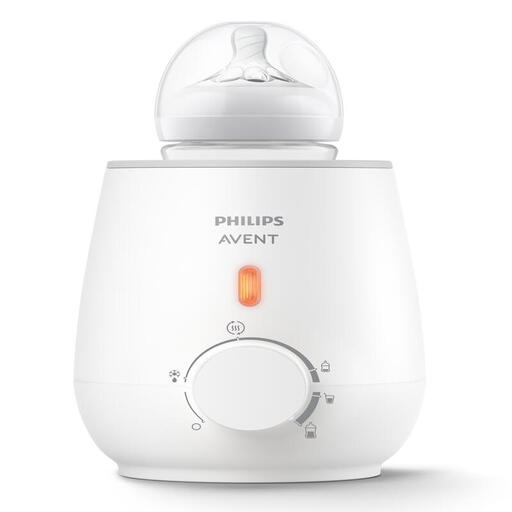
Why this product fits the profile: This electric bottle warmer is designed for milk and baby food at home, offering an alternative to a transport container.
Compatibility is clearly described: AVENT bottles as well as standard bottles and jars up to 7 cm in diameter can be used. The temperature must be checked before feeding.
Integrated defrost function, keep-warm function and operation at 220–240 V; specified for bottles and containers up to 7 cm in diameter.
Before filling, you can preheat the container with hot water or pre-cool it with cold water. Then pour out the water completely. Fill in food as soon as possible after preparation, close the lid securely and keep the container closed until you’re ready to eat.
Avoid:
For families and shared meals, a 2-litre insulated container like the Maxcook 304 Stainless Steel Vacuum Insulated Pot can be a good choice. For individual transport, a 1.5-litre model usually offers a more manageable size. A version with a separate lunch bag, such as the Maxcook 316 Stainless Steel Insulated Food Jar with Lunch Bag, can make carrying it in a rucksack easier.
We’ve put together a complete, regularly updated list of products that fully meet these strict selection criteria and the safety regulations in force in the EU.
That depends on the insulation, fill volume, starting temperature and how often it’s opened. The Maxcook models mentioned here are stated in the product description to have a heat retention time of 4–6 hours. For food safety, meals should also be prepared, transported and eaten promptly.
A suitable insulated container for soup has a seal and a firmly closing lid. However, “leak-proof” doesn’t mean every container can be turned upside down without risk. Check the closure after filling and transport liquid foods upright whenever possible.
Many models are designed for hand washing with warm water and mild washing-up liquid. The seal and lid should be checked separately and dried thoroughly. Always follow the specific care instructions, especially if the manufacturer advises against cleaning in the dishwasher.