
Lieferung heute & morgen

Qualitätsgarantie

Willkommens-Angebote freischalten: KOSTENLOSE Lieferung | Bis zu 80 % RABATT | Kostenlose 30-Tage-JoyPlus-Testphase
App herunterladen
A thermal lunch box is designed to transport hot meals, soup or cold food safely to work, school and wherever you are. In practice, however, problems are often caused not by capacity, but by unclear product information, unsuitable closures or an inaccurate assessment of how the lunch box will be used.
Before buying, it is therefore worth taking a close look at three common pitfalls:
For a single meal, around 700 to 1,000 ml is often sufficient. A rectangular lunch box can be stored neatly in a work bag or school bag and is suitable for several different components.
A 1.5-litre food jar is more suitable for users who want to transport larger portions, several meals or food for multiple people. The greater capacity usually means more weight and a larger diameter. Before buying, check the following:
A stainless steel thermal container with vacuum insulation is designed for hot and cold food. Depending on the model, the recommended products use 304 or 316 stainless steel. The lid is partly made of plastic and contains a silicone seal.
The material specification alone does not indicate how convenient a container will be in everyday use. Also look for:
A wide opening is particularly practical for soups, stews and rice dishes. It often also allows you to eat directly from the container.
A leakproof lunch box should only be transported with the lid closed correctly. With screw-top lids, make sure that the seal is seated properly and that no food residue is obstructing the closure area.
Not every thermal lunch box is microwave-safe. Stainless steel models with vacuum insulation must generally not be placed in the microwave. With plastic containers, the lid must be removed before heating to prevent pressure from building up. According to Tefal product information, the Master Seal To Go models mentioned are microwave-safe as long as the lid is removed before heating.
You should also check dishwasher suitability for each individual model. Hand washing is often recommended for thermal containers, particularly around the sealing area. A BPA-free lunch box may be important to users who specifically look for this material specification. According to Tefal product information, the two lunch boxes featured do not contain bisphenol A.
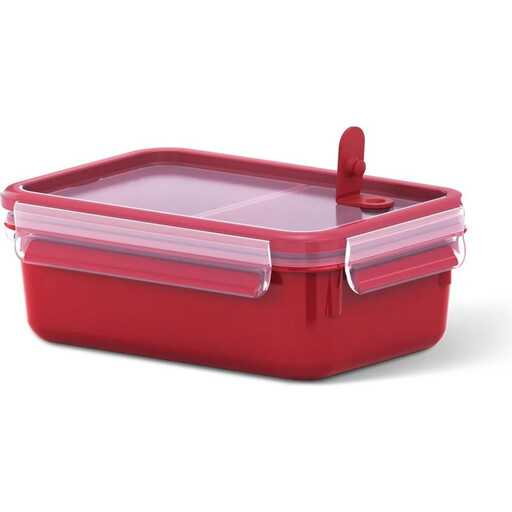
Why this product suits this profile: With a capacity of 1,000 ml, this rectangular lunch box is suitable for work, school and short journeys. Its format is ideal for planning classic packed lunches.
The product information specifies a leakproof closure and instructions for safe microwave use with the lid removed.
1,000 ml capacity; according to Tefal product information, BPA-free, dishwasher-safe and microwave-safe.
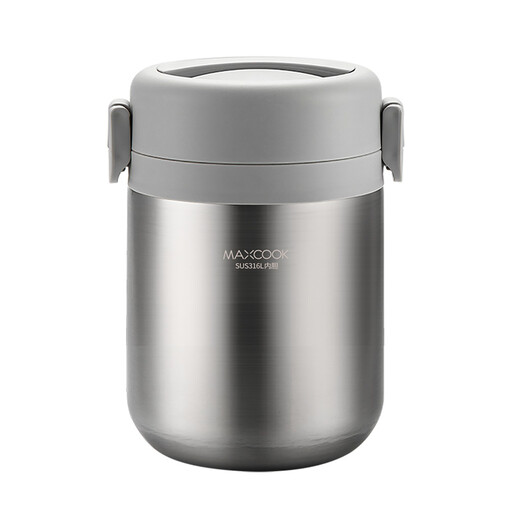
Why this product suits this profile: This 1.5-litre thermal container made from 316 stainless steel is designed for larger portions and frequent use with hot or cold food.
The product description specifically mentions a wide opening, a tightly closing lid and that it should not be used in a microwave.
316 stainless steel, 1.5-litre capacity, vacuum insulation and a wide opening; according to the product information, it is not suitable for the dishwasher or microwave.

Why this product suits this profile: Its large capacity and shape are ideal for soups, stews and larger meals during commutes, outdoor activities or long working days.
The description states that it maintains temperature for 4–6 hours and recommends hand washing and careful handling of the seal.
304 stainless steel, 1.5-litre capacity, vacuum insulation and a wide opening; according to the product information, it is not intended for carbonated drinks.
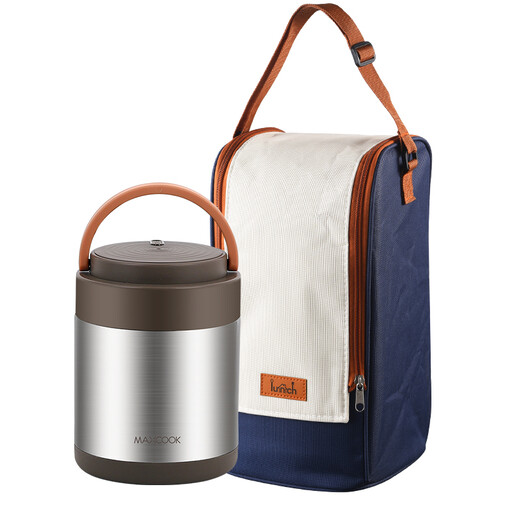
Why this product suits this profile: The 1.4-litre capacity provides room for substantial meals without using the full capacity of a 1.5-litre model.
The product information specifies a wide opening, a leakproof lid and recommended hand washing to protect the seal.
304 stainless steel, vacuum insulation, 1.4-litre capacity and a wide opening suitable for soups.
We have put together a complete, regularly updated list of products that fully meet these strict selection criteria and the safety regulations applicable in the EU.
To ensure that a thermal lunch box performs reliably in everyday use, you should follow a few basic rules:
This depends on the insulation, amount of food, starting temperature and outside temperature. According to the product information, the Maxcook models mentioned above offer 4–6 hours of temperature retention. This should be treated as a guideline, not as a guarantee that the temperature will remain constant.
Only if the manufacturer explicitly states that it is suitable. According to the product information, the Tefal lunch boxes can be used for heating, but only without the lid. Vacuum-insulated stainless steel containers such as the Maxcook models must not be placed in the microwave, according to the product information.
After emptying it, clean the container with warm water and washing-up liquid. Pay particular attention to the lid, thread and silicone seal. Hand washing is recommended for the Maxcook food jars. Before storing the lunch box, allow it to dry completely and, where possible, store it with the lid open.