
Lieferung heute & morgen

Qualitätsgarantie

Willkommens-Angebote freischalten: KOSTENLOSE Lieferung | Bis zu 80 % RABATT | Kostenlose 30-Tage-JoyPlus-Testphase
App herunterladen
A thermal lunch box is designed to transport meals safely and, depending on its construction, keep them hot or cold for several hours. In everyday life, the key considerations are a secure seal, a suitable capacity and easy cleaning. Whether you need one for the office, school, commuting, day trips or camping, not every model is suitable for every situation.
The term leak-proof food container refers to the seal under the intended conditions. A lid with a gasket can contain liquids, but that does not automatically mean it is suitable for vigorous shaking, overfilling or transport in every position. Soup containers in particular should be closed correctly and checked for damage before being packed.
Look for:
A 1.5-litre lunch box offers plenty of space, but it can be considerably heavier once filled. For a single meal at the office or school, 700 to 1,000 ml is often enough. A larger model is more suitable for multiple portions, families, long days outdoors or users with higher calorie requirements.
The external dimensions are also important: the container needs to fit in your bag, rucksack or cool bag. So do not just check the litre capacity; also consider the height, diameter and empty weight.
Heat or cold retention depends on factors including the amount of food, its starting temperature, how often the container is opened and the ambient temperature. Manufacturers’ claims about temperature retention should therefore be treated as guidelines, not a guarantee for every everyday situation.
With a thermal food container, preheating it with hot water can improve performance. For cold food, briefly pre-chilling it with cold water is recommended. Ideally, fill the container immediately before transporting it.
A stainless-steel lunch box is resistant to knocks and, when cleaned properly, is less likely to retain odours. Stainless-steel containers with vacuum insulation are often designed as food jars or thermal soup containers. The lid is usually made from plastic and contains a gasket that should be cared for separately.
Plastic models can be lighter and flatter. This makes them practical for sandwiches, salads or several separate components. If you are looking for a microwave-safe lunch box, follow the manufacturer’s instructions: often, only the container without the lid can be placed in the microwave. A vacuum-insulated stainless-steel container is generally not suitable for microwave use.
As a rough guide:
A wide opening makes filling, stirring and eating directly from the container easier. At the same time, a wide shape may take up more room in your bag. For a classic lunch box for taking on the go, flat, rectangular models are often more practical.
Dishwasher-safe construction saves time in everyday life. However, care instructions should be checked particularly carefully for vacuum containers. Some lids or gasket areas are not suitable for the dishwasher. Removable gaskets can be cleaned and dried more thoroughly.
Before using a microwave: remove the lid, prevent pressure from building up and heat only the components expressly approved for this purpose. A conventional oven or hob is not suitable for the containers mentioned above.
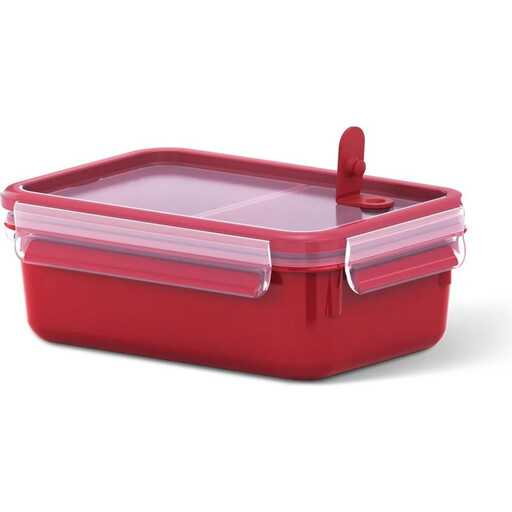
Why this product suits the profile: With a capacity of 1,000 ml, a rectangular shape and a stated weight of 283 g, this model is suitable for a single meal at work or school. The product details state that it has a leak-proof closure and is suitable for microwave and dishwasher use.
The capacity is clearly stated and is below that of many large 1.5-litre containers. The manufacturer also points out that the lid must be removed before heating.
1,000 ml capacity, dimensions of 195 × 135 × 70 mm, BPA-free materials and dishwasher cleaning according to the product description.
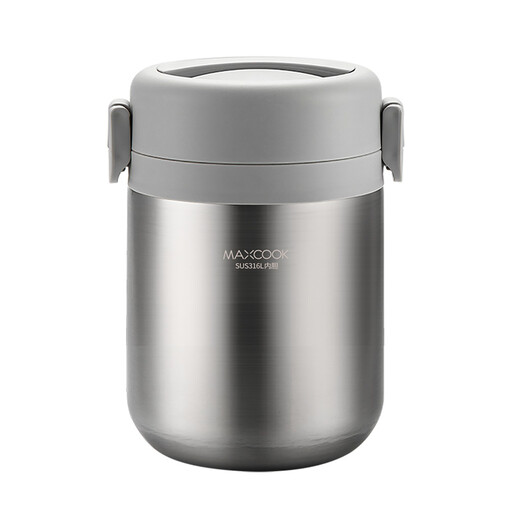
Why this product suits the profile: This food jar combines vacuum insulation with 316 stainless steel, a wide opening and a stated capacity of 1.5 litres. It is suitable for large meals, multiple portions and longer periods away from home.
The description gives specific details about the material, gasket, wide opening and care instructions. The container must not be placed in the microwave and should be washed by hand.
316 stainless steel, vacuum insulation, a wide filling opening and a leak-proof lid according to the product details; external dimensions of approximately 15,5 × 15,5 × 22 cm.

Why this product suits the profile: The combination of vacuum insulation, a wide opening and 1.5 litres is ideal for users who want to transport hot food or soup to work, on day trips or during outdoor activities.
The product description gives a temperature-retention time of 4 to 6 hours as a guide. It also highlights the need for hand washing, correct closure and upright storage.
304 stainless steel, vacuum insulation, a wide opening, 1.5-litre capacity and a stated empty weight of approximately 1.04 kg.
We have put together a complete, regularly updated list of products that fully meet these strict selection criteria and the safety regulations applicable in the EU.
Fill the container as fully as possible without overfilling it. A larger amount of food can help maintain a stable temperature better than leaving a lot of air inside. Soups and other liquid foods should not reach the rim of the lid. Before transporting the container, make sure the gasket is seated cleanly and the closure is fully secured.
Hot food can cause burns. Allow the contents to cool briefly before eating directly from the container and open the lid carefully. Carbonated drinks and dry ice must not be placed in these containers, as pressure may build up.
This depends on the insulation, amount of food, starting temperature and surroundings. For the Maxcook model made from 304 stainless steel mentioned above, 4 to 6 hours is given in the product details. This is not a general figure for every thermal lunch box. Preheating and filling the container fully can improve the starting conditions.
Only if the manufacturer has approved the specific container for microwave use. Microwave use is stated for the Tefal Master Seal To Go, but the lid must be removed beforehand according to the instructions. Vacuum-insulated stainless-steel models such as the Maxcook Food Jars mentioned above are not suitable for microwave use.
Empty the container immediately after your meal and clean the inside, lid and gasket with warm water and washing-up liquid. Removable gaskets should be dried separately. Stainless-steel food jars are often intended to be washed by hand. Store the container with the lid open so that moisture and odours can escape.