
当日/次日达

品质保障

开启新人专享福利: 全场免邮 | 低至 2 折 | 免费试用 30 天 JoyPlus 会员
下载 Joybuy
A thermal mug should keep coffee warm on the way to work, make water readily available during exercise or keep cold drinks pleasantly chilled while you are out and about. In practice, however, unclear product information, unsuitable sizes and leaky lids often lead to disappointing purchases. If you are choosing between a travel mug, Travel Mug, thermal tumbler and double-walled mug, you should therefore look beyond colour and design.
A lid with a drinking opening can reduce splashes, but it is not automatically suitable for carrying in a bag. Liquid can escape, particularly when there are changes in pressure, hot drinks or the mug is stored on its side. Always check whether the manufacturer distinguishes between splash-resistant, leakproof and not suitable for horizontal storage.
For example, the BODUM Travel Mug 350 ml in Cranberry Brown specifically states that, because of its pressure-equalising design, the mug is not completely leakproof and should be kept upright. For commuters and travellers, this information is more important than a general marketing claim.
A 1.2-litre thermal tumbler is suitable for long working days, hiking or training. However, it can be heavy for a short commute and may not fit in a standard vehicle cup holder. A travel mug with a capacity of 250 to 350 ml, on the other hand, is more compact but holds less and may need refilling.
A double-walled glass mug is often made from heat-resistant borosilicate glass, but it is still a glass product. Sudden temperature changes, impacts or dropping it onto a hard floor can cause cracks. Information such as “dishwasher-safe” also does not necessarily apply to the lid, seals or special coatings.
Use your usual drink volume as a guide:
Also check the external dimensions and diameter. Despite having the right capacity in millilitres, a mug may still be too wide for your car’s cup holder.
A double-walled mug creates an insulating layer of air between the walls. This reduces heat transfer to the outside, while condensation from cold drinks may also be reduced. However, this is not a guarantee of a specific temperature-retention time. Reliable information should refer to specific product data rather than blanket claims such as “keeps drinks warm forever”.
For glass models, borosilicate glass is a commonly used material for heat-resistant drinking vessels. Even so, you should follow the guidance concerning temperature changes. Plastic models may be lighter and more resistant to knocks. For plastic products, also check whether they are stated to be BPA-free.
A drinking mug with a lid should suit the way you plan to use it. A simple drinking opening is often sufficient at a desk. When cycling, driving or exercising, a secure closure, carry handle or a tumbler with a straw may be more practical.
When it comes to cleaning, ask yourself the following questions:
The term dishwasher-safe mug should therefore always be considered in relation to the individual components.
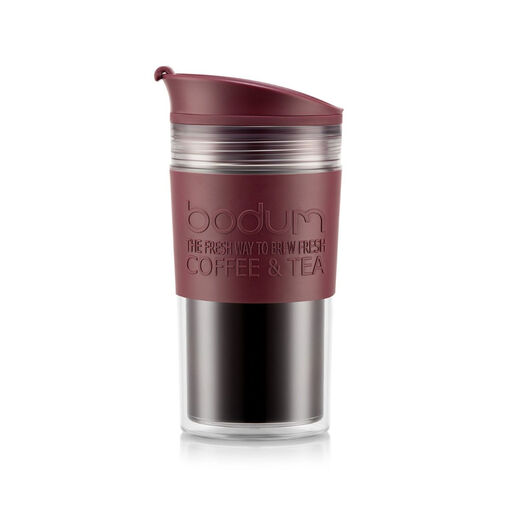
Why this product suits this profile: With a capacity of 350 ml, it is designed for coffee or tea on your daily commute. The silicone ring provides a secure grip, while the screw-top lid helps regulate the flow as you drink.
The product information states that the mug should be transported upright. This helps avoid the common confusion between a splash-resistant lid and complete leakproofing.
350 ml capacity, double-walled construction, BPA-free plastic and stated dishwasher suitability.
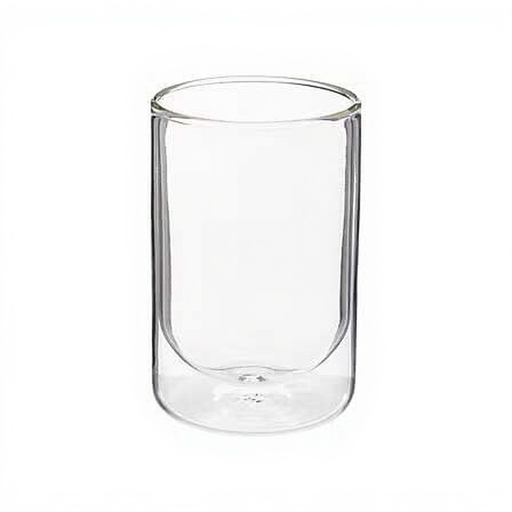
Why this product suits this profile: The clear 400 ml glass is suitable for coffee, tea, water and juice at home or in the office. The integrated handle helps you hold and use it securely.
The care instructions state that it is dishwasher-safe, while also warning against sudden temperature changes and use in the microwave or oven.
400 ml capacity, double-walled glass construction, handle and stated dishwasher suitability.
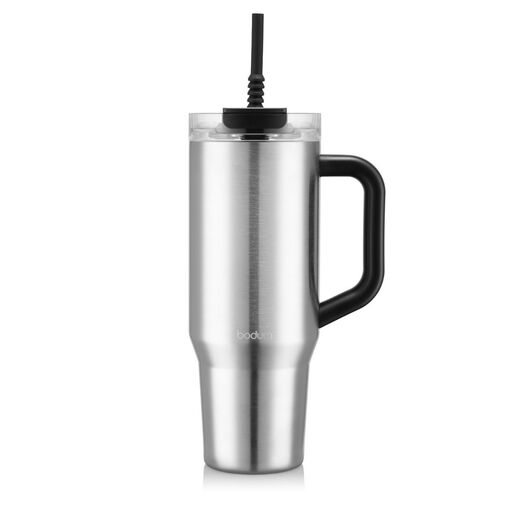
Why this product suits this profile: With a capacity of 1.2 litres, this thermal tumbler is aimed at people who want to refill less often during training, at the office or on long journeys. The straw, handle and lid are designed for use on the go.
The large capacity is clearly stated. Before buying, users should nevertheless consider the weight, space required and whether the lid is suitable for upright transport.
1.2-litre capacity, reusable straw, carry handle and lid, according to the product description.
We have put together a complete, regularly updated list of products that fully meet these strict selection criteria and the safety regulations applicable in the EU.
The lifespan of a thermal mug depends greatly on its material, seals and cleaning routine. Wash the mug before using it for the first time. For lids with several individual parts, regularly remove the seals and drinking openings and clean them separately to prevent drink residue from building up. When drinking hot beverages, take the first sip carefully, as the contents may be considerably hotter than the outside of the mug suggests.
A Travel Mug should preferably be transported upright unless the manufacturer explicitly approves another storage position. With glass mugs, avoid switching directly from very hot to very cold liquids. Damaged glasses, lids or seals should no longer be used.
For a standard portion of coffee or tea, 250 to 350 ml is usually enough. If you want to take a large cup, several drinks or enough water for several hours, you can choose 500 to 600 ml. 1.2 litres is mainly useful when refilling on the go is difficult.
This depends on the material, lid construction, fill level, starting temperature and surroundings. Without specific information from the manufacturer, it is not possible to give a reliable time. Preheating the mug with hot water can reduce heat loss, but it does not replace an objective time indication from the manufacturer.
No. Some models are described as dishwasher-safe, while different instructions may apply to individual components or seals. Therefore, check the care instructions for the specific product. With glass mugs, also follow the warnings about sudden temperature changes.