
当日/次日达

品质保障

开启新人专享福利: 全场免邮 | 低至 2 折 | 免费试用 30 天 JoyPlus 会员
下载 Joybuy
A thermal mug is meant to be a reliable companion for your coffee, tea or cold drinks throughout the day – on the train, on your way to university, in the car, at the office or out on a walk. In practice, however, a few typical buying decisions can lead to disappointment. A high price doesn't guarantee suitable insulation performance or easy cleaning.
Claims like "keeps cold for up to 24 hours" or "keeps hot for up to 12 hours" usually refer to specific conditions. What really matters is how full the vacuum-insulated mug is, what temperature the drink starts at, and how often the lid is opened.
For commuters, a thermal mug to go that keeps hot drinks warm for the journey to work and through the morning is often sufficient. If you want to transport a cold drink for an entire day out, however, you should give more weight to the cold-retention claim and the capacity.
A leak-proof thermal mug is only practical for everyday use if the lid, sealing ring and closure work together properly. A one-touch mechanism can make opening easier in the car, while a screw cap often provides extra security. Also check whether the manufacturer explicitly states that the mug is suitable for transport in a bag, and whether carbonated drinks are excluded.
A double-walled thermal mug with a narrow drinking opening can be harder to clean than a model with a wide opening. Residue tends to build up around seals, sliding drinking spouts and straws. So look for detachable lid parts, a wide opening and clear care instructions. "Dishwasher-safe" shouldn't be assumed automatically if the product description only mentions hand washing.
For coffee on the way to work, 350 to 550 ml is often a practical range. A 400 ml travel mug fits more easily into bags and cup holders, while 550 ml allows for longer journeys without refilling. Large models with 900 ml or 1.2 l are better suited to water and cold drinks, but they take up more space and are heavier.
Check before you buy:
A stainless steel thermal mug with double-walled vacuum insulation reduces heat exchange between the drink and the surroundings. Commonly used grades of stainless steel, such as STS304 or 18/8, are explicitly stated in the product specifications. However, the material alone doesn't tell you anything about the actual insulation duration. For that, the manufacturer's own claims are what matter.
An inner coating, for example made from ceramic, can be interesting for users who prefer a flavour-neutral drinking surface. At the same time, it requires gentle cleaning without steel wool or abrasive products.
A thermal mug with a lid should close securely and have a drinking opening that suits how you'll use it. For drivers, one-handed operation and a safety lock are practical. For tea, an integrated strainer or a wide opening can be helpful. With hot drinks, remember: the contents can still be very hot even after a long time. Let it cool down before your first sip, and don't fill the mug to the brim.
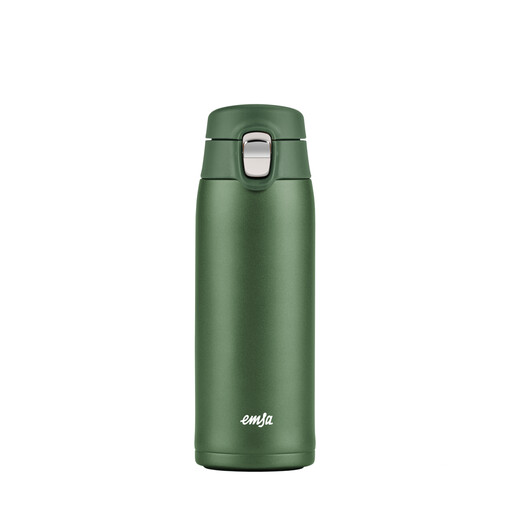
Why this product fits the profile: This slim stainless steel model is designed for short journeys, commuting and your daily coffee to go. According to the product information, it keeps drinks hot for up to 8 hours and cold for up to 16 hours.
The product data states a specific capacity, a flip-top closure and a leak-proof construction, rather than just generic insulation claims.
0.4 l capacity, slim design, one-handed operation and stainless steel body.
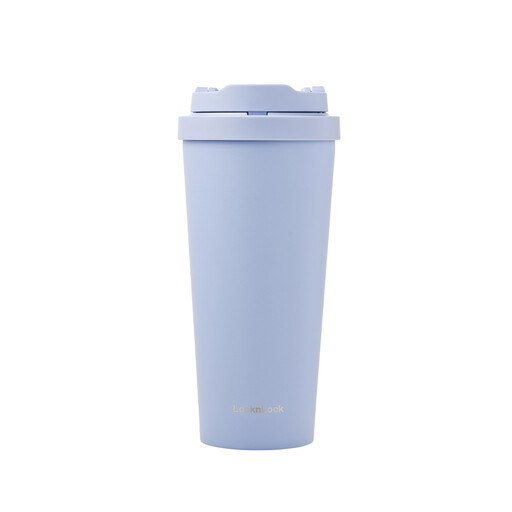
Why this product fits the profile: This double-walled thermal mug combines 550 ml capacity with a one-touch lid, safety lock and wide opening. According to the product information, it stays hot for up to 4 hours and cold for up to 28 hours.
The safety lock and non-slip base address accidental opening and tipping. According to the product description, the mug is not dishwasher-safe.
STS304 stainless steel, 550 ml, one-handed opening, wide cleaning opening and BPA-free components according to the product information.
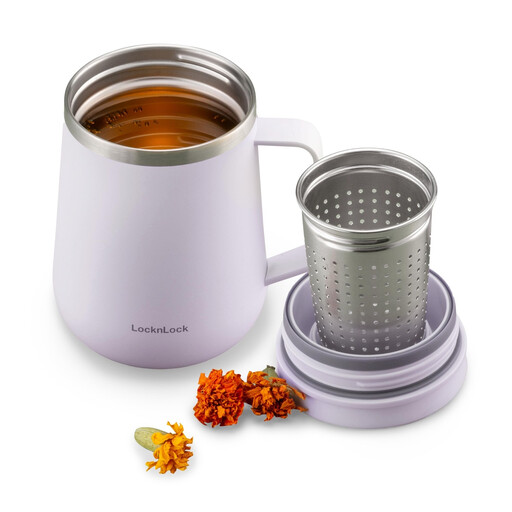
Why this product fits the profile: This model is aimed at tea and coffee drinkers in the office or on the go. An integrated stainless steel strainer supports brewing directly in the mug.
The strainer and the hand-washing required by the design make the features transparent. The lid should be fully closed before transport.
400 ml, vacuum insulation, tea strainer, carry handle and non-slip silicone base.
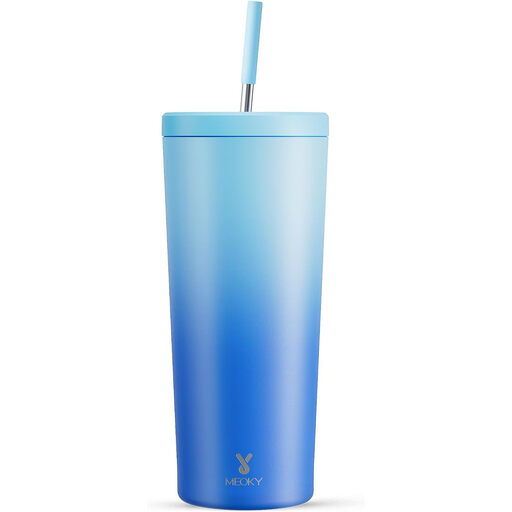
Why this product fits the profile: The 24 oz mug is designed for cold drinks, longer car journeys and large volumes. According to the product information, the tapered base fits many standard cup holders.
The product information clearly defines the usage: for fully leak-proof transport, the straw should be removed. Hot and carbonated drinks are not intended.
18/8 stainless steel, 24 oz capacity, vacuum insulation, silicone tip on the straw and non-slip base.
Rinse a new insulated mug with warm water and mild detergent before first use. After coffee, tea or milky drinks, all parts should be cleaned as soon as possible. Sealing rings need particular attention, as liquid residue can collect there.
Do not use steel wool or aggressive chlorine-based cleaners. The microwave, oven and freezer are not suitable for the stainless steel models mentioned. Carbonation can build up pressure in sealed containers; so please observe the relevant safety instructions.
We've put together a complete, regularly updated list of products that fully meet these strict selection criteria and the safety regulations in force in the EU.
That depends on the insulation, fill level, starting temperature and how often the lid is opened. According to the product information, the claims for the models featured range, for example, from up to 4 to 8 hours for hot drinks. For the commute, a realistic time frame is therefore more important than a maximum advertised claim.
Models with a tapered base or a compact cylindrical shape can fit many standard cup holders. However, measure your existing holder, as vehicles have different diameters and depths. A safety lock can offer extra everyday practicality when driving.
With proper use, a stainless steel thermal mug can be used for a long time. Check the seal, lid and mug body regularly. As soon as cracks, deformation or a damaged seal become visible, the product should no longer be used for transporting hot drinks.