
Lieferung heute & morgen

Qualitätsgarantie

Willkommens-Angebote freischalten: KOSTENLOSE Lieferung | Bis zu 80 % RABATT | Kostenlose 30-Tage-JoyPlus-Testphase
App herunterladen
Whether in the office, on the way to university or out hiking: thermal mugs and water bottles are part of everyday life for many people. The choice ranges from insulated stainless steel water bottles and BPA-free water bottles to takeaway cups with lids. However, product specifications are not always directly comparable. Capacity, closure type and cleaning often determine everyday usability more than colour or design.
A leak-proof water bottle is only practical when the closure is correctly sealed and the gasket is properly fitted. On some models, this claim only applies to upright transport or without a straw inserted. So check the following:
A closure with a straw can make drinking easier, but it is not automatically suitable for safe transport.
A thermos flask or thermal mug with vacuum insulation can keep drinks at temperature for several hours. However, this does not mean that every model is suitable for boiling drinks, carbonated beverages or the freezer. Plastic bottles without insulation can often only be used for cold or lukewarm drinks.
Lids, straws and sealing rings can trap residue. Many products require hand washing, while other components are dishwasher-safe. A difficult-to-access drinking opening increases the maintenance effort. Before buying, it is worth checking the care instructions and whether the lid can be fully dismantled.
For the commute or short errands, 300 to 500 ml is often sufficient. If you are out and about for several hours, you can choose a model with 550 to 720 ml. Large mugs of 900 ml or more reduce the need for refilling, but take up more space and can be heavier.
Also pay attention to the diameter. A slim travel mug fits more easily into a car cup holder. For a water bottle for your rucksack, height, weight and a carrying loop are important practical details.
A stainless steel water bottle is robust and is often combined with double-walled vacuum insulation. Stainless steel models can be suitable for hot drinks, provided the manufacturer explicitly states this. With a single-walled stainless steel bottle, the outer surface can become warm.
Tritan, polypropylene and other plastics are lightweight and transparent. A BPA-free water bottle indicates that Bisphenol A is not listed as a material component. Nevertheless, temperature limits must be observed. Glass is flavour-neutral but more prone to breakage, and therefore not always suitable for sport or outdoor activities.
A screw cap seals reliably in many cases, but requires two hands. A flip-top lid can be opened more quickly. A water bottle with a straw is suitable for frequent drinking while walking or training, but should not be used with hot liquids if this is excluded in the safety instructions.
For thermal mugs, claims such as “8 hours hot” or “16 hours cold” should be understood as manufacturer estimates. The actual duration depends on factors including starting temperature, fill volume and surroundings. For coffee and tea, a small travel mug may suffice; for water in summer, a larger insulated water bottle is often more suitable.
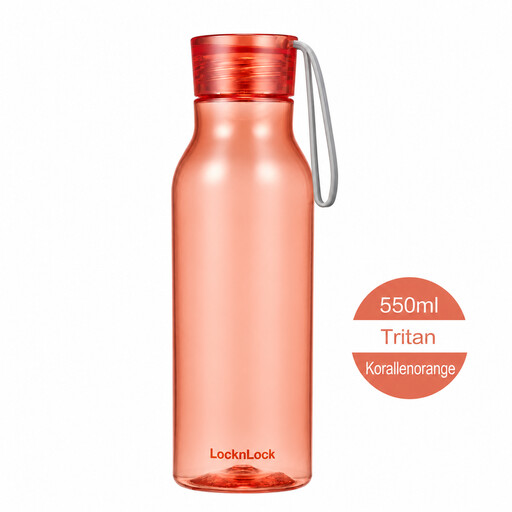
Why this product fits the profile: The lightweight Tritan bottle holds 550 ml and is suitable for cold drinks in everyday life, at the office or at school.
The product specifications mention a silicone gasket, a temperature limit of -20 to 60 °C and clear instructions for hand washing. This makes it easier to assess the intended use.
550 ml capacity, approximately 110 g weight, BPA-free Tritan and integrated carrying loop.
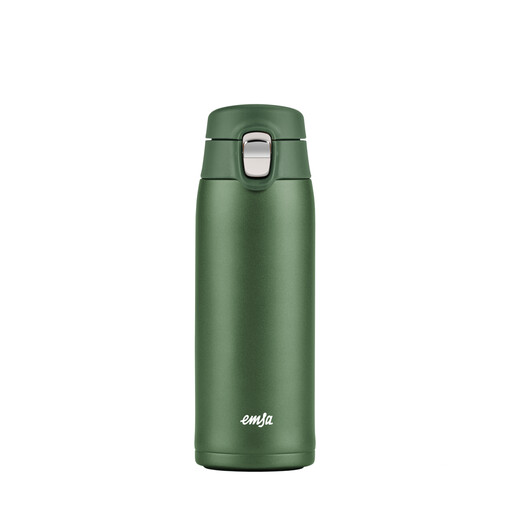
Why this product fits the profile: The slim stainless steel thermal mug is ideal for commuters and professionals looking for a compact solution for coffee or tea.
The specifications mention a flip-top closure, a slim design and stated leak-proof performance. The lid should be fully clicked shut before transport.
0.4 l capacity, stainless steel construction and manufacturer-stated insulation values of 8 hours hot and 16 hours cold.
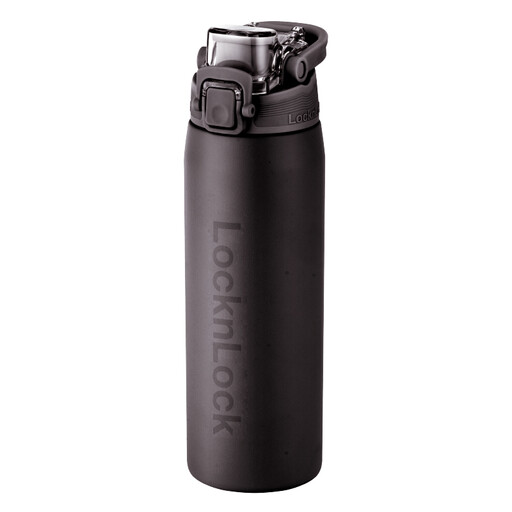
Why this product fits the profile: The thermos flask with 720 ml, 316 stainless steel and straw is designed for active users during sport, travel or outdoor activities.
The care instructions exclude the dishwasher and carbonated drinks. Following these guidelines reduces common issues with seals and pressure build-up.
720 ml capacity, 316 stainless steel, straw and corrosion resistance specifications.

Why this product fits the profile: The large tumbler is designed for cold drinks in the car, at home or on longer journeys.
The product description distinguishes between leak-proof transport without the straw and use with the straw. Hand washing is also recommended.
24 oz capacity, double-walled vacuum insulation, 18/8 stainless steel and tapered shape to fit most car cup holders.
We have compiled a complete, regularly updated list of products that fully meet these strict selection criteria and the safety regulations in force in the EU.
This depends on the insulation, fill volume, starting temperature and surroundings. Manufacturer claims such as “8 hours hot” or “16 hours cold” serve as a guide. Pre-warming with hot water can help maintain temperature on some models. What matters most is that the lid is fully closed.
Not every stainless steel bottle is automatically intended for hot drinks. Check the temperature specification from the relevant manufacturer. Products with a straw or plastic parts often have additional restrictions. Hot liquids also pose a risk of scalding, particularly when drinking directly.
Ideally, it should be rinsed after every use and cleaned regularly with warm water, mild detergent and a suitable bottle brush. The lid, straw and sealing ring should be checked separately and dried thoroughly. Damaged seals or cracks are a good reason to stop using the bottle.