
当日/次日达

品质保障

开启新人专享福利: 全场免邮 | 低至 2 折 | 免费试用 30 天 JoyPlus 会员
下载 Joybuy
A thermal travel mug should keep your hot and cold drinks reliably by your side – whether you’re commuting to work, driving, studying at university or travelling. But product names like “Travel Mug”, “insulated coffee cup” or “leak-proof thermal mug” don’t tell you much about how they actually perform in daily life.
Three common buying mistakes often lead to the wrong choice:
A stainless steel thermal mug with double-walled vacuum insulation is often a practical choice for commutes and longer journeys. Between the stainless steel walls is a largely insulating layer that reduces heat transfer. Still, check whether the manufacturer gives separate figures for hot and cold drinks. “Keeps warm for a long time” isn’t precise enough without a time frame.
Double-walled glass works differently: the air layer between the glass walls can reduce heat transfer, while the outside feels more comfortable in your hand with hot drinks. However, such double-walled glass cups are fragile and are generally better suited to a desk, kitchen or meeting room than a bag. Borosilicate glass, for example, is described in product details as being more resistant to temperature changes than standard glass. Even so, extreme temperature changes should be avoided.
A thermal mug with a lid should close securely without needing excessive force. Practical features include:
For transport in a rucksack, a leak-proof thermal mug is especially important. Look for a specific manufacturer statement about leak resistance, and test it with cold water before first use. Hot liquid can build up pressure; carbonated drinks or dry ice are only suitable if the manufacturer expressly allows them.
For a single coffee, 250 to 350 ml is often enough. This size is relatively compact and suits a short commute. 450 to 500 ml is ideal if you plan a longer morning without refilling. Models around one litre or more are intended for long days or high fluid intake.
Measure your car’s cup holder before buying. You should also consider the diameter, height and weight when full. A thermal mug for the car and office needs not only suitable insulation, but also a stable base and a drinking opening that can be used safely while driving. When driving, only use the mug if it does not compromise road safety.
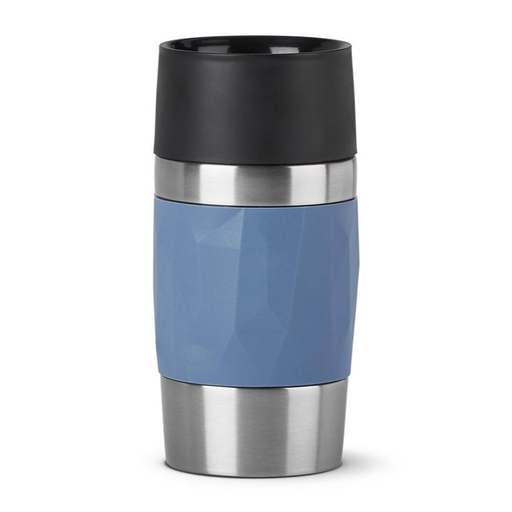
Why this product suits the profile: The compact 300 ml size is ideal for coffee or tea on short journeys, as well as for use in the office and car. According to the description, the product is made from stainless steel with a double-walled construction.
The product details mention a screw cap, a silicone seal and a leak-proof construction. Even so, make sure the lid is fully closed before transporting it.
360-degree drinking opening, soft-touch grip area and, according to the product description, keeps drinks hot for up to 3 hours and cold for up to 6 hours.
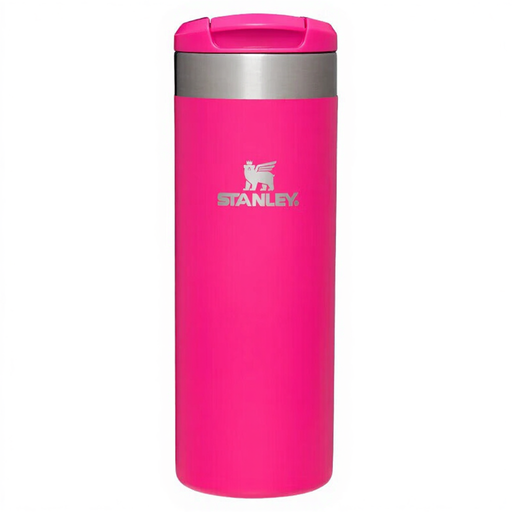
Why this product suits the profile: 470 ml offers more capacity than a classic coffee cup, yet remains manageable for commutes. According to the product description, the mug is designed to fit many car cup holders.
The lockable drinking lid is stated by the manufacturer to be leak-proof. This reduces the risk of accidental opening, but does not replace regular checks of the seal.
18/8 stainless steel, double-walled vacuum insulation and, according to the product details, keeps drinks hot for up to 6 hours and cold for up to 8 hours.
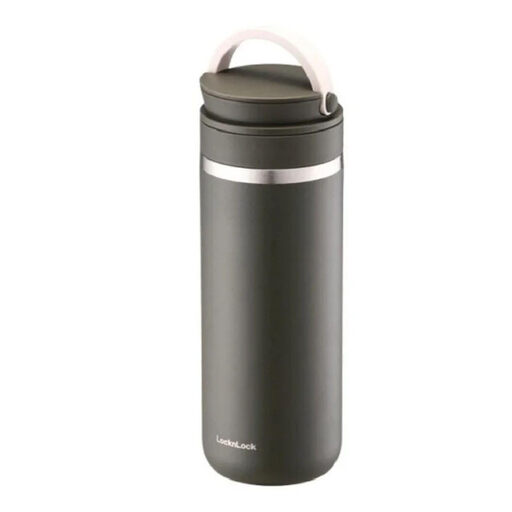
Why this product suits the profile: The 475 ml size is aimed at heavy users in the office, while travelling or on longer commutes. The integrated handle makes it easier to carry.
The two-part opening separates drinking, filling and cleaning. According to the product description, however, the mug is not dishwasher-safe and should be washed by hand.
Vacuum-insulated stainless steel 316 inside and stainless steel 304 outside; according to the product details, keeps drinks hot for up to 8 hours and cold for up to 37 hours.
We’ve put together a full, regularly updated list of products that fully meet these strict selection criteria and the safety regulations in force in the EU.
The lifespan of a reusable drinking cup depends heavily on how you clean it. The lid, seal and drinking opening should be rinsed and dried thoroughly after each use. Coffee residue, milk and sugar can cause odours or build-up. Only use the cleaning method approved by the manufacturer.
For stainless steel models, avoid abrasive cleaners and chlorine-based products. Glass cups should be protected from knocks. Even as a coffee cup with a handle, a glass model is not automatically suitable for transport. A cup with a straw should only be used for drinks for which the manufacturer has intended this use; very hot liquids can cause scalding when drunk through a straw.
For a single coffee, 250 to 350 ml is usually enough. 450 to 500 ml is suitable for longer journeys or multiple drinks. Before buying, check the diameter of your car’s cup holder and the height under shelves.
This depends on the material, lid design, fill volume and outside temperature. More reliable than general advertising claims are specific manufacturer statements such as “up to 3 hours” or “up to 8 hours”. These figures are guidelines and not a guarantee for every usage situation.
It can be useful for a desk or kitchen. For a rucksack, bicycle or frequent car journeys, stainless steel models with a lockable lid are generally more practical, as glass is sensitive to impact and not every glass cup can be sealed leak-proof.