
Lieferung heute & morgen

Qualitätsgarantie

Willkommens-Angebote freischalten: KOSTENLOSE Lieferung | Bis zu 80 % RABATT | Kostenlose 30-Tage-JoyPlus-Testphase
App herunterladen
A warm, home-cooked meal at the office, university, or on the go is not only more affordable but often the healthier choice. A good insulated food jar is essential for this. However, the market is flooded with products whose marketing promises often fail to deliver in practice. Before you make a decision, it's crucial to know the common pitfalls to avoid a poor investment.
As your Joybuy Product Recommendation Officer, I'm here to help you understand the key product features and make an informed choice.
At first glance, many containers look sturdy and functional. The disappointment often only sets in during daily use. Pay special attention to these three points:
To avoid buyer's remorse, you should focus on objective, technical features rather than marketing slogans.
By far the most effective method for temperature retention is vacuum insulation. A high-quality stainless steel insulated container has a double-wall construction with a vacuum created between the walls. This vacuum prevents heat transfer through convection and conduction. A simple insulated lunch box (often with just a layer of foam) offers significantly lower performance and is better suited for short periods.
Pay attention to the type of stainless steel used. 304 stainless steel (also known as 18/8 stainless steel) is the common standard for food containers. 316 stainless steel offers even higher corrosion resistance, which is particularly advantageous for very salty or acidic foods.
For a truly leak-proof lunch box or thermal container for soup, a screw-top lid with a thick, precisely-fitted silicone gasket is the most reliable solution. Clip-on lids, common on many plastic boxes, can lose their seal under high pressure or after prolonged use. Check that the gasket sits firmly in the lid and can be easily removed for cleaning and reinserted.
The ideal food container for on the go fits your needs. A capacity of 0.75 to 1 litre is often sufficient for a single person's lunch. For larger portions or stews, 1.4 to 1.5 litres is a good choice. A wide mouth is a crucial advantage: it not only makes filling and cleaning easier but also allows you to eat directly from the container.
Here are some product recommendations tailored to specific use cases that meet the criteria mentioned above.
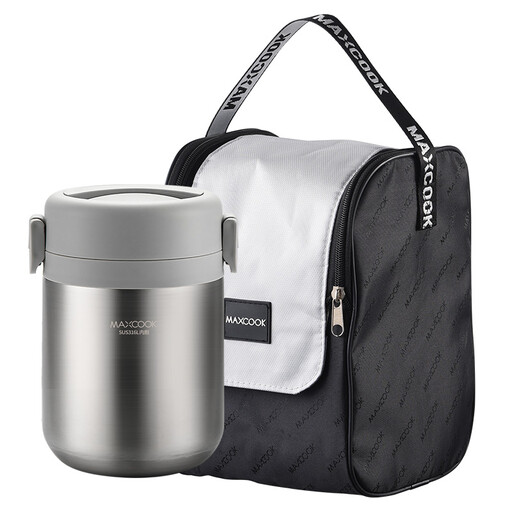
Why This Fits Their Persona: Ideal for professionals who want to bring a large, hot meal like a stew or pasta. The set, including the container and a matching insulated lunch bag, provides extra insulation and makes transport easy.
The vacuum insulation combined with the 316 stainless steel ensures reliable temperature retention without altering the taste. The screw-top lid with a silicone gasket minimises the risk of leaks with soups and sauces.
Large capacity (1.5L), highly corrosion-resistant stainless steel, and an included matching bag for easy transport.
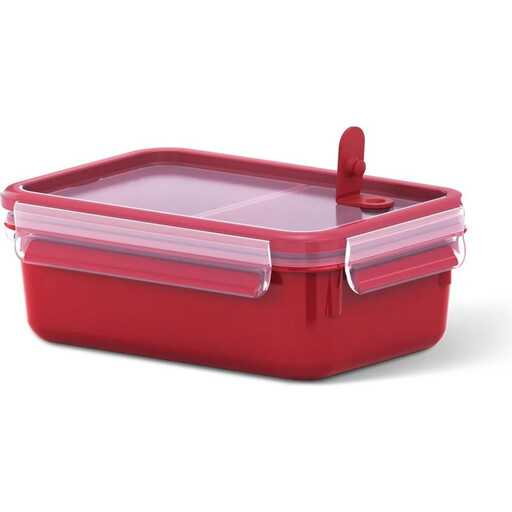
Why This Fits Their Persona: Perfect for anyone who needs flexibility. The box is suitable for hot and cold food and can be used in the microwave if needed (without the lid). Its compact shape fits well in backpacks.
The manufacturer explicitly guarantees it is leak-proof, ensured by a special seal in the lid. The material is clearly declared as BPA-free, which eliminates uncertainty with plastics.
Microwave and dishwasher safe for maximum convenience. Origin: Germany.
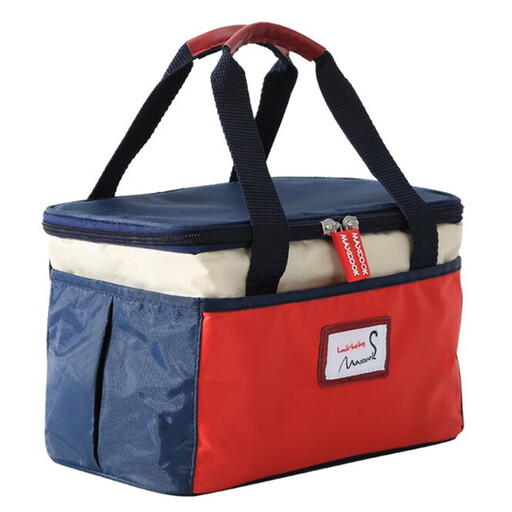
Why This Fits Their Persona: This set is a system solution for parents or individuals who like to transport different components (e.g., main course, salad, snack) separately. The bag holds the individual containers, ensuring organisation and additional insulation.
Instead of relying on a single, large container that might be unsuitable for some foods, this bento system offers flexibility. The risk of leakage is distributed by using multiple, smaller containers for different contents.
A complete, organised system with multiple containers and a matching bag. Allows for the separation of hot and cold foods.
We have compiled a full, up-to-date list of products that fully meet these strict selection criteria and German safety regulations.
Rinse the container with hot water immediately after use. For a thorough cleaning, use warm water and mild dish soap. Stubborn odours can often be removed with a mixture of baking soda and warm water, left to soak for a few hours. Always store the container with the lid off to ensure good air circulation.
To get the most out of a thermal food container, you should "prime" it before filling. For hot foods, fill it with boiling water for about 5-10 minutes and empty it just before adding your meal. For cold foods, use ice-cold water. This step brings the inner wall to the correct temperature and reduces initial heat loss.
Not necessarily; it depends on the use case.
The right choice depends on whether you prioritise maximum insulation or maximum flexibility (e.g., reheating on-site).
Sincerely, Your Joybuy Product Recommendation Officer