
Lieferung heute & morgen

Qualitätsgarantie

Willkommens-Angebote freischalten: KOSTENLOSE Lieferung | Bis zu 80 % RABATT | Kostenlose 30-Tage-JoyPlus-Testphase
App herunterladen
Whether you're monitoring body temperature, optimising your indoor climate, or checking the garden temperature, a reliable thermometer is an indispensable everyday tool. The market offers an overwhelming variety, from simple analogue models to connected smart home devices. But not every product lives up to its promises. Many buyers invest in devices that quickly prove to be inaccurate, impractical, or short-lived.
This guide will help you recognise the common pitfalls and understand the crucial features. This way, you can find a thermometer that is precisely tailored to your needs without falling for overpriced marketing hype.
Before you make a decision, you should be aware of the most common issues that lead to frustration and unnecessary expense.
To avoid making the wrong choice, focus on the following three core aspects that determine a thermometer's performance and utility.
Accuracy is the most important criterion. It is usually specified as a tolerance value (e.g., ±0.3°C).
The thermometer's construction must be suitable for its intended location. A device designed for indoor use is not suitable for outdoors.
If you opt for a smart thermometer, check the type of connection.
Instead of presenting an overwhelming list, we have selected products for clearly defined user groups.
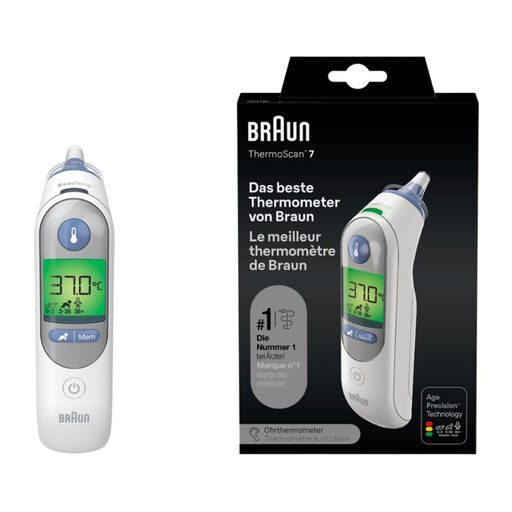
Why it's a great fit: Designed for fast and stress-free fever measurements in children and adults. The age-adjustable fever guidance provides extra reassurance for parents.
Sidesteps the pitfall of inaccurate sensors by using a pre-warmed tip, which minimises the cooling effect in the ear canal to ensure repeatable, precise measurements.
The Age Precision technology interprets the result based on age. The colour-coded display (green, yellow, red) allows for an immediate assessment of the fever level.

Why it's a great fit: Ideal for users who want to not only monitor their indoor climate but also actively control and automate it. Perfect for integration into an existing Tapo smart home ecosystem.
Avoids the pitfall of unreliable "smart" features by relying on a stable, hub-based system (Tapo Hub required) with Sub-1G wireless technology. This ensures reliable automation and data logging.
Enables the creation of automation rules (e.g., activating a dehumidifier when humidity is high). The high-precision sensor (±0.3°C according to the manufacturer) provides reliable data for control.
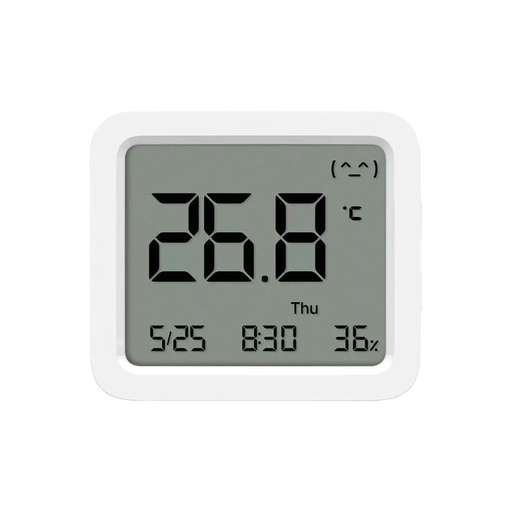
Why it's a great fit: For anyone looking for a simple, reliable, and straightforward solution to monitor their indoor climate. Its minimalist design and clear display make it a discreet helper in any room.
Focuses on one core function: accurately displaying temperature and humidity. It avoids the trap of feature bloat, offering optional Bluetooth connectivity without overwhelming the user.
The digital display provides clear, easy-to-read values at a glance. According to the manufacturer, the sensor offers high accuracy (±0.10°C tolerance for temperature), which is remarkable in this price range.
We have compiled a complete, up-to-date list of products that fully meet these strict selection criteria and UK safety regulations.
No, not all of them. Devices with Bluetooth connect directly to your smartphone but have a limited range and are mainly suitable for checking data nearby. Models that use a hub (a central control unit) offer greater range, a more stable connection, and allow for integration into a comprehensive smart home system for automating routines.
A thermometer measures temperature (heat or cold). A hygrometer, also known as a humidity sensor, measures the amount of water vapour in the air (relative humidity). Many modern digital devices, called thermo-hygrometers, combine both functions, as temperature and humidity together determine the perceived indoor climate.
Modern infrared thermometers, especially those for medical purposes like ear or forehead thermometers, can provide very accurate results when used correctly. A clean lens and proper positioning according to the manufacturer's instructions are important. Models with positioning aids, like the Braun ThermoScan 7, help to minimise measurement errors. For industrial or culinary purposes, they offer a quick way to measure surface temperatures without direct contact.